
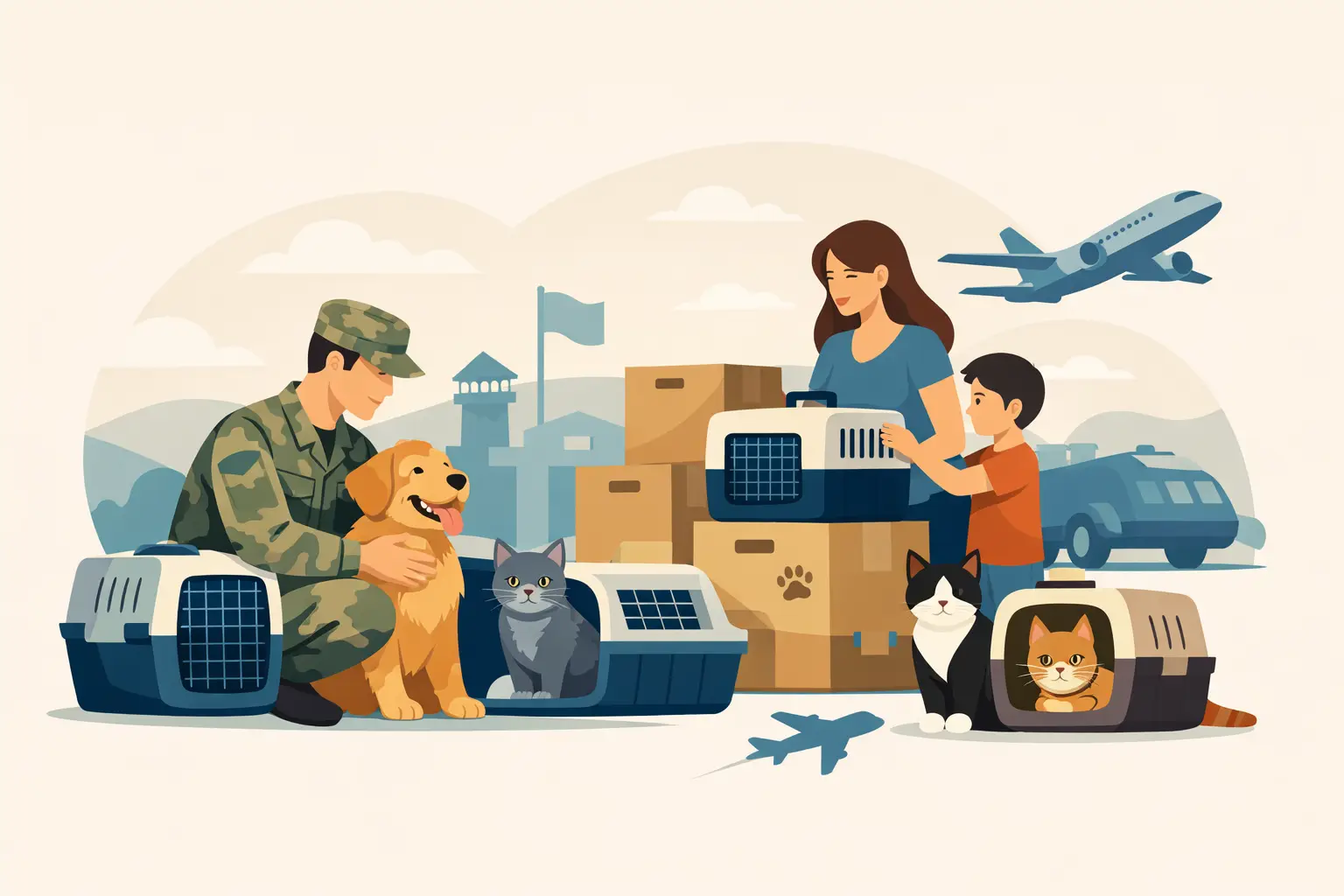
Pet Relocation Case Study for Military Families
Orders can change fast. A military family may have weeks, not months, to prepare for a PCS, and the family dog or cat still needs the same level of care, documentation, and transport planning as any other international move. This pet relocation case study for military families shows what a well-managed move really involves when the timeline is tight, the destination has import rules, and the pet is not cargo in the emotional sense of the word. It is a family member traveling through a highly regulated system.
In this example, the family was relocating from the continental United States to an overseas duty station with one medium-size dog and one indoor cat. The service member had confirmed orders, but housing, airline routing, and final reporting dates were still shifting. That kind of uncertainty is normal in military moves. It also creates risk, because animal transport planning depends on exact dates, approved routing, kennel sizing, veterinary timing, and destination entry requirements.
The challenge was not just getting two pets from point A to point B. The challenge was coordinating a humane move under military timing constraints while protecting the animals from avoidable stress and making sure the family did not arrive without compliant paperwork.
What made this military pet move complicated
This was not an unusual case by industry standards, but it combined several common pressure points. The destination country required current health documentation, vaccine records, and timing-sensitive certifications. The airline options were limited because of season, aircraft type, and pet acceptance rules. The dog needed a larger travel kennel that met airline specifications, while the cat needed a different setup to support safe containment and comfort.
There was also a practical family issue that many civilian moves do not have to the same degree. The service member and spouse were managing household goods, base coordination, out-processing, family travel, and reporting deadlines all at once. Pet transport was one more major task in a week already filled with mandatory appointments and moving deadlines.
That is where planning changes the outcome. In military relocations, the strongest transport plans are not simply efficient. They are resilient. They leave room for date changes, flight adjustments, weather issues, and paperwork review without compromising the animals’ welfare.
Pet relocation case study for military families: the planning phase
The first step was establishing a realistic transport timeline. That meant reviewing the duty station country requirements, identifying the latest possible veterinary appointment windows, confirming whether the pets could travel on the same itinerary as the family, and determining if manifest cargo was the safer or only viable option.
Many families assume cabin travel or checked pet travel will always be simpler. Sometimes it is. Sometimes it is not. Aircraft restrictions, pet size, breed considerations, heat embargoes, and international customs procedures can make a professionally coordinated cargo movement the more reliable choice. The right answer depends on the route, the pet, and the destination.
The transport plan for this family focused on four priorities: compliance, timing, animal welfare, and contingency coverage. Compliance came first because missing or incorrect paperwork can stop a move at departure or arrival. Timing came next because health certificates and endorsements often must be completed within specific windows. Animal welfare shaped kennel selection, feeding guidance, check-in timing, and connection planning. Contingency coverage meant preparing backup options if the family travel schedule changed.
Once the route was identified, the family received kennel guidance for both pets. This part matters more than many people expect. A kennel should not be treated as a last-minute purchase. It must meet airline standards, fit the animal correctly, allow normal posture and turning, and support secure labeling and handling. Just as important, the pet should be acclimated to it before travel. A compliant kennel that the pet has never seen before can still create unnecessary stress.
Documentation and compliance are where many PCS pet moves go wrong
In this case, the veterinary file had to be reviewed early to confirm vaccine dates, species requirements, and destination acceptance rules. The family already had a trusted veterinarian, which helped, but military moves often expose gaps that do not matter on routine annual visits. A vaccine may be current for health purposes but outside the destination country’s accepted sequence. A microchip may be present but not recorded in the exact way required for import paperwork. Those small details can become major barriers.
For this move, the documentation process included reviewing the pets’ identification records, confirming the validity of vaccinations, preparing the health certificate within the required timeline, and coordinating final paperwork so it matched airline and destination expectations. The family did not need more forms. They needed the correct forms, completed correctly, and aligned to travel dates that were still moving.
This is one reason military families benefit from experienced transport coordination. The challenge is rarely one single requirement. It is the interaction of many requirements at once.
The travel day strategy
By the week of departure, the route had changed once and the family’s own travel itinerary had shifted. Because the pet movement had been built with contingencies in mind, those changes did not force a restart. The dog and cat were rebooked onto a compliant routing with manageable transit time and confirmed acceptance.
On travel day, the focus was controlled execution. That included final document checks, kennel preparation, species-appropriate instructions for feeding and hydration, and check-in timing designed to reduce waiting in uncontrolled environments. Humane handling is not a slogan in these moments. It is the operational difference between a stressful process and a managed one.
For the dog, kennel positioning, absorbent bedding, and clear labeling were essential. For the cat, the priority was secure containment and minimizing overstimulation during transfer points. Cats and dogs do not experience transport the same way, and treating them as if they do can lead to poor planning.
Another point worth addressing is sedation. Families sometimes ask about it when they are worried about anxiety. In most cases, sedation is not recommended for air travel unless specifically directed by a veterinarian who understands the route and the animal’s health status. The safer approach is preparation, acclimation, proper kennel setup, and informed handling.
Arrival and handoff matter as much as departure
A successful relocation is not measured at takeoff. It is measured when the animal clears arrival procedures and is safely reunited with the family. In this case, the pets arrived on schedule, cleared the required entry process, and were reunited without incident.
What made that possible was not luck. It was the combination of early route review, document control, realistic scheduling, and a transport plan designed around the animals rather than around wishful assumptions. The family had enough uncertainty in the PCS itself. The pet relocation process needed to be one part of the move that felt controlled.
What military families can take from this case study
The main lesson from this pet relocation case study for military families is simple: the earlier the planning starts, the more options remain available. That does not mean every move requires months of lead time. Military orders do not always allow that. It means families should start pet transport planning as soon as orders look likely, even if travel dates are not final.
It also helps to recognize where the real risks are. Most failed or delayed pet moves are not caused by one dramatic event. They are caused by preventable issues like missing paperwork, kennel noncompliance, poor routing choices, heat restrictions, or assumptions about airline acceptance. Those issues are fixable when addressed early and expensive when discovered late.
There is also a welfare point that should not be overlooked. Military families already carry enough emotional strain during a move. When pets are treated as an afterthought, the stress compounds quickly. When they are handled as living family members with specific transport needs, the entire relocation becomes more manageable.
For families facing a domestic or international PCS, expert support can reduce both risk and pressure. Global Animal Transport works with the kind of timing, compliance demands, and humane handling standards these moves require. Not every case looks the same, and that is exactly the point. A good plan is built around the route, the regulations, and the animal in front of you.
If your next set of orders includes a pet, give the transport plan the same seriousness as the rest of the move. Your pet does not need guesswork. Your pet needs a safe, well-managed path home.
