
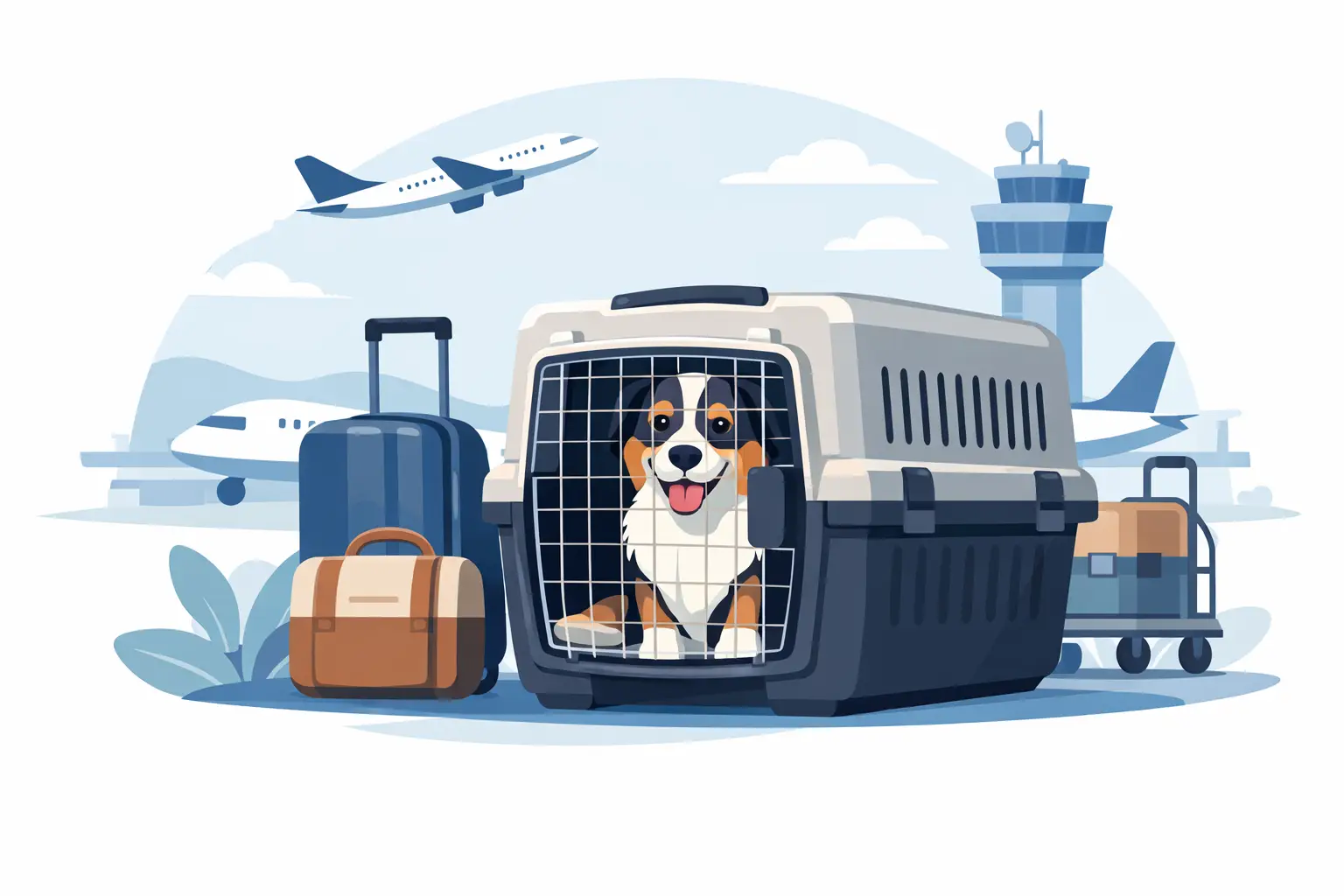
Airline Approved Dog Crate Review
Air travel with a dog usually gets stressful long before the airport. In most cases, the problem is not the flight itself. It is choosing a kennel that will actually be accepted on travel day. This airline approved dog crate review is designed to help you evaluate crates the way airlines, cargo teams, and animal transport professionals do – with safety, compliance, and animal welfare at the center.
A crate can look sturdy online and still be the wrong choice for live-animal transport. Some are marketed as airline approved when they fail on ventilation, door strength, hardware, or sizing. Others may be acceptable for one route but not another, especially if your dog is traveling internationally, as manifest cargo, or under seasonal restrictions. That is why the smartest review is not just about brand preference. It is about whether the crate supports humane handling and meets the standards likely to matter at check-in.
What matters most in an airline approved dog crate review
The first question is not whether the crate is popular. It is whether your dog can travel safely inside it for the full transport process, including loading, waiting periods, and unloading. Airlines and professional shippers are looking for a hard-sided kennel with secure construction, reliable ventilation, and enough room for the dog to stand naturally, turn around, and lie down without being compressed.
That last point is where many buyers get into trouble. A crate that seems roomy in the living room can become restrictive once a dog is inside for an extended travel window. If the ears touch the roof when standing, or the dog has to crouch to reposition, the crate may be too small. On the other hand, going too large can create handling issues and, for some dogs, more instability during transport. The right fit is measured, not guessed.
Most airline-compliant crates share a few non-negotiable features. They are made of rigid plastic or similarly durable material, use a strong metal door, include ventilation on multiple sides, and fasten with solid hardware rather than flimsy snap-together pieces. Water dishes that attach securely to the inside of the door are also typically expected. If any of those basics are missing, the crate may be unsuitable even if the listing says airline approved.
The difference between marketed approval and real compliance
This is where a practical airline approved dog crate review has to be honest. There is no universal sticker that guarantees acceptance everywhere. Airlines apply their own live-animal policies, and many align with IATA-based standards while adding route-specific or breed-specific rules. A crate can be broadly compliant and still rejected if it does not meet an airline’s dimensions, hardware requirements, or weather policy.
That means the phrase airline approved should be treated as a starting point, not a final answer. It usually means the crate was designed with common air travel standards in mind. It does not always mean it will be accepted for your exact carrier, aircraft type, destination country, or dog.
For pet owners, breeders, and institutional clients, this distinction matters because rejection at check-in is not a minor inconvenience. It can disrupt the entire movement plan, create welfare concerns, and force same-day crate replacement under pressure. In high-stakes relocations, the crate should be reviewed against the transport plan, not just against product marketing.
How to assess crate construction before you buy
Start with the shell. A suitable air travel crate should feel rigid and stable, not thin or flexible. If the top and bottom halves separate too easily or bow under pressure, that is a warning sign. Heavy-duty plastic kennels are common because they balance durability with manageable weight, but not all plastic crates are built to the same standard.
Next, inspect the door. Metal doors are generally preferred over plastic because they hold up better during handling and create a more secure closure. The latch should be simple, strong, and resistant to accidental opening. Side clips matter too. Many airlines and transport professionals prefer or require metal nuts and bolts securing the crate halves, even when the crate comes with quick-connect plastic fasteners.
Ventilation should be present on multiple sides, with enough airflow for the animal without creating oversized openings that compromise containment. This balance is especially important for strong, anxious, or escape-prone dogs. A crate that allows air circulation but prevents pawing, chewing, or pushing at weak points is the better choice.
Finally, consider the floor area and interior height in relation to your specific dog, not the weight label on the box. Weight ranges are often too general. Two dogs of the same weight can need very different crate dimensions based on height, body length, and ear set.
Sizing is where most crate reviews fall short
Many product reviews focus on assembly speed, storage, or home use. Those details may matter, but they are secondary for air transport. Proper sizing is the real test.
A dog should be able to stand with the head in a natural upright position, not forced down by the crate roof. The dog should be able to turn around normally and lie in a comfortable resting posture. For some breeds, especially long-legged dogs, narrow-bodied breeds, or dogs with upright ears, standard sizing charts can be misleading.
Puppies create another challenge. If they are still growing and the trip is scheduled weeks out, a crate that fits today may not fit by departure. Senior dogs, orthopedic cases, and brachycephalic breeds also need more careful planning because comfort and airflow become even more important.
If you are moving a valuable breeding dog, a show dog, or a beloved family companion, it is worth measuring carefully rather than buying based on breed averages. That extra step reduces the risk of rejection and, more importantly, reduces unnecessary travel stress for the dog.
Trade-offs between common crate types
Not every crate category performs equally well in air transport. Soft-sided carriers may be acceptable in some cabin situations for small pets, but they are not appropriate for most cargo movements or larger dogs. Wire crates are useful for home and vehicle use, yet they are generally unsuitable for airline transport because they do not provide the enclosed protection and structural consistency airlines expect.
The most widely accepted option is the hard-sided travel kennel. Even within that category, there are trade-offs. Lighter models are easier to move and may cost less, but they can feel less secure for large or strong dogs. Heavier-duty models offer better strength and often better door systems, though they add cost and may push dimensional or weight limits depending on the route.
Custom or specialty crates may be necessary for giant breeds, snub-nosed breeds under permitted conditions, or dogs with unusual proportions. For international, zoological, or highly regulated moves, crate selection becomes part of a broader logistics process rather than a retail purchase decision.
Common mistakes that lead to travel-day problems
One of the most common issues is assuming any large pet kennel will pass. Another is buying a crate without checking whether extra hardware is needed. Many otherwise acceptable crates need metal bolt upgrades, absorbent bedding adjustments, feeding and watering attachments, or travel labels before they are ready.
A second mistake is waiting too long. Dogs should have time to acclimate to the crate before travel. A compliant kennel is still the wrong kennel if the dog panics inside it because it was introduced the night before departure.
A third mistake is ignoring route details. Domestic travel may have one set of practical expectations, while international transport can introduce customs timing, transfer handling, and additional documentation requirements that affect crate setup. In more complex relocations, the crate is only one part of the welfare and compliance picture.
When professional guidance matters
If the trip involves a layover, international entry requirements, a larger breed, or a dog traveling as cargo, crate review should be done alongside the full transport plan. This is especially true when the animal’s welfare depends on precise coordination between the owner, airline, ground handlers, and receiving parties.
That is where experienced transport support adds value. A specialist such as Global Animal Transport can review whether the selected kennel aligns with airline requirements, route conditions, and the dog’s specific needs, rather than leaving the owner to interpret generic product claims alone.
A better way to judge any crate
The best airline approved dog crate review is not the one with the most stars. It is the one that answers four practical questions. Is the crate structurally sound? Is it correctly sized for the individual dog? Does it meet the airline and route requirements? And will it support safe, humane handling throughout the journey?
If the answer to any one of those questions is uncertain, pause before you buy. The right crate does more than get accepted at check-in. It protects your dog during one of the most vulnerable parts of the transport process, and that is always the standard that matters most.
