
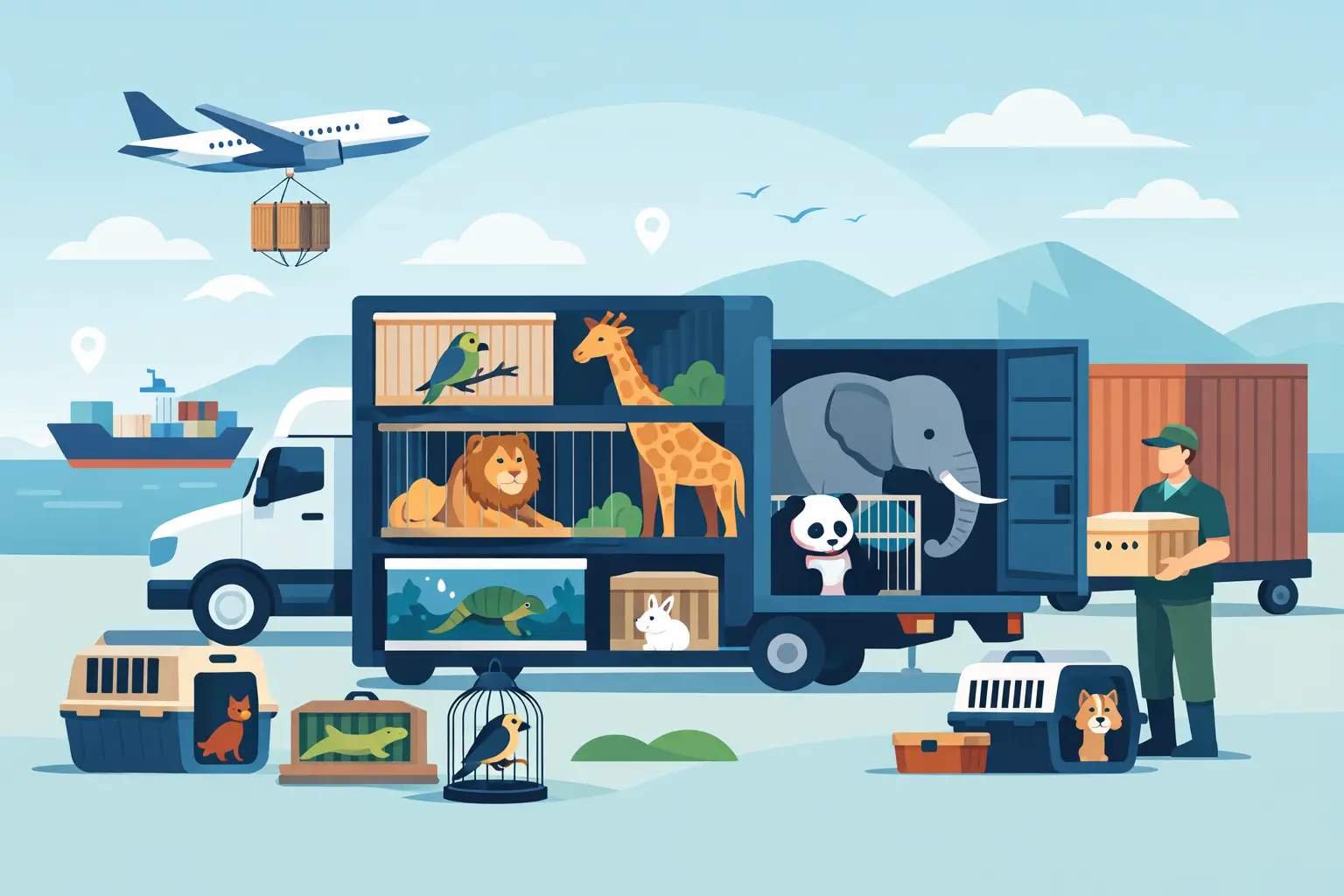
Animal Logistics: Safe Transport for Every Species
A pet arriving calm after an international flight, a marine specimen transferred with stable water conditions, or a large animal loaded safely for ground transport all depend on the same discipline: animal logistics planned around the animal, not just the route. Every move involves a living being with physical, behavioral, medical, and regulatory needs that must be addressed before departure.
For a family, the animal may be a beloved companion. For a zoo, aquarium, breeder, farm, or conservation organization, the shipment may involve animals essential to a program, collection, or operation. In either case, safe transport requires more than booking cargo space. It requires informed coordination, humane handling, proper equipment, and a clear plan for every stage of the journey.
What Animal Logistics Really Includes
Animal logistics is the specialized planning and management of live animal transportation by air, ground, or sea. It brings together transportation schedules, species requirements, travel containers, veterinary documentation, import and export rules, customs procedures, handling arrangements, and destination delivery.
The complexity changes with the animal and the destination. A domestic move for a dog or cat may call for airline-approved kennel preparation, health records, and carefully timed airport delivery. An international shipment can add country-specific import permits, vaccination requirements, customs clearance, inspection appointments, and coordination with overseas agents.
For livestock, equine transport, exotic species, zoological animals, and aquatic life, the planning becomes more specialized still. Loading methods, temperature control, feeding schedules, water quality, staffing, biosecurity, and emergency contingencies may all be part of the transport plan. The goal is not simply movement from point A to point B. The goal is a safe, humane transfer that protects the animal’s welfare throughout transit.
Why Species-Specific Planning Matters
No single transport method is appropriate for every animal. Dogs, cats, birds, reptiles, fish, horses, cattle, and large mammals respond differently to travel conditions. Their containers, handling procedures, environmental needs, and allowable transit times can vary substantially.
A crate for a household pet must provide enough room for safe positioning, ventilation, and secure containment. It also needs to meet carrier and destination requirements. For reptiles or small mammals, container design must account for temperature sensitivity, escape prevention, bedding, and species-appropriate airflow. Aquatic animals may require insulated systems, oxygen management, stable water parameters, and rapid transfers to minimize changes in temperature and water chemistry.
Large animals introduce a different set of demands. They may require custom stalls, specialized vehicles, experienced handlers, loading ramps, planned rest periods, and veterinary oversight. Animals that are easily stressed by noise, unfamiliar environments, or separation need careful handling protocols that reduce unnecessary disruption.
This is why a general freight approach is not enough. Animal transport decisions should be made by professionals who understand how the species travels, what conditions it can tolerate, and where the greatest risks may occur.
The Critical Steps in Safe Animal Transport
A successful shipment begins well before the animal reaches an airport, port, or loading facility. The early planning stage is where many preventable delays and welfare concerns are avoided.
Confirming travel eligibility and documentation
Destination rules can determine whether and when an animal is permitted to travel. Depending on the species and country, requirements may include health certificates, vaccination records, microchip verification, laboratory testing, import permits, export permits, ownership documentation, and quarantine arrangements.
Requirements can change, and timelines matter. Some tests, treatments, and permits must be completed weeks or months before departure. A professional transport plan identifies these deadlines early so a family or organization is not faced with a last-minute cancellation or border delay.
Selecting the right route and transport method
The fastest route is not always the best route. A direct flight may reduce handling time, but availability, aircraft type, seasonal weather, embargoes, and destination acceptance rules can influence the safest option. In some cases, a charter aircraft, cargo freighter, ocean charter, or dedicated ground transport is the more appropriate choice.
Route planning should account for layovers, transfer facilities, ground handling quality, local climate, customs hours, and the time required to move the animal safely after arrival. For high-value, sensitive, or large animal shipments, a customized route may be necessary to maintain welfare standards and operational control.
Preparing a suitable travel environment
Travel containers and support systems are central to humane transport. They must be correctly sized, secure, clean, well ventilated, and appropriate for the animal’s species and mode of travel. In many cases, animals should be acclimated to their crate, stall, or container ahead of time to reduce anxiety on departure day.
Preparation also involves practical details such as absorbent bedding, identification labels, feeding instructions, water arrangements, and temperature considerations. Sedation is not a routine solution for travel stress and should only be considered under direct veterinary guidance. A calm, properly prepared animal and an experienced handling team are usually the stronger foundation for safe transit.
Managing handoffs and monitoring transit
Most transportation risks arise during handoffs: home pickup, airport acceptance, security screening, aircraft loading, layovers, customs release, and final delivery. These points require precise coordination between drivers, handlers, airline teams, brokers, veterinarians, and receiving parties.
Round-the-clock availability matters when schedules change, weather interrupts operations, or an inspection takes longer than expected. A professional logistics team should know who is responsible at each handoff and what action will be taken if the original plan changes.
Domestic and International Moves Require Different Levels of Coordination
Domestic animal transport can be straightforward when the route is short and regulations are limited. Even then, weather, carrier restrictions, safe vehicle conditions, and pickup timing need attention. A well-managed domestic move should never treat an animal as ordinary cargo.
International transport has more moving parts. Customs procedures, import restrictions, transit country rules, language differences, airport handling arrangements, and quarantine protocols can all affect the journey. The destination country’s requirements take priority, and a minor documentation error can lead to costly delays or refusal of entry.
Institutional moves can be especially complex. Zoos and aquariums may coordinate animal care teams, exhibit readiness, permits, conservation partners, and specialized receiving equipment. Livestock operators may need to meet agricultural, disease-control, and welfare requirements across jurisdictions. These shipments benefit from a single logistics partner that can coordinate the full process rather than leaving critical steps divided among unrelated providers.
Questions to Ask an Animal Transport Provider
The right provider should be able to explain the plan clearly and specifically. Ask how the team handles your animal’s species, what documentation is required, who manages airport or port handoffs, and how changes are communicated. For international moves, ask who is responsible for customs clearance and destination delivery.
It is also reasonable to ask about container standards, temperature considerations, transfer procedures, and available support outside normal business hours. A reliable provider will not promise that travel is risk-free. Instead, they will identify the risks, explain the safeguards, and create a realistic plan based on the animal, route, and regulations involved.
Price matters, but the lowest quote may not include the planning, permits, handling expertise, or destination support needed for a safe move. Compare what is actually included. A complete service plan often prevents the expenses and distress caused by avoidable errors later.
A Higher Standard of Care for Every Journey
At Global Animal Transport, animal welfare and operational control are treated as equally essential. From household pets and small animals to livestock, aquatic life, and zoological species, each move is planned according to the needs of the animal and the demands of the route.
The most reassuring transport plan is one that leaves as little as possible to chance. When documentation, handling, equipment, timing, and destination arrangements are prepared with care, the journey becomes more manageable for the people responsible and, most importantly, safer for the animal making it.
