
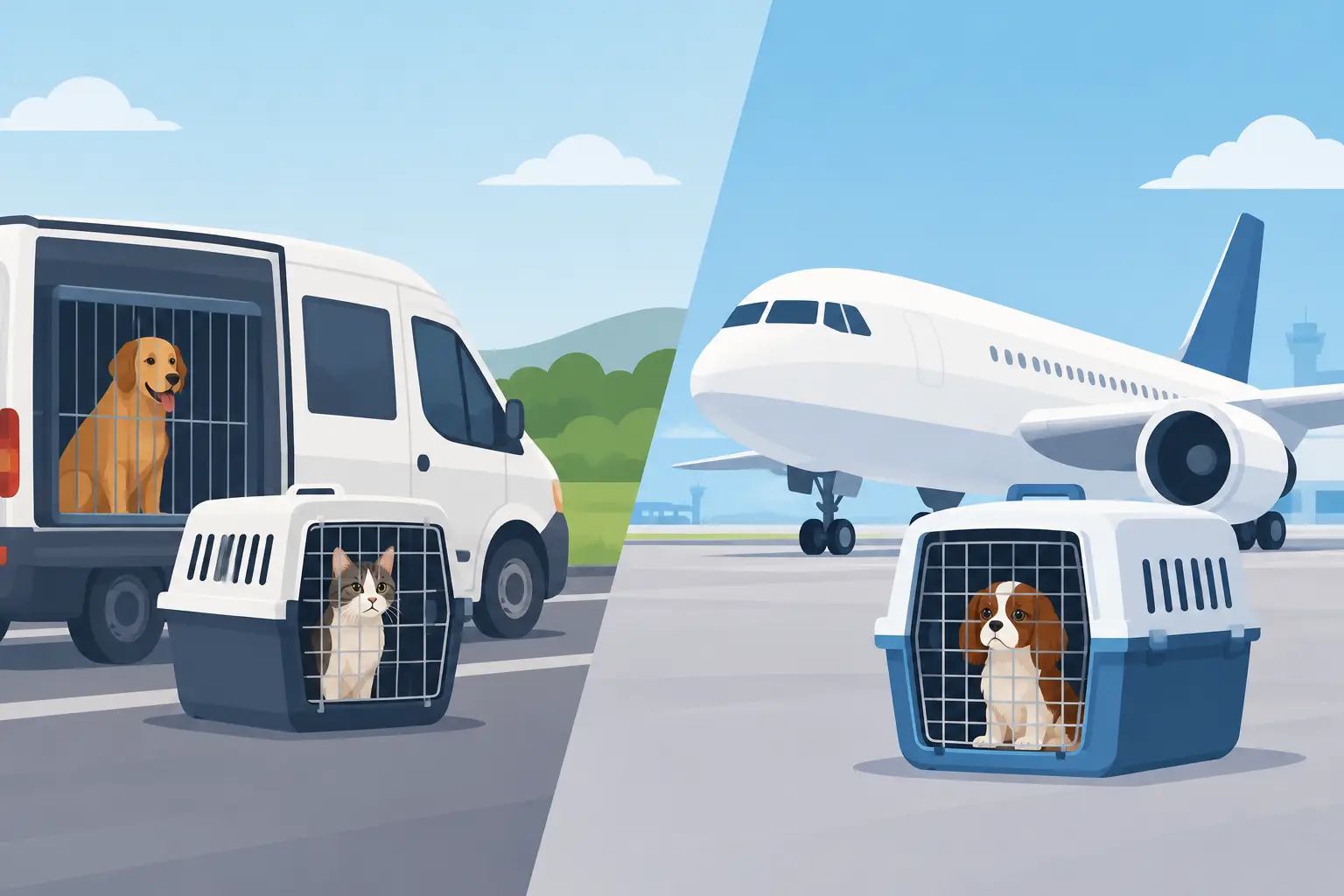
Ground Transport Versus Air Shipping for Animals
A relocation plan can look simple on a map and still be demanding for the animal making the journey. The decision between ground transport versus air shipping is not simply a question of speed or price. It is a welfare decision shaped by species, temperament, distance, weather, medical needs, handling requirements, and the controls available at every transfer point.
For a family pet, the best option may be a direct, professionally managed ground move that avoids airport activity altogether. For a zoo animal, breeding program, or time-sensitive international shipment, air transport may be the only practical route. The right choice is the one that reduces overall stress while meeting regulatory, safety, and schedule requirements.
Ground Transport Versus Air Shipping: What Changes?
Ground and air transport create very different travel experiences. A road-based move generally provides more control over the environment and fewer handoffs. An air move covers great distances quickly but requires careful planning around airport acceptance, security screening, aircraft schedules, loading procedures, customs, and final delivery.
Neither method is automatically safer in every situation. A short domestic trip by air can involve hours of travel to and from airports, advance check-in, crate handling, and waiting periods. A properly planned ground move may offer a quieter and more continuous experience. Conversely, a multi-day road journey can create more total time in transit than a well-coordinated flight, making air the more humane choice for certain animals and destinations.
The decision should be based on total journey time, not flight duration alone. That includes pickup, pre-departure preparation, holding time, transfers, border clearance, arrival processing, and delivery to the final destination.
When Ground Transport Is Often the Better Fit
Ground transportation is often ideal for domestic relocations, regional moves, and routes where direct service can significantly reduce handling. A dedicated vehicle can be equipped for the species being moved, with climate management, secure containment, ventilation, monitoring, and planned welfare stops where appropriate.
For dogs and cats, ground service may be especially beneficial when the animal is anxious around unfamiliar noise, crowds, or crate transfers. Door-to-door service also limits the number of people involved in the move. That continuity matters for elderly pets, animals with mobility concerns, bonded pairs, and pets that need a calmer travel routine.
Ground transport can also offer practical advantages for larger groups. Breeders moving multiple animals, livestock operators coordinating regional shipments, and institutions moving animals with compatible travel needs may benefit from a route planned around rest intervals, feeding schedules, sanitation, and staffing requirements.
The value of direct control
On the road, a trained transport team can respond to changing conditions more directly. Weather, traffic, animal behavior, and scheduled stops can be managed in real time. The vehicle environment can be adjusted within the parameters appropriate for the species, and the same handlers can remain responsible for the shipment from pickup through delivery.
That does not mean every long-distance ground route is preferable. Extended travel can be tiring, particularly in hot weather, remote areas, or locations with limited suitable stopping points. The longer the route, the more important it becomes to assess rest requirements, vehicle capability, driver schedules, and contingency planning.
Domestic flexibility and local delivery
Ground transport is frequently the most flexible option for destinations without convenient airport access. It can eliminate the need for an owner or receiving facility to travel several hours to collect an animal from a cargo terminal. For a pet owner coordinating a household move, that direct final delivery can reduce uncertainty at an already stressful time.
When Air Shipping Is the Better Choice
Air shipping becomes a strong option when distance, geography, or urgency makes ground transport impractical. International relocations, island destinations, transcontinental moves, and time-sensitive animal transfers often require air service. For these journeys, speed can be an important welfare factor because it reduces the number of days an animal spends in transit.
Air travel is not a single service category. Commercial airline cargo, cargo freighters, and aircraft charters have different capabilities, routing limitations, and acceptance rules. The appropriate option depends on the species, shipment size, crate dimensions, temperature needs, destination requirements, and whether the animal can safely travel within a particular aircraft environment.
For zoological animals, aquatic species, and large mammals, a charter or specialized cargo solution may be necessary. These shipments can require custom containment, dedicated loading procedures, veterinary coordination, life-support equipment, experienced attendants, and tightly managed ground handling at both ends of the flight.
International moves require more than a flight booking
An international animal shipment can involve import permits, export documentation, health certificates, vaccination records, species declarations, inspection appointments, customs clearance, and destination-specific quarantine rules. Airlines may also impose seasonal restrictions, breed-related policies, crate standards, or limitations based on aircraft type.
A missed document, an unsuitable route, or an improperly timed health certificate can delay an animal at a critical point. Professional coordination helps align these requirements before the animal begins its journey, rather than trying to solve a compliance issue at the airport.
Faster can mean less stressful – if the route is managed well
The shortest flight is not always the best itinerary. A nonstop flight may be preferable to a connection, but availability, aircraft suitability, seasonal weather, and arrival procedures must all be considered. In some cases, a slightly longer route with better handling support and safer timing is the more responsible choice.
The goal is to minimize unnecessary exposure, waiting, and transfers. This is particularly important for animals that are sensitive to temperature changes, noise, dehydration, or disruption to feeding and care schedules.
Key Factors That Should Drive the Decision
A reliable transport recommendation begins with the animal, not the mode of transport. Species-specific planning is essential because a travel plan that works well for a healthy adult dog may not be appropriate for a brachycephalic breed, a pregnant mare, a group of livestock, tropical fish, or an endangered species moving under conservation protocols.
Health status is another central factor. Age, respiratory condition, medication needs, mobility limitations, reproductive status, and veterinary guidance can affect whether air or ground travel is appropriate. Sedation should never be treated as a shortcut for travel anxiety. It can create additional risks and should only be considered under direct veterinary instruction where suitable.
Climate deserves equal attention. Heat and cold can affect transport availability and animal comfort, particularly during airport transfers and seasonal peaks. The plan should account for the full route, including origin, connection points, and destination, rather than relying on the weather at departure alone.
Finally, consider handling complexity. Every transfer introduces another variable. For some shipments, air is still the best choice despite airport handling because the distance is too great for road transport. For others, avoiding multiple handoffs is exactly why a dedicated ground vehicle is the better answer.
A Better Way to Compare Cost and Risk
It is tempting to compare a ground quote with an airline rate and choose the lower number. That comparison rarely reflects the full scope of safe animal transport. The true cost of a move may include compliant crates or containers, pickup and delivery, document preparation, import processing, veterinary requirements, airport handling, attendants, specialized equipment, and contingency arrangements.
Lower-cost options can also shift responsibility back to the owner or receiving party. If a shipment requires strict timing, specialized care, or international documentation, fragmented services can create gaps at the points where expertise matters most.
A complete transport plan should clearly identify who is responsible for each part of the journey, how the animal will be monitored, what conditions are being managed, and what happens if weather, traffic, or flight schedules change. For high-value, rare, or emotionally significant animals, that level of planning is not an extra. It is fundamental to responsible care.
Choosing the Route Around the Animal
The best transport method is usually clear once the full journey is understood. Ground may be the compassionate choice for a direct domestic move with manageable mileage and an animal that benefits from consistent handlers. Air may be the responsible choice when international distance or time in transit would otherwise place a greater burden on the animal.
At Global Animal Transport, planning starts with the animal’s needs, then builds the route, containment, handling, documentation, and support structure around them. A careful consultation before travel can turn a difficult relocation into a controlled, humane journey with the right people accountable at every stage.
