
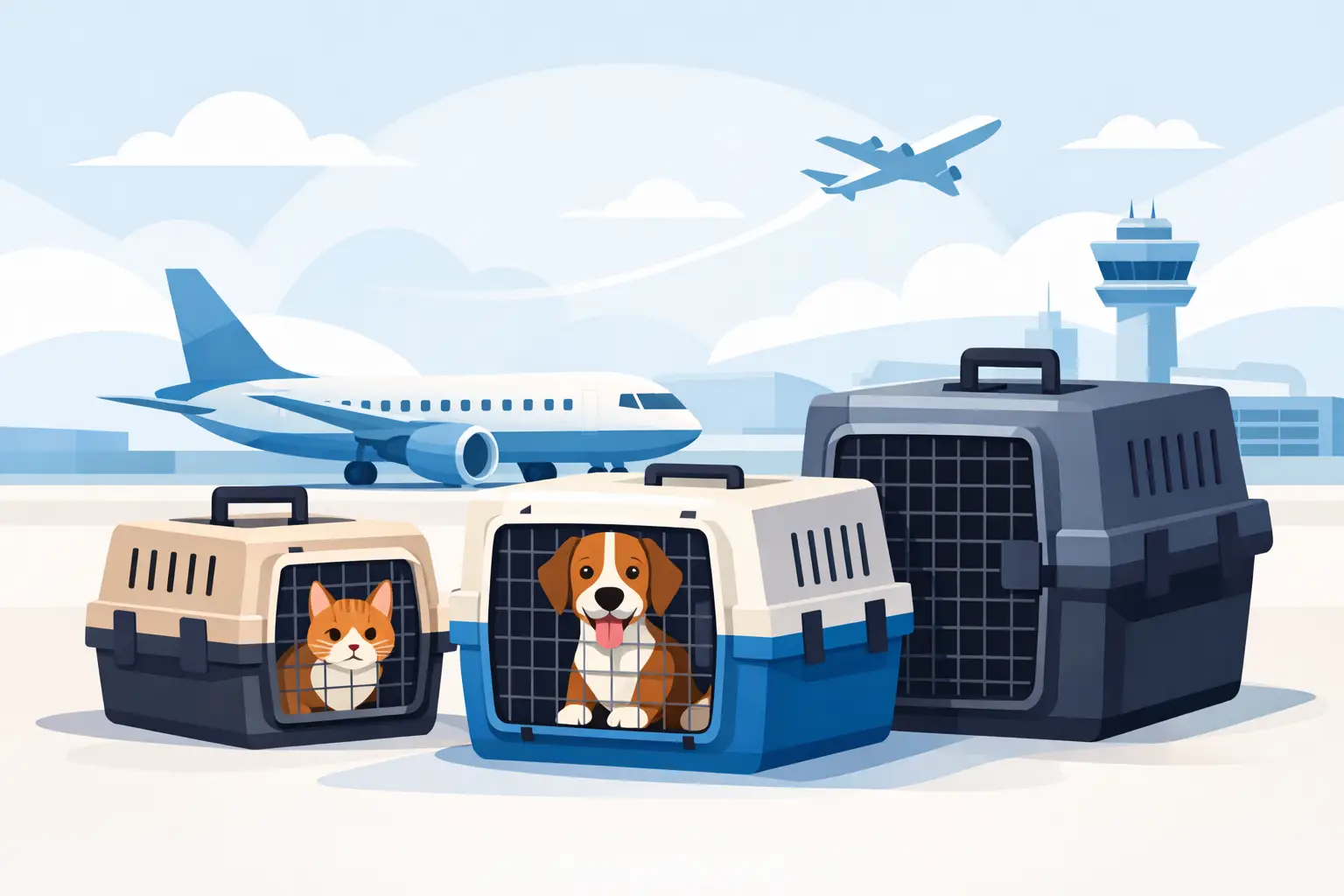
Guide to Animal Air Crates
The crate is not a minor detail in air transport. It is the animal’s travel environment, safety enclosure, and recovery space for the duration of the journey. That is why any reliable guide to animal air crates has to start with one principle: the right crate protects welfare first, and logistics second.
For pet owners, breeders, zoos, aquariums, and livestock operators, crate selection affects far more than comfort. It can influence airline acceptance, handling safety, temperature stability, stress levels, and the risk of injury during loading, transfer, and arrival. A crate that looks acceptable at home may still fail airline or species-specific requirements once the move becomes international, long-haul, or operationally complex.
What an animal air crate is really expected to do
An air crate has one job on paper – contain the animal securely during transit. In practice, it has to do much more. It must allow safe ventilation, prevent escape, withstand movement and stacking conditions, support species-appropriate posture, and reduce avoidable stress. For many shipments, it also has to meet airline rules, import or export handling standards, and the expectations of animal health professionals overseeing the move.
This is where people often underestimate the difference between a basic kennel and a transport-ready air crate. Not every commercially sold crate is suitable for air cargo. Some are too light, too flexible, poorly ventilated, or built with components that can fail under pressure. Others are technically strong enough but incorrectly sized for the animal inside.
A proper crate should support natural positioning. That means the animal can stand without the ears or head pressing into the roof, turn normally when appropriate for the species, and lie down in a stable position. For some animals, extra room improves comfort. For others, too much open space can increase instability and anxiety during movement. The right fit depends on the species, the route, and the animal’s behavior.
Sizing in a guide to animal air crates
Sizing is the point where welfare and compliance meet. If the crate is too small, the animal may be refused for travel or suffer unnecessary stress. If it is too large, the animal may slide, lose footing, or struggle to brace during handling.
For dogs and cats, measurements should be taken carefully rather than estimated by breed or weight alone. Height, body length, shoulder width, and normal standing posture all matter. A lean, tall dog and a heavier, shorter dog of the same weight may require very different crate dimensions. Snub-nosed breeds can present additional concerns because airflow and heat tolerance require closer attention.
For birds, reptiles, small mammals, hoofstock, and exotic species, sizing becomes even more specialized. Some animals need room for stable posture with low visual stimulation. Others need perching support, protected head clearance, reinforced walls, or species-specific substrate. Large mammals and zoological animals may require custom-built enclosures engineered around both animal behavior and aircraft handling requirements.
That is why there is no single universal answer to crate size. The correct crate is determined by the individual animal, not just the category it belongs to.
Material matters more than most people expect
Crate construction affects both acceptance and in-transit safety. In most companion animal moves, rigid plastic crates with secure metal hardware are standard because they balance durability, ventilation, and manageable weight. Soft-sided carriers may work in some cabin situations, but they are generally not appropriate for cargo transport or for animals that need a stronger containment structure.
The crate door is one of the most important components. It should close securely and resist bending or accidental opening during handling. Ventilation openings should be adequate without creating exposure risks for paws, noses, horns, beaks, or claws. Fasteners should be strong and properly installed. A crate held together with weak clips or makeshift ties may fail before the flight even departs.
Absorbent bedding or padding is another point people get wrong. The goal is not luxury. The goal is stability, hygiene, and species-appropriate comfort. Bedding that shifts too easily, holds excess moisture, or creates entanglement risk can cause problems in transit. For some species, flooring and absorbent materials must be selected very carefully to prevent slipping, pressure injury, or contamination.
Airline approval is only part of the standard
Many people focus on whether a crate is airline approved. That matters, but it is only the starting point. Airline acceptance does not automatically mean the crate is ideal for the animal, the route, or the destination requirements.
A domestic nonstop trip for a healthy adult dog is very different from an international relocation with multiple checkpoints, customs clearance, climate changes, and extended ground handling. A crate that passes basic airline review may still need modifications for a long route, a sensitive breed, a larger species, or a highly valuable zoological shipment.
For international and institutional moves, crate planning should also account for transfer procedures, customs inspection access, labeling, feeding and watering systems where required, and whether the shipment involves cargo aircraft, charter aircraft, or specialized handling teams. The crate has to function within the full transport chain, not just at check-in.
Species-specific needs change the crate design
The phrase animal air crate covers a wide range of transport realities. A dog crate and a fish transport system do not share the same design logic, even though both are part of air animal logistics.
Companion animals typically require rigid enclosures with safe ventilation, reliable door security, and enough room for normal posture. Rabbits, ferrets, and other small mammals may need tighter environmental control and careful attention to stress sensitivity. Birds may require crates that protect feathers and prevent panic injury while still allowing airflow and access for observation.
Reptiles and amphibians often depend more heavily on temperature management and internal containment than on open crate space. Aquatic animals and fish move within highly specialized systems that control water, oxygenation, temperature, and stabilization. Livestock and large mammals may need reinforced structures, loading ramps, separation partitions, and planning around balance, weight distribution, and sedation protocols when clinically appropriate.
Exotic and zoological shipments raise the bar further. Behavioral risk, conservation value, regulatory oversight, and veterinary coordination often require custom crating built for one specific move. In those cases, the crate is part engineering project, part welfare tool, and part operational control measure.
Stress reduction starts before the airport
Even the best crate cannot compensate for poor preparation. Animals that have never seen their crate until travel day are more likely to resist loading, panic in confinement, or arrive in a heightened state of stress. Early crate familiarization can make a meaningful difference, especially for household pets.
That does not mean forcing long confinement sessions without guidance. It means allowing the animal to associate the crate with safety before transport. Familiar smells, calm introduction, and supervised acclimation can help reduce fear. For some species, visual shielding or quieter staging conditions may also help. For others, overhandling before departure can increase agitation.
This is one of the main trade-offs in transport planning. What calms one animal may overstimulate another. A social pet may benefit from a familiar blanket and gradual crate training. A more reactive species may need a lower-stimulation setup and minimal disturbance. Good crate planning always accounts for temperament, not just anatomy.
Common mistakes that create avoidable risk
Most crate problems are preventable. The most common issue is incorrect sizing, followed by weak construction, poor ventilation design, and assuming a retail crate is automatically flight ready. Another frequent problem is modifying a crate without understanding airline or handling implications.
Owners also sometimes prioritize convenience over transport integrity. Wheels left attached, loose accessories, poorly secured bowls, or improvised door latches can all create acceptance or safety issues. In professional moves, every component of the crate should have a reason for being there.
For higher-stakes shipments, the biggest mistake is treating crate selection as a late-stage task. By the time health documents, routing, and booking windows are already fixed, there may be limited room to correct a crate issue without delaying the move. Crating should be part of transport planning from the beginning.
When standard crates are not enough
Some moves require custom crating because the animal, route, or handling profile falls outside standard dimensions. This is common with large-breed dogs, brachycephalic animals with added transport considerations, hoofed animals, zoo species, marine life systems, and institutional relocations involving strict oversight.
Custom does not simply mean larger. It may mean stronger materials, different ventilation patterns, internal partitions, reinforced access points, lower-light design, feeding integration, or compatibility with specialized loading equipment. In professionally managed moves, custom crate planning is often what allows the transport plan to remain both compliant and humane.
For clients managing complex relocations, this is where working with an experienced transport specialist matters. A company such as Global Animal Transport evaluates the crate as part of the whole movement plan – not as a separate purchase decision. That approach reduces the chance of refusal, delay, or welfare compromise.
Choosing the right path forward
A good guide to animal air crates should leave you with one clear takeaway: the crate is part of the care standard. It is not just packaging for transport. Whether you are moving a family pet, breeding stock, aquarium species, or a zoological animal, the right crate supports safety, humane handling, and a smoother journey from departure through arrival.
If you are unsure whether a crate is truly appropriate, that uncertainty is worth addressing before travel day. The best outcomes usually come from early planning, species-specific review, and decisions made around the animal’s actual needs rather than assumptions. When the crate is right, the entire transport process starts on stronger ground.
