
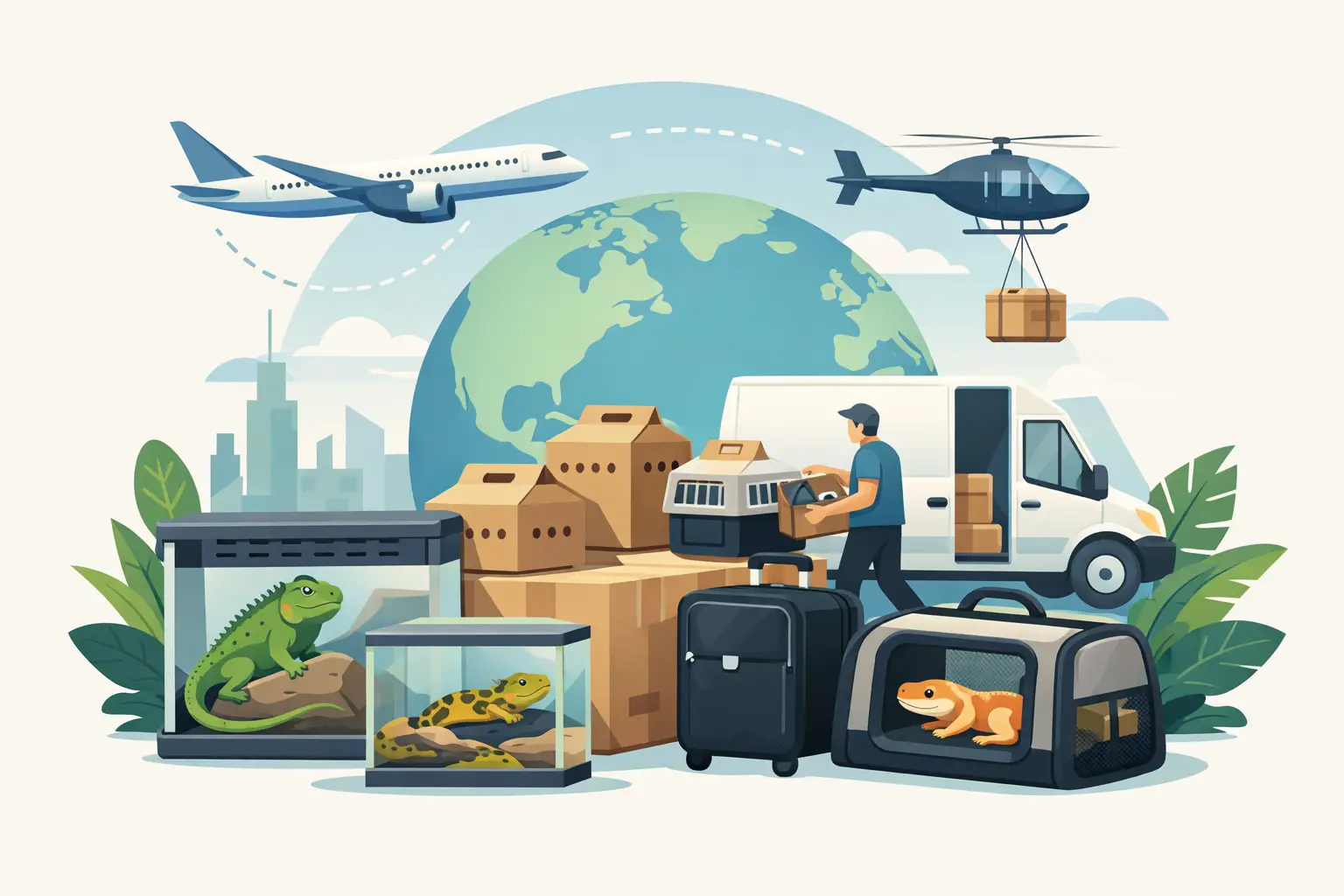
How to Relocate Exotic Reptiles Safely Anywhere
A reptile can look calm while its body is under serious stress. A few degrees of temperature change, an unsecured carrier, or a delayed inspection can quickly become dangerous for an animal that depends on precise environmental conditions. Knowing how to relocate exotic reptiles means planning for more than the distance between two addresses. It requires species knowledge, legal coordination, humane containment, and active monitoring from collection through delivery.
For a short local move, a healthy captive-bred gecko may need a very different plan than a large constrictor, a venomous species, a protected tortoise, or a collection moving across international borders. The safest approach is always based on the animal, the route, the season, and the governing regulations.
How to Relocate Exotic Reptiles With Welfare First
Successful reptile relocation begins with a species-specific assessment. Before selecting a carrier or scheduling transportation, identify the animal’s scientific name, age, size, health status, feeding schedule, normal temperature range, humidity needs, and behavioral risks. Accurate records are not paperwork for its own sake. They allow every person involved in the move to make safe decisions.
A desert-dwelling lizard may tolerate brief dry conditions better than a tropical monitor, but neither should be exposed to uncontrolled heat or cold. Aquatic turtles need different moisture management than arboreal snakes. Large reptiles may require reinforced, purpose-built crates, while small animals can be safely transported in secure, ventilated containers placed within insulated outer packaging.
The goal is not to recreate a permanent enclosure during transit. It is to provide a stable, secure travel environment that protects the reptile from escape, injury, temperature extremes, dehydration, and unnecessary disturbance. In many cases, a darkened, appropriately sized travel container helps reduce visual stimulation and stress.
Start with veterinary and health planning
A qualified reptile veterinarian should assess any animal with a recent illness, injury, appetite change, respiratory concern, shedding problem, or reproductive condition before travel. Moving a compromised reptile can worsen dehydration, suppress immune function, and create avoidable health risks.
Ask the veterinarian whether the animal is fit to travel and whether the receiving jurisdiction requires a health certificate, diagnostic testing, parasite screening, or other documentation. Requirements can vary by species and destination. International movements may also require official veterinary endorsement within a specific time window before departure.
Feeding should be planned carefully. Many reptiles travel better with an appropriate fasting period, particularly species that may regurgitate if handled or transported shortly after feeding. The right timing depends on species, age, meal type, and veterinary guidance. Young animals, medically sensitive reptiles, and species with specialized nutritional needs should never follow a generic fasting schedule.
Confirm Legal Requirements Before Booking Transport
Exotic reptile relocation is heavily regulated because laws address public safety, invasive species concerns, animal welfare, and conservation. A move that appears straightforward can be delayed or denied if documentation is incomplete.
First, verify whether the species is legal to possess at the destination. State, county, city, and homeowners association rules may all matter for domestic relocations. Some areas restrict large constrictors, venomous reptiles, crocodilians, monitor lizards, non-native turtles, and other regulated species. A permit held at the current address does not automatically transfer to a new state or municipality.
For international moves, confirm import and export rules well before travel. Depending on the species, this may involve wildlife trade permits, proof of legal captive breeding or acquisition, veterinary certificates, import licenses, customs declarations, and inspection appointments. Protected species can require additional approvals and longer lead times.
Keep original documents organized and accessible during the entire move. Copies are useful, but officials may require original signed certificates or permits. Names, addresses, scientific names, identification numbers, and dates must match across every document. Small inconsistencies can create costly delays at a border or cargo facility.
Choose a Secure, Species-Appropriate Travel Container
The travel container is a safety system, not simply a box. It must prevent escape, protect the reptile from crushing or impact, allow appropriate ventilation, and remain manageable for trained handlers. The container should be selected according to the animal’s strength, body shape, size, and behavioral tendencies.
For many snakes and small lizards, a secure inner bag or appropriately sized ventilated container may be placed inside a rigid outer crate. The animal should have enough room to rest naturally, but not so much that it can be thrown around during movement. For tortoises, stable footing and protection from sliding are priorities. Large reptiles often require custom-built containment with reinforced closures and controlled access.
Do not use a permanent glass enclosure as a travel carrier. Glass can break, heavy fixtures can shift, and the enclosure is rarely designed for vehicle or air cargo movement. Avoid loose rocks, branches, water bowls, or other heavy accessories that may strike the animal in transit. Bedding must also be selected with care. It should support sanitation and stability without creating an ingestion, entanglement, or respiratory risk.
Every container should be clearly labeled for professional handling and compliance purposes. Labels may include live-animal information, orientation markings, species details where appropriate, handling instructions, emergency contact information, and permit references. For dangerous or regulated animals, additional marking and security standards may apply.
Control Temperature, Humidity, and Transit Timing
Environmental control is one of the most critical parts of exotic reptile transport. Reptiles cannot regulate body temperature in the same way mammals can. A carrier left on a hot tarmac, in an unheated cargo area, or in direct sunlight can become unsafe quickly.
Plan the route around seasonal temperatures, departure times, transfer locations, and likely delays. Direct routing is generally preferable because each handoff increases handling, waiting time, and exposure risk. When air transportation is needed, confirm that the carrier, aircraft, and cargo process can accommodate live reptiles under controlled conditions.
Heat packs, cool packs, insulation, and moisture control may be useful, but they must be chosen and positioned properly. An incorrectly activated heat source can overheat a small container. Excess moisture can create chilling conditions or respiratory problems, while insufficient humidity can be harmful for tropical species or reptiles in shed. The correct solution depends on the animal and the expected duration of transport.
For long-distance or international movements, contingency planning is essential. A professional plan accounts for weather disruptions, airport delays, customs holds, missed connections, and safe holding arrangements if the itinerary changes. The transport team should know who can make decisions after hours and how the reptile’s condition will be assessed if a delay occurs.
Use Trained Handlers for High-Risk Species
Some relocations should not be managed as a standard pet move. Venomous reptiles, giant constrictors, crocodilians, protected species, and animals with specialized welfare needs require experienced personnel, compliant containment, and clear emergency procedures.
Handlers must understand how to move the species safely without unnecessary restraint or prolonged exposure. They should also know what to do if an animal escapes, becomes distressed, or requires veterinary intervention. For institutions, breeders, and conservation programs, chain-of-custody documentation may be necessary to confirm who held responsibility at each stage.
This is where specialized logistics support can make a meaningful difference. Global Animal Transport coordinates domestic and international animal moves with a focus on humane handling, regulatory planning, and species-specific transport requirements. For complex reptile shipments, professional coordination helps align permits, routing, containment, inspections, and final delivery before the animal begins its journey.
Prepare the Receiving Habitat Before Arrival
The move is not complete when the transport container reaches its destination. The permanent habitat should be fully prepared and tested before the reptile arrives. Confirm temperatures with reliable gauges, establish the correct humidity range, secure all locks and screens, provide fresh water where appropriate, and ensure suitable hiding areas are in place.
Avoid placing the reptile directly into a busy room or allowing unnecessary handling after arrival. Give it time to settle into a quiet, stable enclosure. Observe from a distance for normal posture, breathing, movement, and hydration. Feeding immediately is not always appropriate, especially after a lengthy trip. Follow the species’ normal routine and veterinary guidance.
If you notice open-mouth breathing, weakness, prolonged abnormal posture, regurgitation, injury, unusual discharge, or an inability to right itself, contact a reptile veterinarian promptly. Careful observation in the first several days can catch problems before they become emergencies.
A well-planned reptile move is measured by more than an on-time arrival. It is measured by an animal that reaches its new habitat secure, stable, legally cleared, and ready to recover in the conditions it needs to thrive.
