
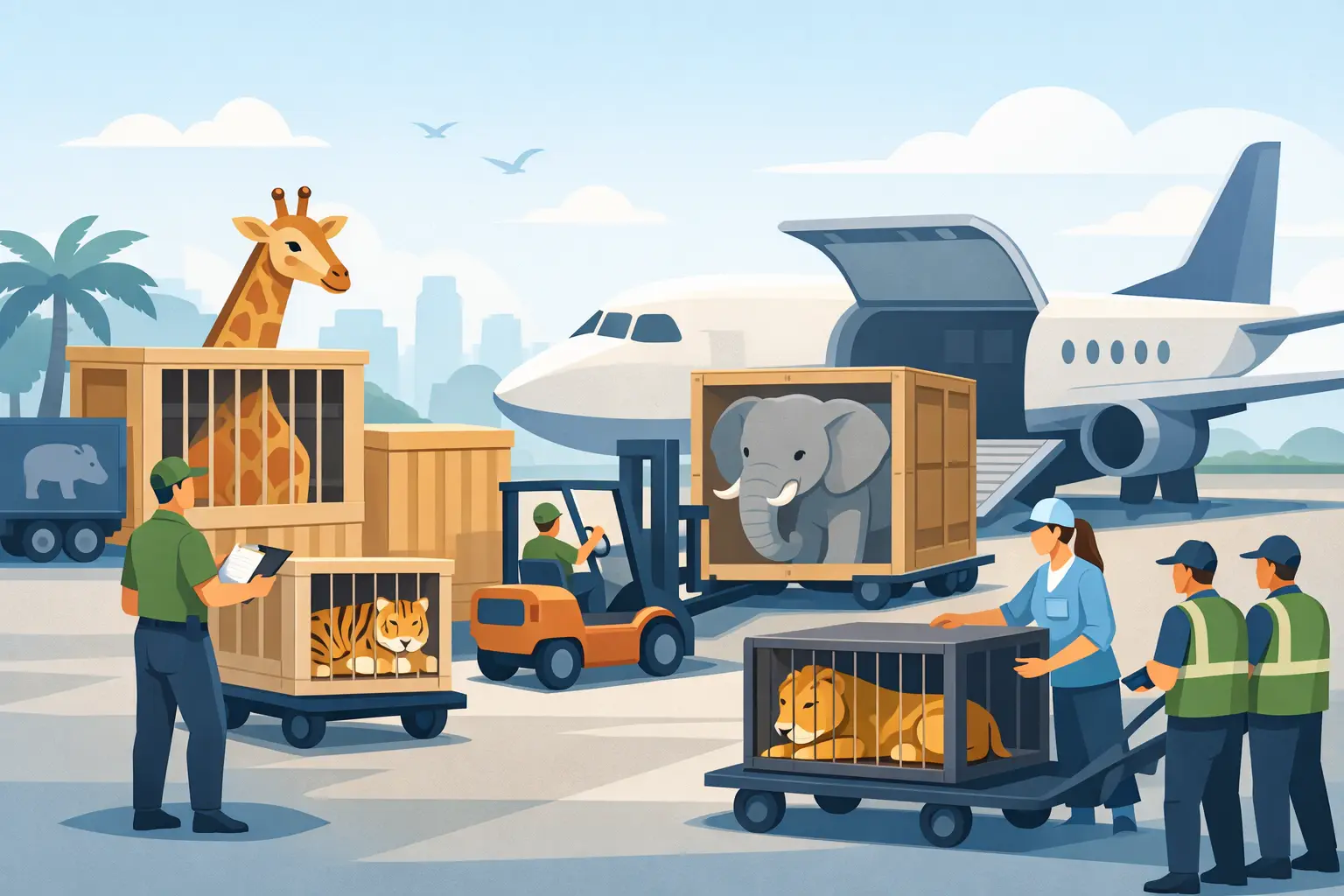
How to Relocate Zoo Animals Safely
A zoo animal move is never just a shipping job. It is a coordinated welfare operation where timing, enclosure design, veterinary oversight, route planning, and trained handling all have to work together without compromise. When institutions ask how to relocate zoo animals safely, the real answer starts long before transport day and continues well after arrival.
For zoos, aquariums, sanctuaries, and conservation programs, the stakes are high. A relocation may involve breeding recommendations, habitat renovations, medical transfers, emergency response, inter-zoo loans, or international conservation work. Each scenario changes the transport plan. A young hoofstock transfer does not follow the same protocol as a senior primate, a venomous reptile, or a cold-water marine species. Safe relocation depends on building the plan around the animal, not forcing the animal into a standard logistics model.
What safe zoo animal relocation really involves
The public often imagines transport as the most difficult part, but the vehicle or aircraft is only one piece of the operation. The broader task includes behavioral preparation, crate conditioning, veterinary documentation, regulatory review, environmental control, loading procedures, staffing, contingency planning, and arrival coordination.
That is why experienced animal transport teams work closely with veterinarians, curators, keepers, receiving institutions, airlines, charter operators, and government agencies. Every handoff matters. Small errors that might be manageable in general cargo can create serious welfare or safety issues when live zoological species are involved.
In practice, safe relocation means reducing stress wherever possible, maintaining species-appropriate conditions throughout transit, and protecting both the animal and the people handling it. It also means planning for what could go wrong. Weather delays, route changes, customs holds, and mechanical disruptions are all manageable only if the move has been designed with backup options from the beginning.
How to relocate zoo animals safely through pre-move planning
The safest relocations are usually the ones that look uneventful from the outside. That happens because the hard work was done in advance.
The first step is a full species and individual assessment. Teams need to understand not only the species but the specific animal’s age, sex, medical condition, social needs, transport history, behavioral triggers, and normal feeding and hydration patterns. A healthy adult big cat may tolerate one type of crate environment, while a geriatric individual with arthritis may need different flooring, loading angles, and rest timing.
Next comes route and mode selection. Ground transport can work well for shorter domestic transfers where vibration, temperature control, and handler access can be tightly managed. Air transport may reduce total travel time for long-distance or international moves, but it introduces additional coordination around airport handling, aircraft configuration, and timing on the tarmac. For aquatic species or large-scale marine life operations, chartered systems with life-support controls may be the only appropriate option.
Crate design is another major safety factor. The right enclosure must meet regulatory standards and species-specific welfare needs at the same time. It has to be secure, appropriately ventilated, and sized for safe posture and balance without allowing excessive movement that increases injury risk. Flooring, drainage, visual barriers, perch structures, partitioning, and access points all depend on the animal involved. For some species, reducing outside stimuli lowers stress. For others, airflow and visibility need a different balance.
Behavioral preparation can make a dramatic difference. Many institutions use crate familiarization before the move so the animal is not encountering a transport container for the first time under pressure. Positive reinforcement, routine exposure, and desensitization can reduce panic behaviors and support safer loading. This takes time, which is one reason rushed relocations carry higher risk.
Veterinary oversight and regulatory compliance
Veterinary clearance is central to humane transport. Before a move, the animal may need a physical exam, diagnostic review, vaccination checks, parasite screening, and certification for interstate or international travel. Sedation decisions also require careful judgment. In some cases, sedation is appropriate for safety or welfare. In others, it can create greater transport risk by affecting breathing, thermoregulation, or balance.
Health documentation must match the destination requirements exactly. Domestic transfers may involve state-level entry rules, while international relocation can require permits, quarantine arrangements, CITES documentation, import approvals, and species-specific health protocols. A paperwork error can delay release and extend confinement time, which is why compliance should never be treated as a last-minute task.
For endangered or highly regulated species, chain of custody and documentation standards become even more important. Institutions need a transport partner that understands the regulatory landscape and can coordinate the administrative side without losing focus on welfare.
Species-specific handling is where safety is won or lost
There is no universal playbook for zoo animals. The handling plan for a giraffe, a penguin, and a crocodilian will differ in almost every operational detail.
Large mammals often require specialized loading equipment, reinforced containers, and careful balance between restraint and freedom of movement. Hoofed species can be vulnerable to slipping, overheating, and stress-related injury. Primates may need stronger visual shielding, tighter biosecurity controls, and close behavioral monitoring. Carnivores require strict containment protocols and team discipline at every transfer point.
Birds present a different set of concerns. Feather condition, airflow, thermal stability, noise exposure, and light management can all affect welfare in transit. Reptiles and amphibians may depend even more heavily on narrow temperature and humidity ranges. Aquatic species add another level of complexity because the transport environment itself becomes a life-support system, with oxygenation, water chemistry, waste management, and temperature requiring active control.
Even social structure matters. Some animals travel best alone to reduce conflict or overstimulation. Others experience higher stress if separated from a bonded companion or established group. The right choice depends on the species and the individual history.
Managing the day of transport
Transport day should follow a written operational plan, not verbal assumptions. Roles need to be clear before anyone approaches the animal. Who is responsible for veterinary sign-off, loading supervision, route communication, temperature checks, security, and receiving coordination should be established in advance.
Timing matters more than many people realize. Moves are often scheduled to avoid peak heat, heavy traffic, crowded terminals, or long waiting periods. The goal is controlled movement from enclosure to crate, from crate to vehicle, and from vehicle to destination with as few unnecessary delays as possible.
Environmental monitoring should continue throughout the trip. That includes temperature, humidity where relevant, ventilation performance, noise and vibration exposure, and the animal’s visible condition. Feeding and hydration plans must reflect the species, trip length, and veterinary guidance. Overfeeding before transit can be as problematic as underfeeding, so these decisions need to be individualized.
Contingency planning is what separates routine transport from professional zoological logistics. Backup routes, emergency veterinary contacts, alternate holding facilities, spare equipment, and communication protocols should already be in place before departure. If conditions change, the team must be able to respond without improvising under pressure.
Arrival is not the end of the move
A relocation is only successful when the animal settles safely at the destination. Arrival procedures should minimize noise, crowding, and unnecessary handling. The receiving team needs the full transfer record, including travel duration, behavioral notes, feeding and hydration history, medications, and any in-transit observations.
Some animals benefit from immediate access to a quiet off-exhibit holding area before introduction to a permanent enclosure. Others need a more gradual transition to new sights, sounds, temperatures, or social groups. Veterinary follow-up may be required to assess hydration, muscle strain, appetite, respiratory condition, or stress response after travel.
Post-arrival observation is especially important because some transport-related issues do not appear during transit itself. Appetite changes, abnormal posture, pacing, respiratory signs, or delayed social stress may emerge later. Good relocation planning includes a handoff period where information continues to flow between the sending institution, the receiving institution, and the transport team.
Why expert coordination matters
When organizations consider how to relocate zoo animals safely, the biggest mistake is treating it as standard freight with a live-animal label attached. Zoological transport is a specialized discipline that combines welfare science, operational logistics, regulatory knowledge, and practical field experience.
An experienced transport provider helps reduce risk by anticipating the details others miss – crate specifications, weather windows, species-specific handling thresholds, airport coordination, customs timing, backup routing, and arrival readiness. That level of planning protects animal welfare and protects the institution from preventable disruption.
At Global Animal Transport, that approach is the standard for complex animal relocations across domestic and international routes. For zoos, aquariums, and conservation teams, the most reliable move is the one built around expertise, humane handling, and careful control at every stage.
If you are planning a zoological transfer, the right question is not simply how fast an animal can be moved. It is how carefully every mile can be managed so the animal arrives stable, protected, and ready for the next chapter.
