
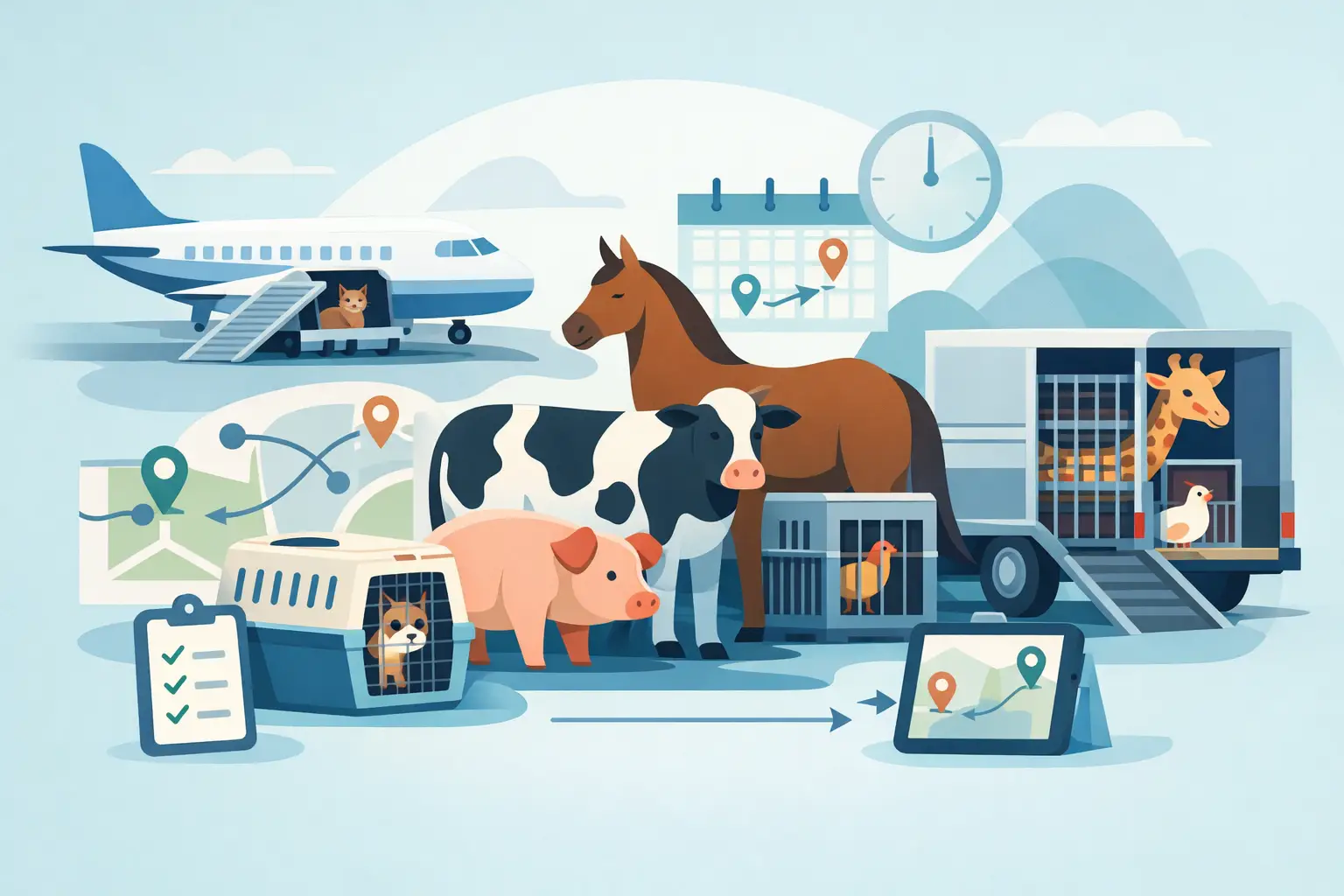
Species Specific Animal Transport Planning
When a transport plan treats every animal the same, problems start fast. A brachycephalic dog cannot be routed like a sporting breed. Tropical fish cannot be packed like reptiles. A sedated large cat, a lactating mare, and a shipment of day-old chicks each bring entirely different welfare, containment, timing, and regulatory needs. That is why species specific animal transport planning is not a premium add-on. It is the foundation of safe, humane, professional animal relocation.
For pet owners, breeders, zoos, aquariums, and agricultural operators, the stakes are high. The right plan protects health, reduces stress, satisfies legal requirements, and lowers the chance of delays that can compromise animal welfare. The wrong plan can create temperature exposure, feeding errors, transit-related illness, documentation issues, and handling failures that should have been prevented before departure.
What species specific animal transport planning really means
At its core, species specific animal transport planning means building the move around the animal rather than forcing the animal into a standard shipping process. That starts with biology and behavior. Species, breed, age, size, temperament, medical status, acclimation history, and travel tolerance all matter. So do practical details such as crate design, ventilation, noise exposure, light sensitivity, hydration intervals, loading methods, and whether direct routing is possible.
This approach also recognizes that transport is not one event. It is a chain of handoffs, environmental changes, and timing decisions. Ground pickup, holding times, airport operations, customs review, final delivery, and destination setup all affect the animal’s condition. A plan that looks adequate on paper may still be wrong if it ignores how a specific species responds to handling, confinement, motion, or temperature fluctuation.
Why generic transport plans create risk
Generic planning tends to focus on getting an animal from point A to point B. Professional planning focuses on what the animal needs at every stage in between. That distinction matters because transport risk is rarely caused by distance alone. It is usually caused by mismatch.
A crate may meet minimum size guidelines but still be unsafe for an animal that paws, charges, chews, or shifts its weight heavily in motion. A route may be technically available but expose a cold-sensitive reptile to dangerous transfer conditions. A same-day schedule may sound efficient but be inappropriate for livestock that need rest, monitoring, and carefully timed loading.
Even common household pets can require highly individualized plans. Senior pets, snub-nosed breeds, anxious animals, working dogs, and animals with recent surgery need different considerations than a healthy adult pet with prior travel experience. In more complex sectors, such as zoological transport or aquatic shipping, standardization becomes even less reliable because species-specific tolerances are narrower and regulations are often stricter.
The planning factors that change by species
Crating and containment
Containment is one of the clearest examples of why species expertise matters. Dogs and cats need secure, appropriately sized kennels with species-appropriate ventilation and absorbent setup. Birds may need perching considerations, visual shielding, or protection from drafts. Reptiles often require insulated containment with stable microclimates. Hooved animals need strength-rated stalls, load-bearing flooring, and loading methods that reduce panic and injury. Aquatic species may require oxygenation systems, temperature control, and water quality management throughout transit.
A container that works structurally may still fail behaviorally. Some animals need visual barriers to stay calm. Others become more stressed when visibility is restricted. Some species tolerate limited movement well, while others need posture adjustments to protect respiratory comfort or balance.
Climate and environmental control
Temperature planning is not just a weather check. It involves origin conditions, ramp exposure, transfer windows, destination climate, humidity, and species tolerance ranges. Heat-sensitive dogs, cold-sensitive exotics, neonates, aquatic life, and animals with compromised health each need different protection.
This is where route selection becomes a welfare decision. A longer route with better environmental control may be safer than the fastest route with multiple exposure points. For international moves, seasonal timing can be as important as carrier selection.
Feeding, hydration, and rest
Feeding schedules vary significantly across species and ages. Some animals should not travel immediately after a full meal. Others are at greater risk if fasting is excessive. Hydration planning is equally specific. Livestock, companion animals, birds, and aquatic species all require different monitoring strategies, and those strategies must match the trip length and mode of transport.
Rest periods also depend on the animal. Large mammals, horses, and many livestock movements demand close attention to loading density, footing, and recovery time. A plan that ignores fatigue may remain compliant while still falling short of good welfare practice.
Handling and human contact
Some animals calm with frequent human reassurance. Others become more agitated with excess interaction. Species specific animal transport planning accounts for handler approach, transfer methods, restraint needs, and escalation protocols if an animal becomes distressed.
This is especially important with exotic, zoological, or dangerous species, where handling errors can threaten both welfare and safety. But it matters for pets too. A fearful rescue dog and a social family Labrador do not experience loading in the same way, even if they are the same size.
Compliance is part of welfare, not separate from it
Transport planning also has to account for permits, health certificates, import rules, quarantine requirements, airline or charter criteria, and species-specific restrictions. These vary by destination, mode of transport, and animal category. For regulated wildlife, livestock, and aquatic species, documentation failures can create serious delays that place the animals at risk.
The most effective plans do not treat compliance as last-minute paperwork. They build schedules around document validity periods, inspection timing, customs processing, and destination acceptance rules. This is one reason experienced coordination matters so much in international animal relocation. A medically fit animal can still face welfare problems if it arrives before clearance is available or if destination housing is not prepared.
Different animal categories, different planning models
Household pet transport often centers on comfort, owner communication, and minimizing unnecessary transit stress. The plan may prioritize direct flights, safe crate familiarization, airport timing, and destination handoff reliability. Emotional reassurance matters here because families are entrusting a living companion, not a shipment.
Livestock transport adds different concerns, including group movement dynamics, biosecurity, loading density, recovery windows, and operational timing tied to farm schedules. Efficiency matters, but not at the expense of humane handling and condition on arrival.
Zoo and exotic animal moves require a deeper level of coordination. Species-specific security, permits, veterinary oversight, trained handlers, specialized equipment, and contingency planning are often non-negotiable. There may also be institutional coordination between sending and receiving facilities, with enclosure readiness and acclimation plans built into the transport timeline.
Aquatic transport is its own discipline. Fish, marine mammals, corals, and other water-dependent species are managed through water chemistry, oxygenation, insulation, and timing precision. Small deviations that seem minor in a standard cargo environment can be significant in aquatic life support conditions.
What a strong transport plan should include
A professionally managed plan usually begins with a detailed assessment, not a rate sheet. The transporter needs to understand the species, breed or subtype where relevant, medical status, dimensions, behavior, route, timing constraints, and destination requirements. From there, the plan should align the right mode of transport, containment setup, care schedule, documentation process, and contingency measures.
Contingencies are where true expertise often shows. Weather disruptions, carrier changes, customs delays, missed connections, and destination issues do happen. The question is whether the plan has already accounted for them. Animals cannot be managed like ordinary freight when operations change unexpectedly. They need backup options that still protect welfare standards.
For this reason, species expertise and logistics expertise need to work together. One without the other is not enough. A team may know the biology of the animal but fail the routing. Or it may know transportation systems but miss critical welfare risks. The safest outcomes come from integrated planning that treats both as equally important.
At Global Animal Transport, that balance is central to how complex relocations are handled across pet, livestock, aquatic, and exotic categories. The goal is not simply movement. It is controlled, humane movement supported by planning that fits the animal.
Choosing a transporter for species-specific moves
If you are evaluating a provider, ask how they adapt plans by species, age, behavior, and route conditions. Ask who handles documentation, how contingencies are managed, what kind of containment is used, and whether the company has real experience with your animal category. The right partner should be able to explain the reasoning behind the plan in clear terms, not rely on generic assurances.
This is one area where cheaper is not always safer. A lower quote may reflect shorter planning time, less specialized equipment, fewer monitoring provisions, or weaker contingency support. That does not mean every move needs the most complex option available. It means the plan should match the actual animal and the actual journey.
Every relocation brings its own variables, and good planning respects that. Whether the move involves a family dog, a breeding pair, a shipment of koi, or a zoological transfer, the best outcomes start when the transport strategy is built around the species first and the route second.
