
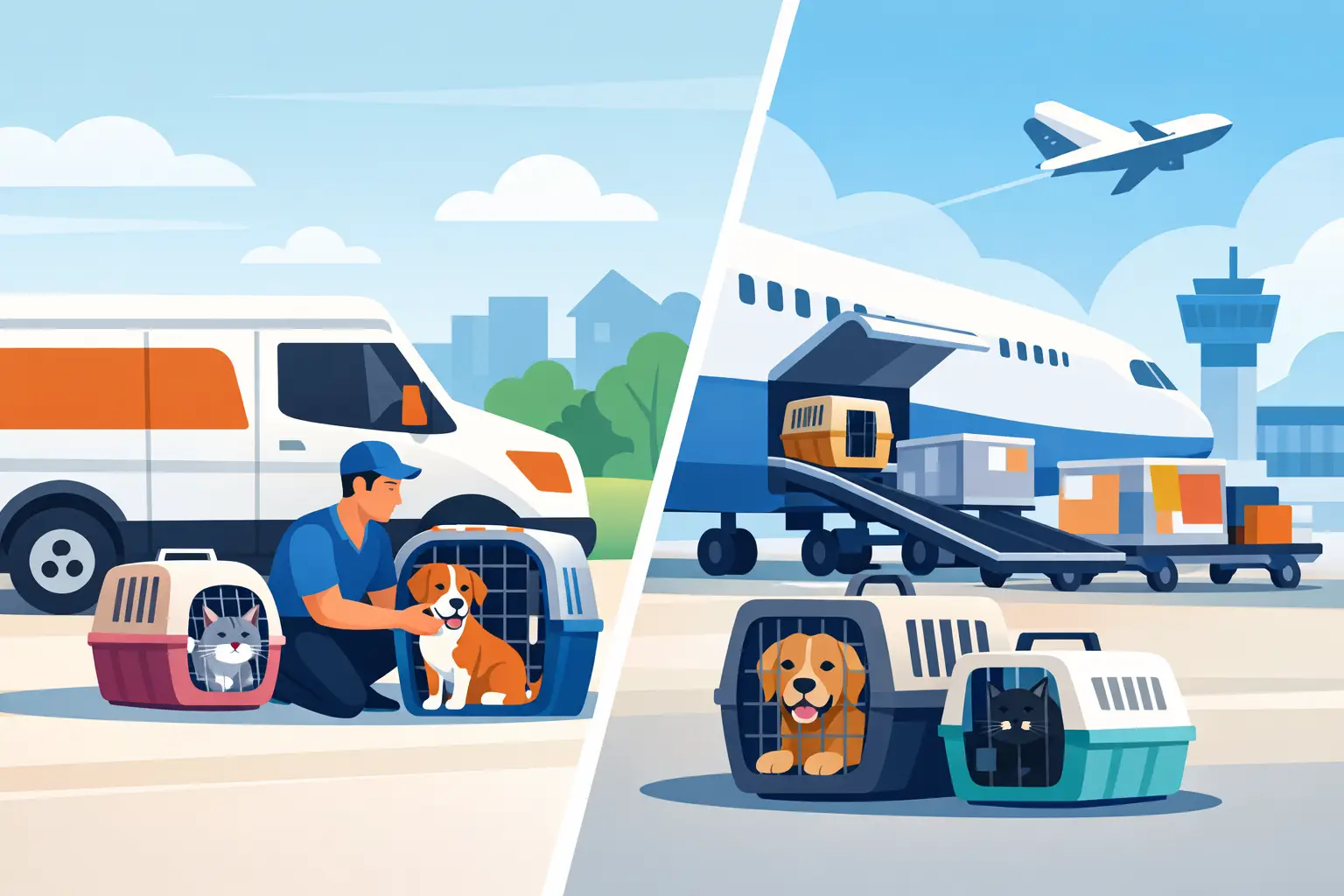
Pet Courier Versus Airline Cargo: Which Is Safer?
A pet’s travel plan can look simple on a booking confirmation and still involve dozens of welfare-critical decisions: crate size, temperature restrictions, airport acceptance times, import permits, layover handling, and who responds if a flight changes. The decision between pet courier versus airline cargo is not only about how an animal gets from one city to another. It is about the level of planning, oversight, and species-specific care behind that movement.
For a healthy dog or cat on a straightforward domestic route, either option may be appropriate. For an international move, a brachycephalic breed, a senior pet, multiple animals, or any animal with specialized needs, the distinction becomes much more significant.
What Airline Cargo Usually Means
Airline cargo transport means an animal travels as a live-animal shipment accepted by an airline’s cargo operation. The pet is housed in an airline-compliant travel crate and transported in a designated, pressurized, and temperature-controlled area of the aircraft when conditions allow. Depending on the airline and route, the shipment may be handled through a cargo terminal rather than a passenger check-in counter.
This can be a responsible and efficient choice when the route is direct, the airline accepts the species and breed, and the owner has completed every requirement correctly. Airline cargo is often the practical option for long-distance and international travel, especially when cabin travel is unavailable or inappropriate.
However, cargo service is not door-to-door care. The airline is responsible for the flight portion and its own acceptance procedures, but owners may still need to coordinate ground transportation, veterinary records, health certificates, crate preparation, customs clearance, import documentation, and pickup at the destination. A missed document, an unacceptable crate, or a weather-related embargo can stop the shipment before departure.
Airline policies also change. Seasonal heat and cold restrictions, aircraft type, route limitations, breed rules, and destination regulations can affect whether an animal is accepted on a particular date. A route that works one week may not be available the next.
What a Pet Courier Provides
A pet courier is a transport professional or company that manages some or all of an animal’s journey. Courier services vary widely. Some specialize in ground transportation, while others provide airport transfers, flight accompaniment where permitted, documentation coordination, customs support, boarding arrangements, or full relocation management.
The most valuable difference is coordination. Rather than asking an owner to connect each part of the move, a qualified courier can build an itinerary around the animal’s needs and manage the handoffs between home, veterinarian, airport, airline, border authorities, and destination delivery.
For many relocations, a courier may still use airline cargo for the actual flight. That means pet courier versus airline cargo is not always an either-or choice. Airline cargo is often the air transportation method; a courier is the professional layer that plans, prepares, monitors, and connects the entire move around it.
That distinction matters when details become complicated. A professional transport coordinator can identify problems before travel day, such as an incorrect microchip sequence for an import certificate, a crate that does not meet airline dimensions, or a connection that leaves too little time for live-animal transfer.
Pet Courier Versus Airline Cargo: The Real Differences
The right option depends on the route and the animal, but several practical differences help clarify the decision.
Oversight before and after the flight
With airline cargo booked directly, the owner generally assumes responsibility for preparing the pet and getting the shipment to and from cargo facilities. This can work well for experienced travelers on simple routes. It also requires close attention to cutoff times, paperwork validity, terminal procedures, and destination pickup rules.
With a courier-led move, the transport team can coordinate pre-travel steps and ground logistics. The scope should be clear in writing. Some services provide pickup and delivery only, while others manage veterinary scheduling, document review, export procedures, customs clearance, and final delivery. Never assume that “door-to-door” includes every regulatory requirement without confirming it.
Welfare planning
Airlines follow established live-animal handling processes, but airline service is necessarily standardized. A courier can add planning tailored to the individual animal: selecting a lower-risk route, timing airport arrival to avoid prolonged waiting, arranging an appropriate vehicle transfer, and confirming that feeding, watering, and exercise plans suit the trip.
This is especially relevant for anxious pets, young animals, large-breed dogs, animals traveling in pairs, and species outside ordinary household pet transport. Welfare planning should also account for the animal’s temperament, medical condition, acclimation to the crate, and ability to tolerate travel. A veterinarian should advise on fitness to fly. Sedation is generally discouraged for air travel unless specifically directed by a veterinarian and accepted under applicable airline policies.
International compliance
International relocations can involve import permits, vaccinations, microchip records, government-endorsed health certificates, parasite treatments, customs declarations, and destination-specific timing windows. Requirements may differ by species, country, transit point, and even the animal’s origin.
Booking airline cargo does not remove these obligations. A knowledgeable courier or animal logistics provider can help organize the process, but owners and institutions should still provide accurate records early. Compliance failures can lead to denied boarding, extended holding, quarantine, return transport, or other costly disruptions.
Cost and value
Direct airline cargo booking may appear less expensive because it covers a narrower portion of the journey. A courier-managed service often costs more because it includes expertise, coordination, ground handling, documentation support, and active problem-solving.
The lower upfront price is not always the lower total cost. Consider the consequences of a rejected crate, canceled shipment, missed health certificate window, rebooked flight, or unexpected destination handling fee. For a simple domestic move, direct cargo may offer good value. For a regulated or time-sensitive international relocation, professional management can protect both the animal and the overall budget.
When Direct Airline Cargo May Be Appropriate
Direct airline cargo can be a sensible option when the pet is healthy and accustomed to its travel crate, the route is nonstop or has a well-managed connection, and the owner is comfortable completing the required preparation. It is often best suited to uncomplicated domestic trips where airline policies are clear and airport transfers are easy to arrange.
Owners should still confirm the exact airline acceptance rules before making plans. Ask about crate standards, check-in deadlines, weather restrictions, live-animal terminal hours, feeding and watering instructions, and what happens if the flight is delayed or canceled. Obtain details for the specific route rather than relying on general online guidance.
When a Courier-Led Move Is the Better Choice
A professionally managed courier service is often worth considering when a pet’s trip has more than one point of risk. International moves, rural pickups, complex connections, multiple pets, restricted breeds, tight document timing, and destination customs requirements all create opportunities for mistakes if one person is trying to manage every step alone.
It is also the stronger choice for organizations moving animals with specialized welfare needs. Zoos, aquariums, breeders, conservation programs, and livestock operators may require purpose-built containers, specialized support systems, charter planning, permits, and handlers familiar with the species. These shipments should never be treated as standard cargo.
At Global Animal Transport, relocation planning begins with the animal, the route, and the regulatory requirements rather than a one-size-fits-all booking. That approach helps match the transport method to the welfare needs of the shipment.
Questions to Ask Before You Choose
Before selecting direct airline cargo or a courier, ask who is responsible for each stage of the trip. Confirm who reviews documents, supplies or approves the crate, arranges airport transfers, handles customs procedures, and responds to disruptions outside normal business hours.
Also ask how the provider evaluates route safety. The shortest itinerary is not always the best one. A slightly longer route with a reliable live-animal facility, favorable weather conditions, and fewer transfers may be the more humane choice.
Finally, be cautious of guarantees that sound too broad. No responsible provider can promise that weather, airline operations, or border authorities will never cause a delay. What a capable transport partner can provide is a realistic plan, clear communication, compliant preparation, and a practiced response when conditions change.
Your pet is not simply a shipment with a destination code. Choose the arrangement that gives their specific journey the care, preparation, and experienced oversight it deserves.
