
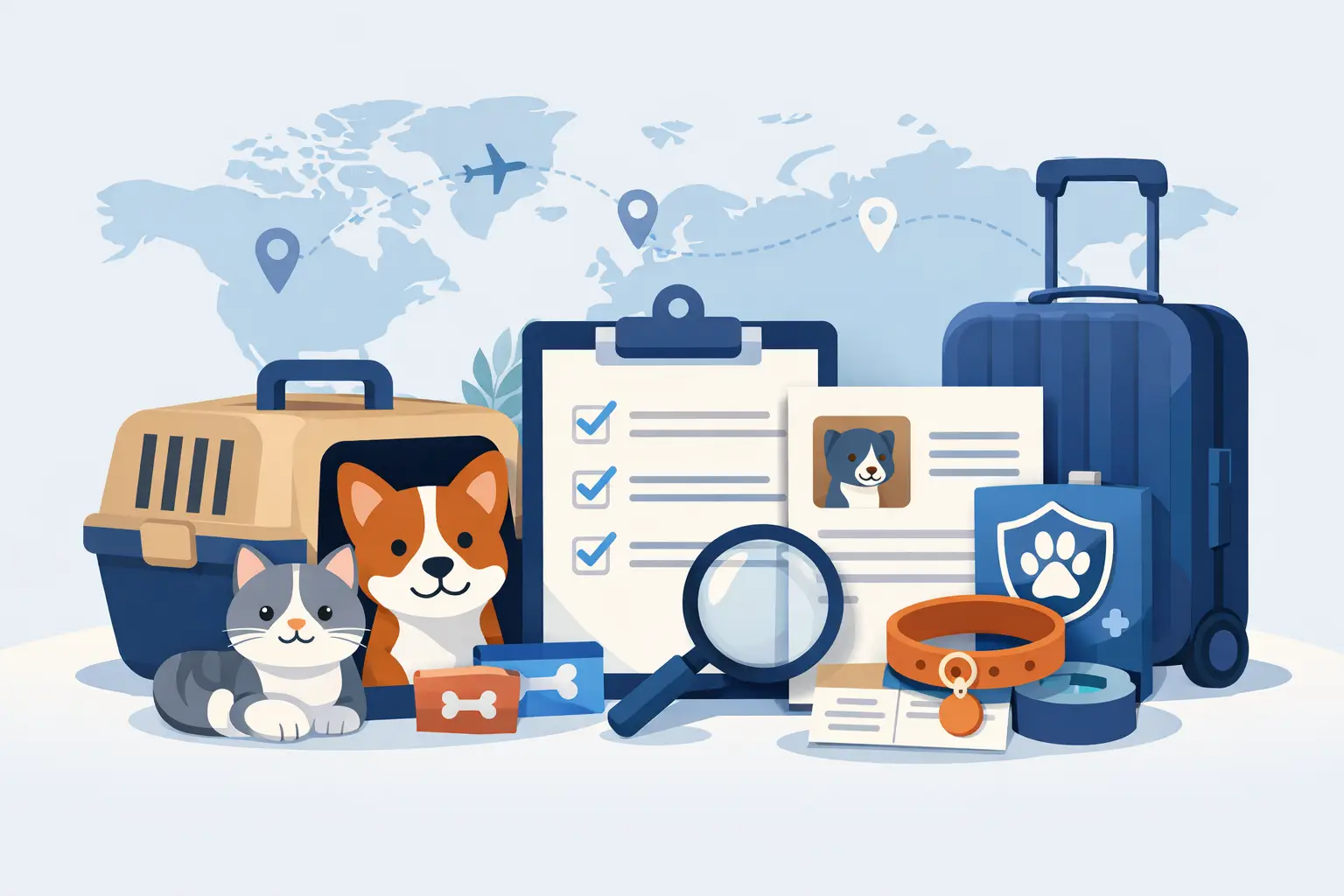
Pet Travel Documents Checklist for Safe Moves
A missing signature, an expired rabies vaccine, or a health certificate issued one day too early can stop a pet’s trip before it begins. This pet travel documents checklist helps owners prepare for domestic and international transport with the same care they give their animal’s comfort, crate, and travel schedule.
Document requirements are not universal. They change based on the animal’s species, age, origin, destination, travel method, airline, and whether the move is commercial or personal. A dog flying between two U.S. states may need far less paperwork than a cat relocating overseas, while birds, reptiles, and other regulated species can require additional permits long before departure.
Start the Pet Travel Documents Checklist Early
International planning should begin as early as possible, ideally several months before travel. Some destinations require specific vaccinations, blood tests, parasite treatments, import approvals, or waiting periods that cannot be compressed. A health certificate alone does not override those rules.
Domestic moves can move faster, but they still require planning. Airlines may require veterinary documentation, and some states or territories have entry rules for dogs, cats, livestock, or other animals. Hawaii and U.S. territories, for example, may have more detailed animal-entry requirements than travel within the continental United States.
Start by confirming four facts: where your pet is leaving from, the final destination, every transit country or airport, and the method of transport. A connecting country can have its own requirements, particularly when an animal changes aircraft, enters a holding facility, or experiences an extended layover.
Core Documents for Most Dogs and Cats
Most pet moves begin with a small set of essential records. Keep the originals organized in a protective travel folder, and retain clear digital copies in case documents are misplaced during the journey.
The documents commonly requested include:
- Current rabies vaccination certificate, with vaccine manufacturer, lot number, administration date, expiration date, and veterinarian details
- Veterinary health certificate or certificate of veterinary inspection issued within the required travel window
- Permanent identification records, including microchip number and implantation date when applicable
- Import permit or entry authorization from the destination country, state, or territory
- Airline booking confirmation and any required live-animal acceptance paperwork
- Owner identification, contact information, and destination address
A vaccination record is not always the same as a rabies certificate, and a routine wellness exam is not always sufficient for a travel health certificate. Authorities and carriers may require particular language, official forms, accredited veterinary signatures, or government endorsement. Small formatting gaps can create major delays.
For a pet with a microchip, verify that the chip can be scanned and that the number matches every document exactly. In many destinations, the microchip must be implanted before the rabies vaccination is administered. If the order is reversed, the vaccination may not be accepted for import purposes even if it is otherwise current.
Health Certificates and Government Endorsement
The health certificate is often the time-sensitive document that requires the closest coordination. A veterinarian examines the animal and certifies that it appears healthy enough for transport, but the certificate must be completed within the validity period set by the airline or destination authority. That period may be several days, 10 days, or another specified timeframe.
For certain international destinations, the certificate must be endorsed by a government veterinary authority after the veterinarian signs it. Endorsement confirms that the paperwork meets the destination’s import protocol. It can add processing time, so the appointment, certificate issuance, and endorsement schedule need to be planned as one sequence.
Do not schedule the veterinary visit based only on the departure date. Work backward from the destination’s rules, including business days, holidays, courier time if documents must be sent for endorsement, and the airline’s cargo acceptance deadline. A certificate issued too soon can expire before arrival. One issued too late may not allow enough time for endorsement.
International Requirements That Often Cause Delays
International pet transport is not simply domestic travel with a longer flight. Entry procedures can include disease-control measures, customs requirements, and animal welfare rules. The destination country sets the standard, and requirements can change without much notice.
Depending on the route and animal, your documentation may need to include rabies titer test results, parasite treatment records, proof of residency, a transit permit, an import license, or a declaration of non-commercial movement. Some destinations also require advance notification of arrival so inspection staff are available.
Quarantine is another consideration. Some countries impose quarantine when documentation is incomplete, health conditions are not met, or advance requirements have not been satisfied. In the most serious cases, an animal can be refused entry and returned to origin at the owner’s expense. Early verification protects both the pet and the travel plan.
Breed restrictions, age limits, and prohibited-species rules should also be checked before flights and veterinary appointments are booked. These restrictions may apply even when an animal has all standard health paperwork. For exotic pets, birds, reptiles, and protected wildlife, species-specific documentation may be more complex than the travel arrangements themselves.
Airline Paperwork and Crate Information
Airlines have their own live-animal policies in addition to government entry requirements. They may request an airline-specific health certificate, a shipper’s certification, feeding and watering instructions, emergency contact information, or a signed statement that the animal is fit for travel.
The pet’s crate should be properly labeled with identification and handling information. Include the animal’s name, owner and consignee contact details, routing information, and feeding instructions where required. Labels should be legible, waterproof, and consistent with the paperwork. A mismatch between the crate label, booking, and health certificate can slow acceptance at the cargo facility.
Airline rules also affect timing. Cargo acceptance may close several hours before departure, and weather restrictions can alter plans for brachycephalic breeds, young animals, senior pets, or animals traveling during extreme temperatures. Documentation may remain valid while an airline schedule changes, so maintain flexibility where possible.
Keep Copies With the Right People
Original documents should travel with the animal or be presented according to carrier and destination instructions. The owner should also retain copies, particularly when a pet is traveling separately or being received by a family member, agent, breeder, or relocation representative.
Provide the receiving party with a complete document set before travel. They should know the flight details, arrival procedures, inspection location, local contact information, and any fees that must be paid before release. This matters even more when pets are arriving in a country where the owner will not be present at the airport.
Digital copies are helpful, but they do not replace originals when an authority requires official signatures, stamps, or endorsements. Save scanned copies in an accessible location and print an additional set for the travel folder.
When Professional Coordination Is Worth It
A straightforward domestic trip may be manageable with direct planning between the owner, veterinarian, and airline. The calculation changes when a move involves international entry, complex transit, multiple pets, restricted breeds, special medical needs, or species with specialized permits.
Professional animal transport coordination helps align the paperwork timeline with veterinary appointments, airline cargo requirements, crate preparation, customs procedures, and destination handling. At Global Animal Transport, planning is built around humane handling and route-specific compliance because documentation is only one part of protecting an animal through a move.
Before departure, review every name, microchip number, date, signature, and destination address one final time. That quiet review can be the difference between a calm handoff and an avoidable delay, giving your pet the best possible start in its new home.
