
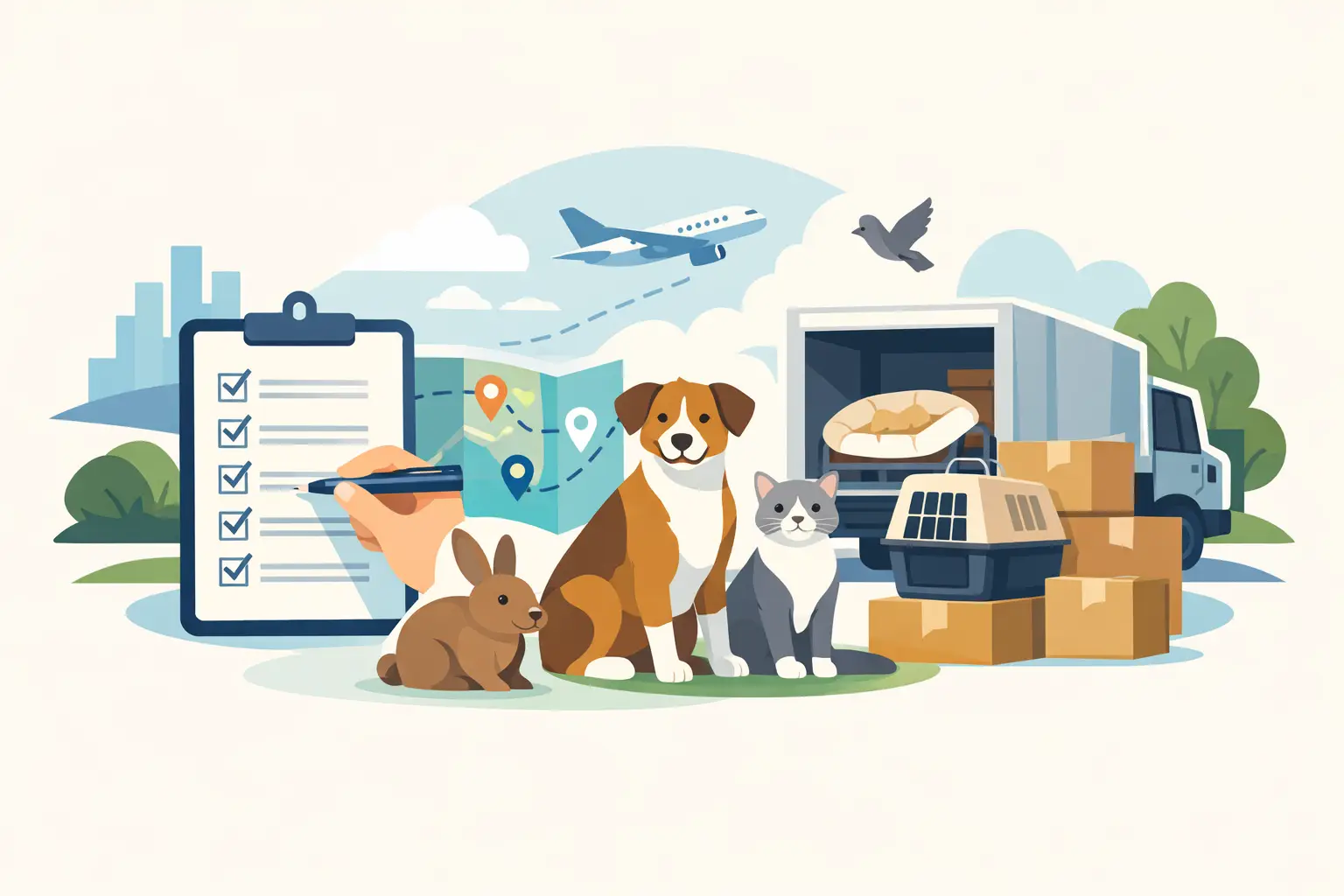
Animal Relocation Checklist for Safe Moves
When an animal has to move, small oversights can turn into serious problems fast. A complete animal relocation checklist helps prevent delays, reduce stress, and protect welfare at every stage, whether you are moving a family dog across state lines or coordinating a regulated international transfer for livestock, fish, or zoological species.
Animal transport is never one-size-fits-all. A cat, a horse, a reef fish shipment, and a zoo primate all have very different care, containment, and compliance needs. The right checklist is not just about packing and paperwork. It is about matching the transport plan to the species, route, timing, and regulatory environment so the animal arrives safely and in stable condition.
What an animal relocation checklist should cover
A useful checklist starts with the basics, but it also accounts for the details that often cause last-minute disruption. That includes travel documents, crate or enclosure standards, feeding and watering plans, temperature control, routing, and handoff coordination.
For household pets, the process may center on health certificates, vaccination records, approved travel kennels, and arrival timing. For breeders, livestock operators, aquariums, or conservation programs, the checklist expands quickly. Permits, species-specific handling requirements, quarantine rules, customs clearance, and specialized life-support systems may all be part of the move.
That is why the first step is always defining the move itself. Are you relocating domestically or internationally? Is the animal traveling by commercial air cargo, private charter, ground transport, or ocean shipment? Is this a single-animal move or a multi-animal operation? Every answer changes the planning requirements.
Start with the animal, not the route
The strongest relocation plans begin with the animal’s condition and needs. Age, species, breed, temperament, medical history, and travel tolerance should all be reviewed before transport is booked. A brachycephalic dog may require extra caution with airline options. An exotic reptile may need strict thermal management. A marine shipment may require oxygenation, water quality controls, and tightly managed transit windows.
This is also the point to assess whether the animal is fit to travel. Recent surgery, advanced pregnancy, injury, respiratory issues, or chronic stress can affect transport readiness. In some cases, delaying the move is the safer decision. In others, the route or method should be adjusted to reduce handling time or environmental exposure.
A checklist that ignores these realities is incomplete. Safe relocation starts by understanding the live cargo involved and planning around welfare, not convenience.
Health records, permits, and compliance
One of the most common causes of transport disruption is incomplete documentation. Your animal relocation checklist should include a full review of required health and legal records well before the departure date.
For pets, this often includes vaccination records, recent veterinary exams, interstate or international health certificates, and microchip confirmation if required by the destination. For livestock, zoological animals, birds, or exotics, the document set may include import permits, ownership records, testing results, quarantine approvals, and agency-specific transport authorizations.
International shipments add another layer. Country rules vary widely, and they can change with little notice. Some destinations require specific treatments within strict time windows. Others require original paperwork, embassy endorsements, or pre-approved port entry. Aquatic and wildlife shipments may face additional review based on species protection, biosecurity, or environmental risk.
The practical takeaway is simple: document prep should start early. If the route crosses borders or involves regulated species, expert review is not optional. It is part of responsible planning.
Containment, crate training, and enclosure readiness
Transport equipment should never be an afterthought. The crate, kennel, stall, tank system, or species-specific container must match both the animal and the mode of transport. Size matters, but so do ventilation, structural integrity, absorbent materials, secure closures, and compatibility with carrier or regulatory standards.
For pets, crate acclimation can make a major difference. An animal that has never spent time calmly inside a travel kennel may experience unnecessary anxiety on departure day. Gradual crate training ahead of the move helps build familiarity and reduces resistance during loading and transit.
For large animals and institutional moves, containment planning is more technical. Horses may need route-specific stall arrangements and loading protocols. Zoo animals may require reinforced enclosures, transfer chutes, sedation planning where appropriate, and trained handling teams. Aquatic species may need insulated containers, oxygen supply, filtration support, and exact water chemistry controls.
The checklist here is not just, do we have a container? It is, has the container been selected, prepared, tested, and approved for this exact animal and route?
Feeding, hydration, and timing
Transport timing affects animal welfare more than many owners expect. Feeding schedules, water access, rest intervals, and departure windows should all be built into the plan.
Some animals should not eat immediately before departure because of motion sensitivity, stress, or waste management concerns. Others require carefully scheduled nutrition because of age, metabolism, or species biology. Hydration planning also varies. A dog on a short domestic trip and a fish shipment moving internationally will have entirely different hydration and environmental needs.
Temperature is equally important. Heat exposure on tarmacs, cold conditions during winter transfers, and long wait times between connections can create avoidable risk. Whenever possible, routing should reduce unnecessary layovers and handling points. Direct routes are not always available, but fewer transfers generally mean fewer variables.
If the move is complex, build a schedule backward from arrival. That helps define the latest acceptable veterinary exam date, the document completion timeline, crate preparation, and pickup windows.
The handoff points matter as much as the flight
A relocation plan can look solid on paper and still fail during transitions. Pickup, check-in, customs inspection, ground transfer, and final delivery are often where errors happen. Animals may face noise, waiting periods, unfamiliar handlers, and environmental changes at every handoff.
Your checklist should name who is responsible at each stage. Who verifies documents before departure? Who monitors the animal in pre-transport holding? Who receives the shipment at arrival? Who is authorized to clear customs or manage quarantine admission if required?
For institutional clients and high-value or sensitive species, those answers should be confirmed in writing. For individual pet owners, clarity still matters. Even a routine domestic move benefits from knowing exactly where the animal is going, who is handling them, and what the arrival process will look like.
This is one reason professional coordination matters. At Global Animal Transport, planning is built around these transition points because they are critical to both compliance and humane handling.
A practical animal relocation checklist before departure
Before travel day, confirm six essentials. The animal has been assessed as fit for transport. All required health records and permits are complete and current. The crate or enclosure meets species and carrier requirements. Feeding, watering, and environmental controls are clearly planned. Every transfer point has a responsible contact. Arrival arrangements, including pickup, quarantine, or receiving protocols, are already confirmed.
If even one of those areas is uncertain, the move is not fully ready.
When the checklist needs professional oversight
Some moves are manageable with straightforward preparation. Others carry enough complexity that experienced transport support is the safer path. International pet relocation often falls into this category because of changing import rules and timing-sensitive documents. So do livestock movements, zoological transfers, conservation shipments, and aquatic transport.
The bigger the logistical chain, the more coordination matters. Charter flights, multi-country routings, large mammals, delicate marine life, and endangered species all require planning that goes well beyond a generic moving checklist. The transport provider should understand not just shipping mechanics, but animal behavior, containment standards, regulatory pathways, and contingency response.
That level of oversight protects more than the schedule. It protects the animal.
What owners and institutions should expect from a transport plan
A well-run relocation process should feel organized, transparent, and species-aware. You should know what documents are needed, what equipment will be used, how the route was selected, and what welfare safeguards are in place. You should also get honest answers about trade-offs. The fastest option is not always the least stressful. The cheapest route may introduce more handling. Sedation, special feeding changes, or seasonal timing adjustments may or may not be appropriate depending on the species.
Good planning is not about forcing every move into the same template. It is about making informed decisions around the real needs of the animal and the realities of transport.
If you are preparing for a move, treat the checklist as more than paperwork. It is your first line of protection for a safe, humane relocation, and the earlier it is built correctly, the better the journey will be for everyone involved.
