
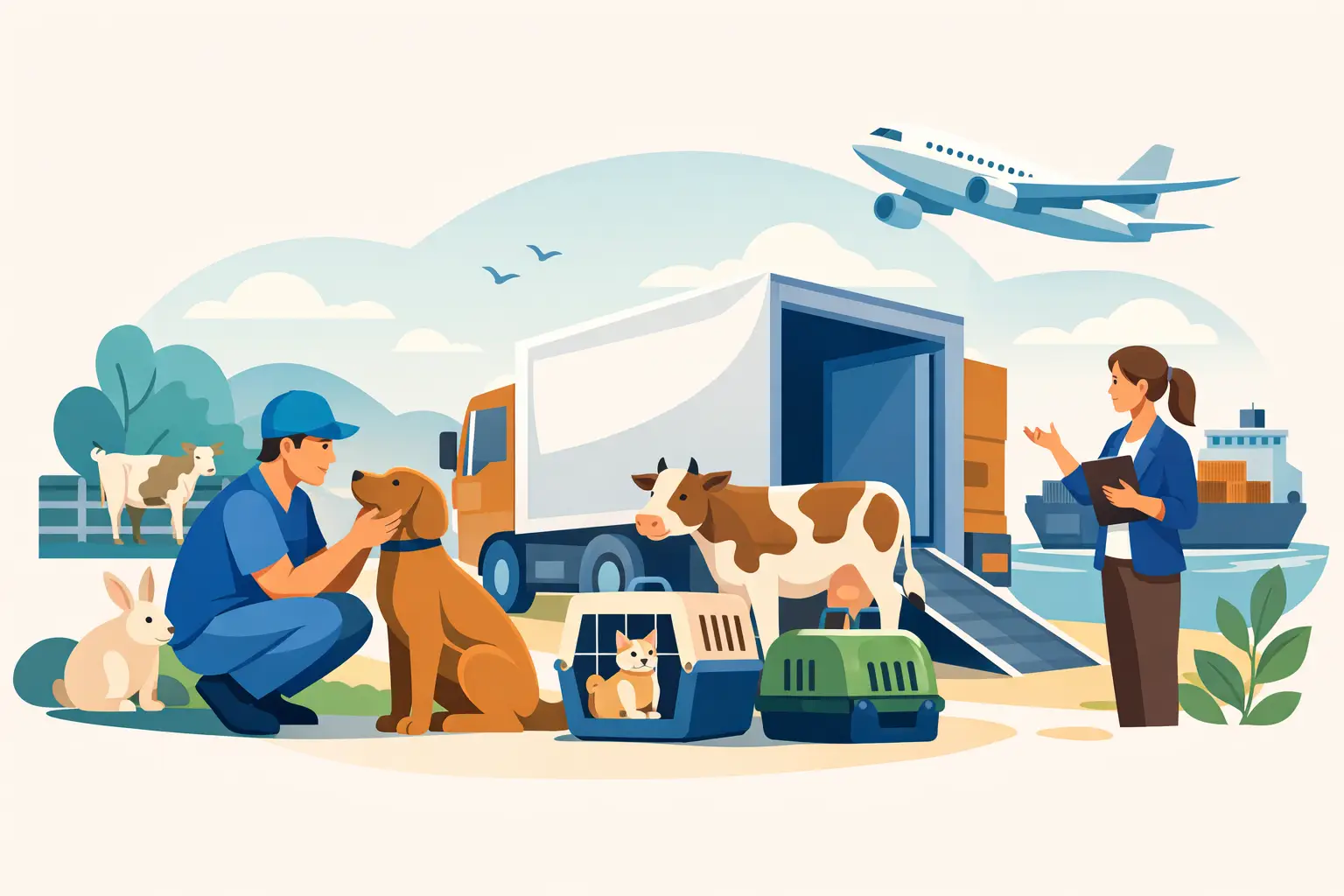
Best Practices for Animal Acclimation Before Transport
A transport crate placed in the home a few days before departure can make the difference between an animal entering calmly and resisting at the last moment. The best practices for animal acclimation begin well before loading, whether the traveler is a family dog, breeding horse, aquarium specimen, livestock group, or zoological animal. Effective acclimation is not simply getting an animal used to a container. It is a planned process that reduces unfamiliarity, protects welfare, and gives handlers reliable information about the animal’s condition before travel begins.
Start Acclimation Early Enough to Observe Behavior
The appropriate timeline depends on the species, temperament, travel distance, and transport method. A confident adult dog moving domestically may need only several days of positive crate exposure. A sensitive cat often benefits from a longer, quieter introduction. Large mammals, livestock, birds, reptiles, and zoological species may require a formal conditioning program over weeks or months, particularly when they must accept specialized crates, stalls, restraint systems, feeding routines, or loading procedures.
Starting early provides time to identify problems without creating a departure-day crisis. An animal that refuses food in a new enclosure, becomes agitated around a ramp, or reacts poorly to engine noise may need adjustments to its plan. Waiting until the travel date limits safe options and can increase stress for both the animal and the people responsible for its care.
Acclimation should be gradual. Introduce one unfamiliar element at a time, then allow the animal to settle before adding another. For example, first allow a pet to investigate an open crate, then offer meals inside it, then briefly close the door, and later practice calm periods with the crate moved or loaded into a vehicle. Rushing from introduction to confinement can create a negative association that is difficult to reverse.
Make the Transport Environment Familiar and Positive
A properly sized, species-appropriate transport enclosure is central to animal welfare. It must provide enough room for the animal to stand, turn around, and rest in a natural position when appropriate for that species. It also needs secure construction, proper ventilation, safe flooring, and a design suited to the transport mode and applicable carrier requirements.
Place the enclosure in a familiar, low-traffic area whenever possible. Let the animal approach it voluntarily. Bedding, a familiar scent, and calm handling can help household pets accept the space. For some animals, familiar items are useful; for others, especially where biosecurity requirements apply, new and sanitary materials may be necessary. The right choice depends on the species, destination rules, and veterinary guidance.
Positive reinforcement is especially valuable for animals that can be trained with food rewards, preferred browse, toys, or gentle social interaction. Never force an animal into a crate simply to complete a practice session. The goal is not only physical compliance. It is a calm, repeatable response that can be safely maintained when professional handlers take over.
Practice the Sensations of Travel
The enclosure is only one part of the experience. Animals may encounter vehicle movement, vibration, unfamiliar sounds, altered lighting, new caretakers, temperature changes, and longer intervals between normal routines. Carefully staged exposure helps reduce the shock of those changes.
For pets, this may include short vehicle rides after crate conditioning. For horses or livestock, it may involve supervised ramp work, standing quietly in a trailer, and experiencing safe, short trips before a longer journey. For birds, reptiles, aquatic animals, and exotic species, acclimation may center on stable environmental parameters, reduced visual stimulation, secure containment, and species-specific handling protocols rather than vehicle practice.
Each practice session should end before the animal becomes overwhelmed. Watch for persistent vocalization, escape attempts, refusal to eat, abnormal posture, excessive salivation, aggression, lethargy, or changes in breathing. A single sign does not always mean travel is unsafe, but it does signal that the plan may need more time or professional review.
Build Health and Documentation Into the Plan
Acclimation works best when it is coordinated with veterinary preparation, not treated as a separate task. Schedule any required health evaluations early enough to address findings before departure. Vaccination records, health certificates, import permits, identification records, laboratory testing, quarantine arrangements, and carrier documentation can all affect the travel timeline.
International relocations demand particular attention because destination requirements can be strict and time-sensitive. Requirements vary by country, species, origin, and purpose of movement. A pet moving with its owner faces a very different process from a zoo animal traveling under conservation permits or livestock moving under agricultural health controls. Documentation should be verified against the current requirements for the full route, including transit points where applicable.
Discuss feeding, hydration, medication, and sedation with a qualified veterinarian and the transport team. Sedation is not a routine solution for travel anxiety. It can affect balance, breathing, temperature regulation, and an animal’s ability to respond to its surroundings. When medication is medically appropriate, it should be part of a documented plan with clear instructions for trained personnel.
Best Practices for Animal Acclimation by Transport Category
Species needs cannot be treated as interchangeable. The following principles help shape a more appropriate acclimation program:
- Household pets benefit from calm crate conditioning, familiar routines, short practice rides, and clear handoff instructions for food, medication, and comfort needs.
- Horses and other large animals need safe loading practice, confidence around ramps and partitions, appropriate stall or crate dimensions, and a plan for monitoring hydration and footing.
- Livestock transport planning should account for group behavior, stocking density, ventilation, biosecurity, rest needs, and the risks of mixing unfamiliar animals.
- Birds, reptiles, and exotic animals often require precise control of temperature, humidity, light exposure, containment, and handling frequency.
- Aquatic animals and fish need stable water quality, oxygen management, temperature control, appropriate packing density, and fast coordination between origin and receiving systems.
These categories can overlap, but the central rule remains the same: prepare the animal for the actual conditions it will experience, not a generic version of travel. A crate that works for a dog may be unsuitable for a brachycephalic breed. A packing protocol suitable for hardy freshwater fish may be unsafe for delicate marine species. Expert planning begins with the animal in front of you.
Keep Routines Steady Before Departure
The final days before transport should be predictable. Maintain normal feeding and exercise patterns unless the veterinarian or transport plan calls for a specific adjustment. Avoid introducing major changes such as a new diet, an unfamiliar boarding environment, or excessive visitors immediately before departure.
Owners and caretakers should also prepare concise written instructions. Include the animal’s normal behavior, dietary needs, medical history, identification details, medications, handling sensitivities, and emergency veterinary contacts. For institutional moves, records may also include behavioral cues, husbandry protocols, social grouping information, and receiving-facility requirements.
Departure-day handling should be calm and deliberate. Build in enough time to avoid rushing, but avoid repeated goodbyes or prolonged activity around the enclosure. Animals often respond to human tension. A quiet, organized handoff supports the conditioning work completed beforehand.
Plan for Acclimation After Arrival
A successful transport plan does not end when the animal reaches its destination. The receiving environment should be ready before arrival, with secure housing, appropriate temperature and lighting, clean water, suitable food, and trained staff or family members prepared to receive the animal.
Post-arrival acclimation may be brief for some pets and extensive for animals entering a new herd, zoo habitat, aquarium system, breeding program, or climate. Limit unnecessary handling at first and monitor appetite, hydration, elimination, posture, activity level, and interaction with other animals. Introductions to resident animals should be managed cautiously, especially where disease prevention, territorial behavior, or social hierarchy are concerns.
For complex domestic and international relocations, Global Animal Transport coordinates species-specific preparation with the larger logistics plan, from suitable containment and handling arrangements to scheduling and destination readiness. The objective is not simply to move an animal from one location to another. It is to protect comfort, safety, and continuity of care throughout the journey.
The most helpful next step is to begin the conversation early. With enough preparation time, animal owners and institutions can replace last-minute uncertainty with a measured acclimation plan that respects the animal’s needs at every stage.
