
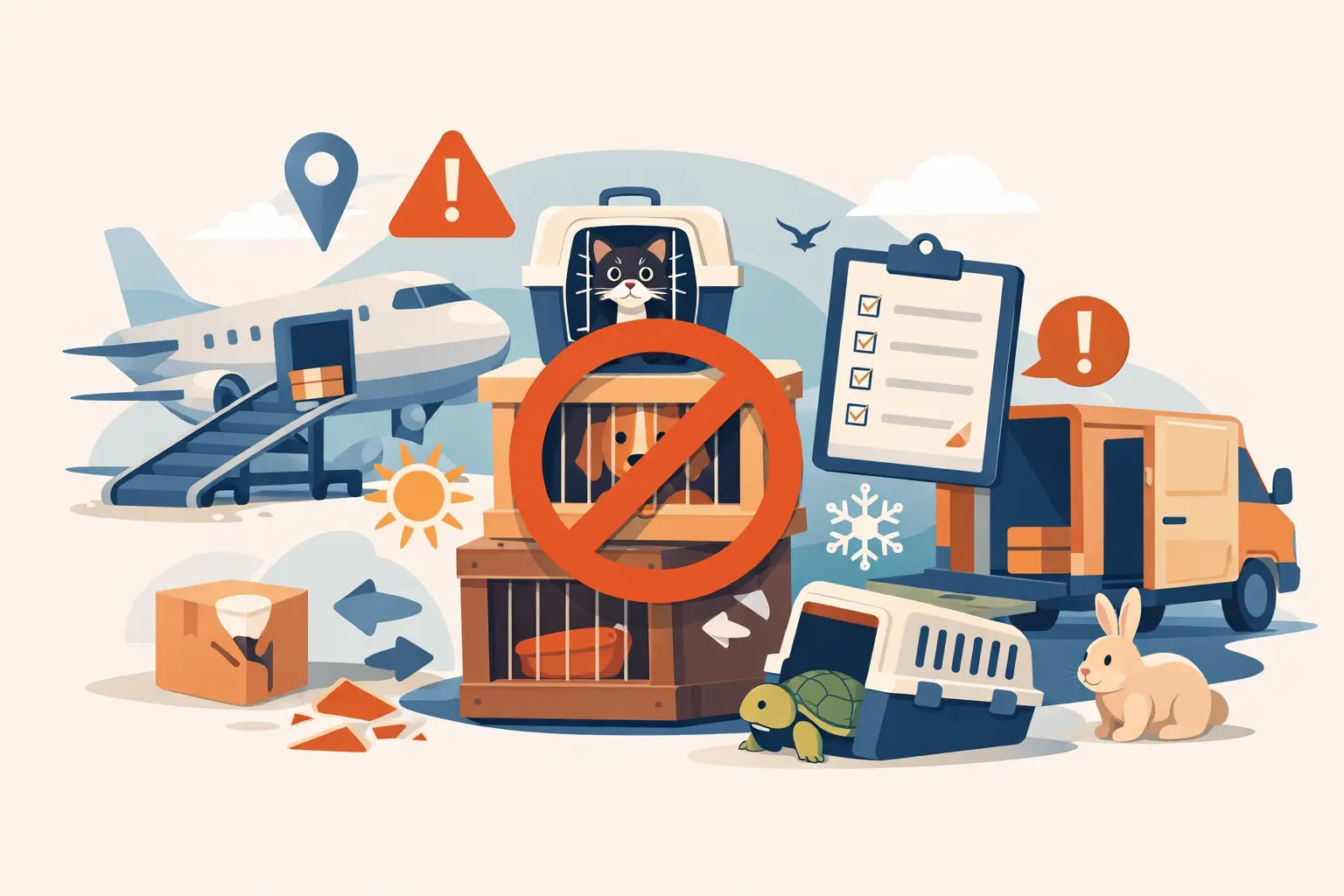
10 Top Mistakes in Animal Shipping to Avoid
A shipment can be booked, a flight can be confirmed, and a crate can be waiting at the door – yet the move can still fail before the animal reaches the airport. The top mistakes in animal shipping usually happen during planning, when documentation, welfare needs, routing, and handling requirements are treated as separate tasks rather than one coordinated operation.
For a family relocating with a dog, a breeder moving valuable stock, or an institution transporting zoological or aquatic species, the stakes are different but the responsibility is the same. Live animals need a transport plan built around their health, behavior, species, and destination rules. Avoiding the following errors helps protect animal welfare while reducing preventable delays, refused bookings, and costly last-minute changes.
1. Starting Documentation Too Late
Import permits, health certificates, vaccination records, species declarations, microchip documentation, and veterinary inspections often have strict timing requirements. A document may be valid for only a limited number of days, and requirements can differ by country, state, airline, species, breed, and the reason for transport.
The mistake is assuming paperwork can be handled once travel dates are finalized. In reality, documentation should shape the schedule from the start. Some destinations require advance permits or testing that takes weeks or months. Certain birds, reptiles, zoo animals, and protected species may require additional wildlife or conservation documentation. Livestock movements can involve agricultural inspections and disease-control restrictions.
A professional review should confirm not only which documents are needed, but also when each one must be issued and who must sign it. One missing stamp or an examination completed outside the allowed window can stop a shipment at check-in or at the border.
2. Choosing a Crate Based Only on Size
A crate is not simply a container. It is the animal’s temporary environment during handling, loading, transit, and possible delays. Choosing one that is too small, poorly ventilated, weak, or not accepted by the carrier creates an immediate welfare and compliance problem.
Animals generally need enough room to stand naturally, turn around, and lie down comfortably. The enclosure also needs to suit the species. A dog or cat may need a secure travel kennel with absorbent bedding and attached water provisions. Horses and large mammals require specialized stalls or containers. Fish, corals, and other aquatic life need water-quality control, oxygenation, temperature management, and packing systems designed for the length of the journey.
Oversizing can create problems as well. If an animal cannot maintain stable footing in a container that is too large, it may be more vulnerable to injury. The right solution balances movement, support, airflow, security, sanitation, and carrier requirements.
3. Treating Every Animal Like a Standard Pet Shipment
A common animal shipping error is applying one familiar process to every species. Dogs and cats may be the most visible part of the live-animal transport industry, but a plan suitable for a pet can be unsafe or noncompliant for birds, reptiles, livestock, primates, large cats, marine animals, or hoofstock.
Species-specific planning affects nearly every decision: container design, ambient temperature, feeding intervals, handling limitations, flight routing, loading method, permits, and contingency support. Some animals travel best with a trained attendant. Others require quiet separation from visual stressors, carefully managed light exposure, or rapid transfer into climate-controlled vehicles.
Age, temperament, reproductive status, medical history, and social grouping also matter. Transporting bonded animals together may reduce stress in some situations. In others, separation is safer because of aggression, territorial behavior, or medical monitoring needs. There is no responsible one-size-fits-all answer.
4. Booking the Fastest Route Instead of the Safest One
The shortest itinerary is not always the best itinerary. A direct flight may be ideal, but it may not be available with the right aircraft, live-animal capacity, seasonal restrictions, or ground support. Conversely, a multi-stop itinerary may be workable if the connection time, facility standards, and animal care plan are appropriate.
Poor routing decisions often overlook airport transfers, customs clearance, overnight holds, weather exposure, and the availability of trained receiving personnel. An animal can spend more time on the ground than in the air, particularly when a shipment involves international entry procedures or movement between cargo facilities.
The right route depends on the animal and the shipment. A healthy adult pet may tolerate a carefully planned connection. A temperature-sensitive aquatic shipment, a young animal, or an animal requiring close observation may need a route with fewer handoffs and tighter timing. Route planning should account for the entire door-to-door journey, not merely the flight number.
5. Ignoring Seasonal Weather and Temperature Risks
Extreme heat and cold are not minor inconveniences for live-animal cargo. They can affect whether a carrier accepts a shipment, how long it can remain on the tarmac, and what ground-transfer procedures are necessary. Heat stress, hypothermia, dehydration, and respiratory distress can develop quickly when conditions are not properly managed.
The mistake is checking the forecast only for the departure city. Conditions at the destination, connection points, and every ground-handling location matter. Weather disruptions can also change a carefully planned itinerary, leaving animals in a facility longer than expected.
Seasonal planning may require a different flight time, a more suitable route, climate-controlled ground transport, or postponement until conditions improve. For some animals, traveling in a less extreme season is the humane choice. A reliable transporter builds weather contingencies into the plan rather than hoping conditions remain favorable.
6. Sedating an Animal Without Transport-Specific Veterinary Guidance
Owners sometimes believe sedation will make travel easier. It may seem compassionate, especially when an animal is anxious, but sedatives can affect balance, breathing, circulation, and the animal’s ability to regulate body temperature. Those risks may increase at altitude or during stressful handling.
Medication decisions should be made only with a licensed veterinarian who understands the animal’s health and the specific transport conditions. Carriers may also have their own restrictions regarding sedated animals. A transport plan should focus first on acclimating the animal to its crate, selecting an appropriate schedule, reducing unnecessary handling, and creating a calm, predictable process.
There are cases where veterinary medication is appropriate, but it depends on the individual animal and the travel plan. It should never be a last-minute substitute for preparation.
7. Failing to Prepare the Animal Before Travel Day
Shipping day should not be the first time an animal sees its travel enclosure, meets a handler, or experiences a long vehicle ride. Crate acclimation is especially valuable for companion animals. Introducing the crate gradually, using familiar bedding when appropriate, and creating positive associations can reduce distress when the actual move begins.
Preparation also includes confirming feeding, watering, exercise, and rest instructions. These details vary by species and route. Overfeeding immediately before travel can be problematic for certain animals, while inadequate hydration can be equally concerning. For animals with medical needs, clear written care instructions and appropriately labeled supplies are essential.
For institutional or commercial shipments, pre-transport conditioning may be more extensive. Animals may need time to become accustomed to stalls, transfer crates, loading ramps, water systems, or keeper-directed routines. This work protects both the animals and the personnel responsible for handling them.
8. Leaving Pickup and Delivery to Chance
A successful flight does not guarantee a successful relocation. Incomplete pickup plans, unavailable receivers, unsuitable destination vehicles, or missed customs appointments can leave animals waiting longer than necessary after arrival.
Door-to-door coordination should identify who is responsible at each handoff, when the animal will be collected, what equipment is needed, and where the animal will go immediately after release. International moves also require clarity around customs brokers, inspection appointments, quarantine requirements, and final-mile transportation.
For livestock, large animals, and zoological species, destination readiness is even more critical. Receiving enclosures, water, feed, biosecurity procedures, veterinary support, and trained staff should be confirmed before the shipment departs.
9. Selecting a Transport Provider Without Species Expertise
Price matters, but the lowest quote may omit the planning, specialized equipment, trained handling, monitoring, or contingency coordination that a live-animal move requires. A provider should be able to explain how it manages the specific species, route, documentation requirements, and welfare risks involved.
Ask practical questions. Who coordinates permits and veterinary timelines? What happens if a flight is delayed? How are temperature-sensitive animals protected during transfers? Is the transport plan tailored to the species and individual animal? Clear, direct answers are a sign of operational readiness.
Global Animal Transport approaches each move as a welfare-centered logistics assignment, whether the shipment involves a household pet, livestock, aquatic life, or a complex zoological relocation. The details differ, but careful planning and accountable coordination should never be optional.
The best time to solve a shipping problem is before an animal is placed in a crate. Give the move enough lead time, share complete information, and choose a plan designed for the animal’s real needs. That preparation provides something every owner and organization wants at arrival: a safe, calm handoff and an animal ready to settle into its next environment.
