
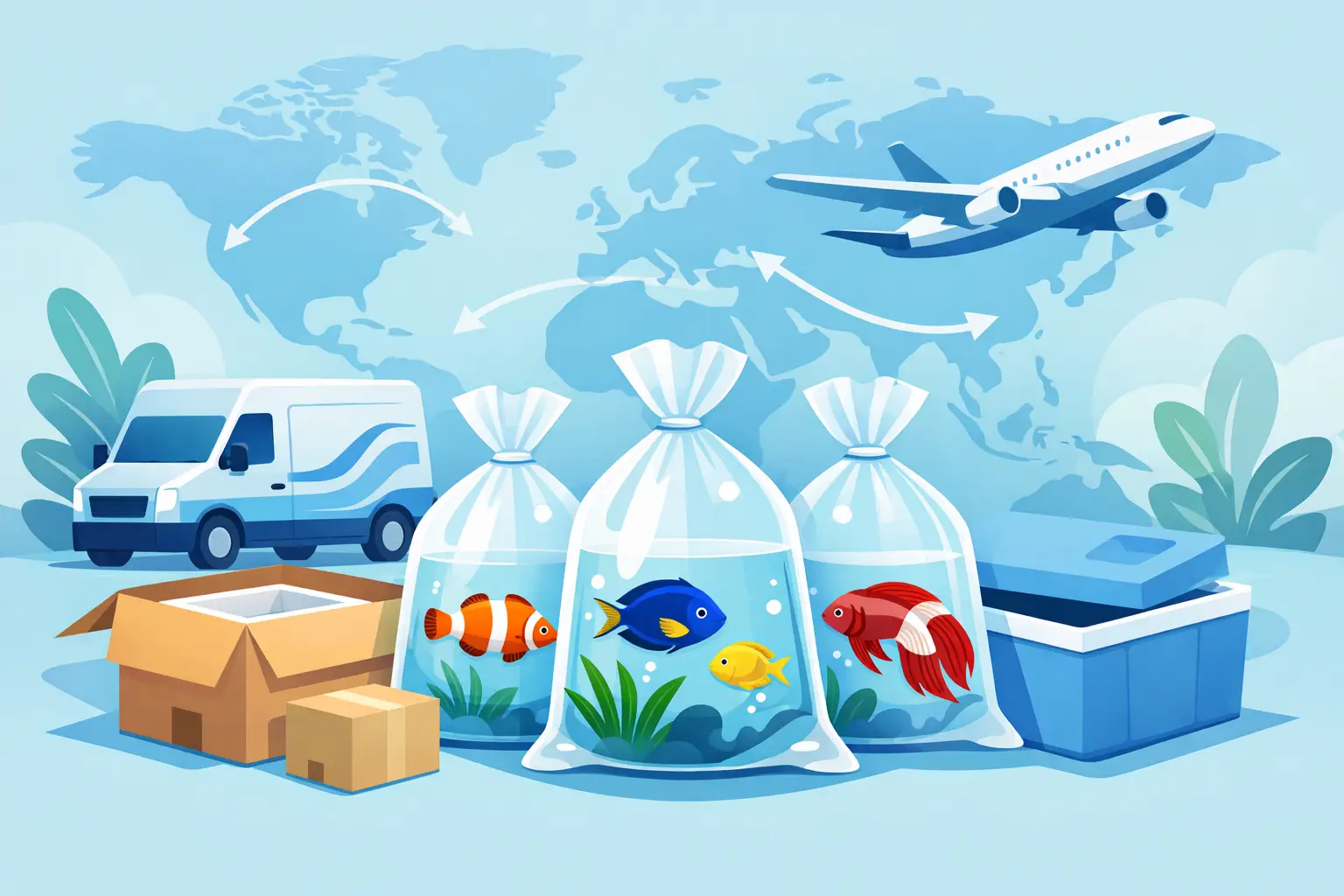
How to Ship Tropical Fish Safely and Humanely
A tropical fish shipment can fail long before the box is loaded. A sudden temperature swing, poor oxygen balance, an avoidable delay, or an incorrectly identified species can put fragile aquatic life at risk. Knowing how to ship tropical fish means planning around the fish’s biology, the route, and every transfer point, not simply placing bags in an insulated container.
For pet owners, breeders, aquarium professionals, and conservation organizations, humane transport starts with a realistic assessment of the animals and the journey. The safest plan is often the one that reduces handling, shortens total transit time, and anticipates what happens if a flight is delayed or conditions change.
How to Ship Tropical Fish: Start With a Transport Assessment
Not every tropical fish should travel under the same conditions. Species, size, age, health, water chemistry, and social behavior all affect packing density and transport requirements. Delicate marine species, fry, large cichlids, venomous fish, and fish with specialized oxygen or temperature needs require more than a standard shipping approach.
Before transport is scheduled, review the animal’s condition with an aquatic veterinarian or qualified fish health professional when appropriate. Fish that are injured, actively ill, severely stressed, or recently treated may not be fit to travel. Moving an unwell animal can worsen its condition and may introduce disease into a receiving collection.
The journey itself matters as much as the destination. A direct domestic route may be suitable for properly prepared fish, while an international movement can involve airline cargo procedures, inspections, border clearance, and timing constraints that add many hours. The goal is to calculate total door-to-door travel time, including pickup, cargo acceptance, layovers, customs processing, and delivery, rather than relying on advertised flight duration alone.
Prepare Fish for Stable Water Conditions
Water quality is one of the most significant variables in tropical fish transport. During transit, fish consume oxygen and release carbon dioxide and waste. Those changes can affect pH and increase toxic ammonia exposure, especially if the shipment is delayed or bags are overstocked.
Professional preparation may include carefully managed fasting before travel. The appropriate fasting period depends on species, age, and health, but the purpose is consistent: reduce waste production without compromising the fish’s condition. Very young fish and species with high metabolic needs may require a different approach. This is why generic packing instructions are not a substitute for species-specific planning.
Use clean, conditioned water that matches the fish’s established needs as closely as possible. Avoid making large last-minute changes to temperature, salinity, pH, or hardness simply because the fish will be shipped. Stable water is usually safer than a hurried attempt to achieve a theoretical ideal.
Fish should be observed before bagging for normal swimming, respiration, and appearance. Separate incompatible species and do not assume that familiar tank mates will tolerate close confinement during shipment. Aggression, fin damage, and stress can escalate quickly in a transport bag.
Use Professional Packing Materials and Methods
Live fish are typically packed in secure fish bags within insulated shipping containers. The bagging method must prevent leaks, provide sufficient oxygen, and protect the animals from abrupt light and temperature changes. Depending on the shipment, packing may involve oxygen-filled bags, double or triple bagging, absorbent lining, rigid insulation, and carefully selected temperature-control materials.
The details must be matched to the species and route. Too little water can create instability, while too much water adds weight, limits gas space, and makes temperature management more difficult. A box that is poorly insulated can expose fish to dangerous temperatures on a cargo ramp, in a warehouse, or during final-mile delivery.
For many shipments, professional-grade containers and purpose-designed fish bags are preferable to improvised household materials. Containers should be strong enough to withstand normal handling, remain upright, and contain a leak if an inner bag fails. External labeling should clearly identify the contents, orientation requirements, handling needs, and any applicable regulatory information.
Temperature packs can be useful, but they are not universal solutions. A heat pack that is too warm, placed too close to the bags, or used on a route with warm exposure points can be as harmful as cold weather. Cold packs carry similar risks. The correct choice depends on the expected temperature range from origin through delivery, not just the weather at either endpoint.
Choose the Right Transport Route and Carrier
The fastest route is not always the safest if it involves rushed connections, unreliable ground transfers, or poor cargo handling conditions. When arranging tropical fish transport, prioritize direct routing, minimal handoffs, and carriers experienced in handling live aquatic animals.
Domestic shipments may move by air cargo or specialized ground service, depending on distance, weather, animal needs, and urgency. International transport requires further coordination. Airline acceptance rules, country-specific import requirements, customs hours, and destination delivery capabilities can all determine whether a route is workable.
A professional animal transport provider evaluates the complete chain of custody. That includes secure collection, preflight timing, airline cargo booking, monitoring during critical handoffs, clearance support where applicable, and coordinated delivery. This is particularly valuable for aquarium collections, breeder shipments, zoological facilities, and high-value or sensitive species where a missed connection is more than an inconvenience.
Confirm Permits, Health Requirements, and Species Rules
Fish can be subject to federal, state, local, airline, and international regulations. Requirements vary widely based on species, origin, destination, and purpose of movement. Marine species, protected wildlife, invasive species concerns, commercial shipments, and animals covered by international conservation controls may require additional documentation or permits.
Do not leave documentation until the day of transport. A missing permit, incorrect scientific name, incomplete invoice, or mismatch between declared and actual species can cause a shipment to be delayed, refused, or held in unsuitable conditions. For international moves, documentation may include import permits, export approvals, health records, customs declarations, and species-specific certificates.
It is also essential to verify whether the receiving state or country allows the species. Some fish that are legal to own in one location are restricted elsewhere because of invasive-species laws or conservation protections. A knowledgeable transport coordinator can identify these issues early, when there is still time to select a compliant route or obtain required approvals.
Build a Contingency Plan Before Departure
Live animal transport needs a backup plan. Flights are delayed, weather changes, customs offices close, and vehicles encounter traffic. Responsible shipping preparations include clear contact information for sender, consignee, carrier, and receiving facility, along with instructions for what should happen if the shipment cannot move as planned.
A useful pre-departure check should confirm four essentials:
- The fish are healthy enough to travel and have been prepared for the expected transit period.
- Packing materials, oxygen capacity, insulation, and temperature control match the species and route.
- Documentation and destination requirements have been reviewed before cargo acceptance.
- A qualified receiver is ready to accept, acclimate, and observe the fish on arrival.
Arrival procedures deserve the same attention as departure. The receiving party should inspect the outer container promptly, move the fish to a stable environment, and acclimate them carefully to the destination water. Avoid rushing this step. Differences in temperature, salinity, and pH can cause serious stress even when the flight itself went smoothly.
When Professional Fish Transport Is the Safer Choice
Small, straightforward domestic shipments may be manageable for experienced aquarists who understand the species and carrier requirements. The risk profile changes quickly for international moves, large volumes, rare species, long routes, or fish requiring narrow environmental tolerances.
Global Animal Transport coordinates specialized aquatic animal moves with welfare, routing, and regulatory requirements in mind. Professional support can reduce avoidable risk by aligning packaging, carrier selection, documentation, pickup timing, and destination handling under one transport plan.
Tropical fish are living animals with limited ability to tolerate mistakes in transit. Give the journey the same care you give their aquarium or holding system, and make every transport decision serve their safe arrival.
