
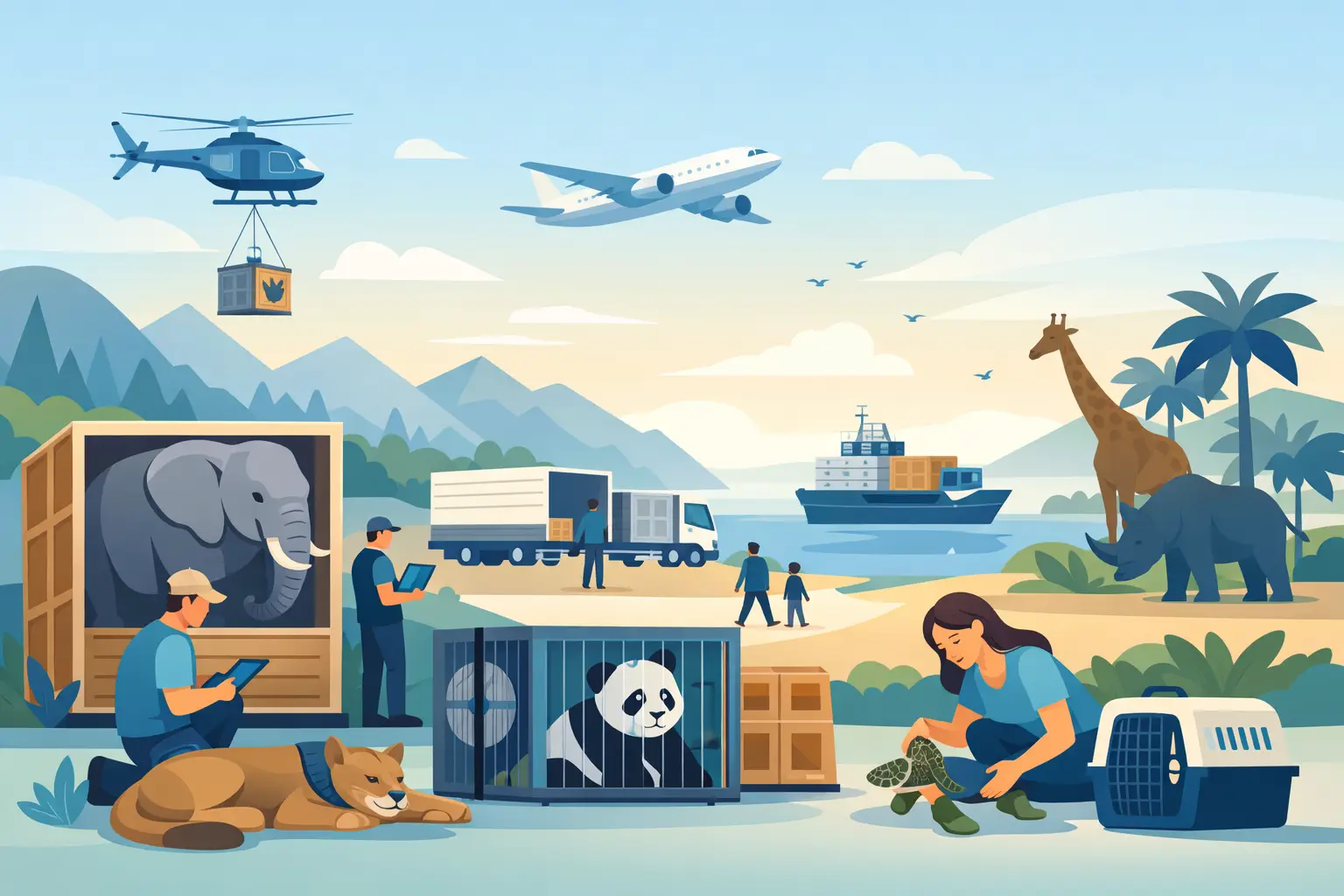
Endangered Species Relocation Logistics
A relocation plan for an endangered animal is never just a shipping schedule. Endangered species relocation logistics involve permits, veterinary oversight, enclosure design, routing, climate control, chain-of-custody procedures, and welfare decisions that can affect breeding value, survival, and long-term conservation outcomes.
For zoos, aquariums, conservation programs, research institutions, and regulated wildlife facilities, the stakes are unusually high. One missed document, one poorly timed transfer, or one transport setup that does not match the species can create regulatory delays, medical risk, and unnecessary stress on animals that may already represent a small and vulnerable population. That is why relocation has to be treated as a specialized operational process, not general freight movement.
What endangered species relocation logistics really involves
At a practical level, endangered species transport means coordinating the movement of live animals under strict legal, biological, and operational requirements. That often includes domestic and international permits, health certificates, import and export approvals, quarantine planning, customs coordination, secure containment, route selection, and trained animal handling from origin to destination.
The logistics become more complex because endangered species rarely fit into a standard transport model. A large carnivore, a primate, a rare reptile, and a marine specimen all require different enclosure standards, environmental controls, feeding plans, sedation protocols if approved, and contingency procedures. Even when two species are similar on paper, age, sex, reproductive status, and medical history can change the transport plan.
This is where experience matters. The goal is not simply to move an animal from one facility to another. The goal is to protect welfare, maintain compliance, and reduce transport-related risk at every handoff.
Why endangered species relocation logistics are so demanding
The difficulty starts with regulation. Endangered animals are often protected under multiple layers of law and oversight. Depending on the species and route, a move may involve federal agencies, state authorities, foreign ministries, customs officials, veterinary inspectors, and destination facility approvals. Timing matters because many of these documents have narrow validity windows.
Then there is the biological side. Some species tolerate transport well with proper preparation. Others are highly sensitive to noise, vibration, temperature shifts, light exposure, or changes in routine. Aquatic animals may need life support systems and water quality management throughout the trip. Birds may require specific perch and crate configurations. Large mammals may require reinforced containment, equipment for safe loading, and carefully controlled human interaction.
There is also the question of mission. Not every relocation serves the same purpose. Some moves support breeding programs. Others are tied to medical treatment, habitat transition, sanctuary placement, exhibit transfers, or conservation response. The logistics plan should reflect that purpose because the transport method, timing, and post-arrival care may change accordingly.
Compliance cannot be treated as a paperwork task
Permits and clearances are central to the process, but they are only one part of a compliant move. Documentation has to align with the actual shipment plan, the species identification, crate specifications, routing, and receiving facility readiness. If those elements are out of sync, a technically approved shipment can still be delayed.
For institutional clients, this is where specialized coordination prevents avoidable disruption. A permit may be valid, but if weather conditions force rerouting, if customs timing changes, or if an airline has species restrictions, the entire movement plan may need to be adjusted without compromising legal compliance or animal welfare.
Welfare planning starts long before departure
Transport stress does not begin at the airport or loading site. It begins with changes in routine, enclosure shifts, pre-travel exams, fasting protocols where appropriate, and unfamiliar handling. Good planning accounts for acclimation time, crate conditioning when possible, medical review, and species-specific preparation so the animal is not facing every stressor at once.
Some animals benefit from quiet loading windows and minimal visual stimulation. Others need more active monitoring during transit. In some cases, direct routing is the priority. In others, a carefully staged trip with controlled rest periods is safer. The right answer depends on species traits, trip length, facility capabilities, and veterinary guidance.
The core phases of a successful relocation
Every endangered species move has its own requirements, but the strongest operations follow a disciplined sequence.
The first phase is assessment. This includes species profile, number of animals, age and sex, medical history, behavioral considerations, legal status, origin and destination requirements, transport mode, and target timeline. If the move is international, documentation pathways and border procedures should be reviewed immediately, not later in the process.
The second phase is transport design. This is where crate or enclosure specifications, temperature parameters, humidity control, lighting exposure, handling protocols, feeding and hydration plans, staffing, and route timing are established. For some species, the best solution is cargo air. For others, aircraft charter, specialized ground transport, or even ocean-based movement may be more appropriate.
The third phase is execution. This includes pickup coordination, pre-departure checks, live animal handling, loading supervision, in-transit monitoring, customs clearance if applicable, and delivery to the destination team. Chain of custody should remain clear throughout.
The final phase is arrival and transition. Safe relocation does not end when the animal reaches its destination. Receiving teams need confirmed handoff procedures, enclosure readiness, observation plans, and immediate access to records. A clean arrival is the result of full-process coordination, not just successful transit.
Species-specific planning changes everything
This is the point many non-specialists underestimate. Endangered species relocation logistics are not interchangeable across taxa.
A hoofstock move may center on loading geometry, footing, hydration timing, and stress reduction through visual barriers. A reptile transfer may focus more on thermal stability and container insulation. A primate relocation may require more intensive behavioral consideration, limited exposure to unfamiliar personnel, and enhanced security. Aquatic species introduce another layer entirely, where oxygenation, salinity, pH, and transit duration can become decisive factors.
Even the best transport equipment is only effective when it matches the animal. A well-built crate that is wrong for the species can still create distress, injury risk, or regulatory issues. That is why planning should be based on the individual animal and the mission of the move, not just available hardware.
Choosing the right transport mode
There is no single best mode for every endangered species shipment. Air transport is often chosen for speed, especially when transit time must be minimized. But speed alone is not enough. The carrier, aircraft environment, airport handling process, transfer points, and destination support all matter.
Ground transport can be the better option for shorter domestic relocations when it allows continuous control, reduced handoffs, and a quieter environment. Charter options may be necessary for high-value zoological transfers, large mammals, sensitive species, or routes where commercial limitations create too much risk. In marine or aquatic contexts, specialized systems can be the deciding factor rather than the vehicle itself.
The right choice usually comes down to balancing welfare, compliance, route reliability, species sensitivity, and destination deadlines. Faster is not always safer. More controlled is often better.
What clients should look for in a transport partner
When the shipment involves protected wildlife, general animal shipping experience may not be enough. Clients should look for a provider that understands regulated species movement, species-specific containment, veterinary coordination, international documentation, customs processes, and contingency planning.
Communication also matters. Institutional clients and animal owners need clear timelines, realistic risk discussions, and responsive support when plans shift. In this kind of transport, reassurance should come from competence, not vague promises.
A qualified partner should be able to explain how the move will be managed at each stage, who is responsible for documentation, how welfare will be protected during delays, and what backup procedures are in place if conditions change. Companies such as Global Animal Transport build trust by pairing operational reach with the kind of species-aware planning that these moves require.
The value of getting it right
A well-managed relocation protects more than a shipment. It protects animal welfare, regulatory standing, institutional reputation, breeding potential, and the broader conservation goals tied to the animal’s future. Poor planning can create setbacks that are expensive, public, and difficult to reverse.
That is why endangered species moves should never be treated as routine cargo projects. They demand a transport strategy built around the animal, the law, and the realities of live movement across borders and facilities.
When the animal is rare, protected, or biologically sensitive, careful logistics are part of responsible stewardship. The best relocation plans make that visible from the first permit review to the final handoff.
