
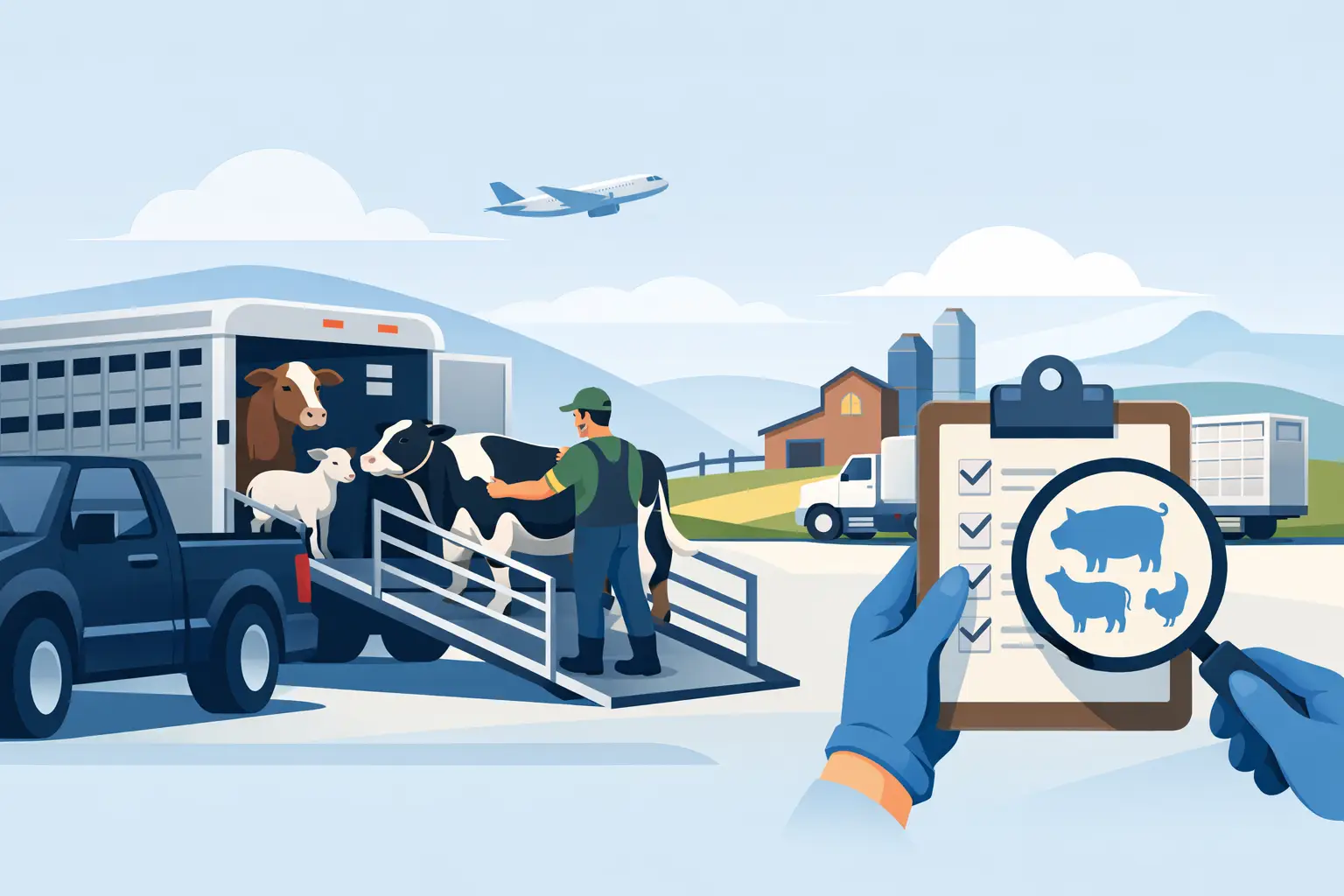
How to Transport Breeding Livestock Safely
A breeding animal is never just another shipment. One stressed bull, a pregnant heifer moved at the wrong stage, or a boar loaded into poor footing can turn a routine trip into a reproductive setback, an injury event, or a costly loss.
That is why knowing how to transport breeding livestock starts with one principle: protect the animal’s breeding value by reducing stress at every stage. Transport is not only about getting animals from one location to another. It is about preserving fertility, maintaining condition, meeting regulatory requirements, and making sure each animal arrives ready to settle into a new environment.
How to transport breeding livestock without unnecessary risk
Breeding livestock require a different level of planning than market animals. Their genetic value is higher, their handling history may be more individualized, and their condition can vary widely depending on age, sex, reproductive status, and destination requirements. A mature sire, an open replacement female, and a heavily pregnant animal should not be moved the same way.
The first decision is whether the animal is fit to travel at all. Fitness for transport depends on soundness, body condition, respiratory health, hydration, recent illness, pregnancy stage, and the expected trip length. Animals with lameness, fever, active disease concerns, severe stress sensitivity, or late-stage pregnancy may need transport postponed or managed under tighter veterinary guidance. Moving on schedule is never worth compromising welfare or breeding performance.
Just as important is trip design. Short, direct movements generally carry less risk than long, multi-stop routes, but that does not mean every short trip is easy. Poor loading, rough driving, extreme temperatures, overcrowding, or mixing unfamiliar animals can create problems quickly. The safest transport plan is the one built around species-specific behavior and the individual animal’s needs.
Preparation matters more than the miles
Most transport problems begin before the vehicle starts moving. For breeding livestock, pre-trip preparation should focus on health, handling, and environment.
A current veterinary review is often essential, especially for interstate or international transport. Health certificates, testing, vaccinations, import permits, and destination-specific breeding documentation may all be required depending on the species and route. Missing paperwork can delay arrival, create quarantine problems, or force animals to remain in holding conditions longer than planned. For breeding stock, those delays can affect condition and breeding schedules.
Feeding and watering plans also need attention. It depends on the species, the animal’s age, and the travel time, but overfeeding immediately before loading can be as unhelpful as underpreparing. Hydration is critical, especially in hot weather and for animals with longer transit windows. Bedding, footing, ventilation, and compartment setup should be chosen to support stability and comfort rather than simply maximize capacity.
Handling before departure should stay calm and predictable. Breeding animals often respond poorly to excessive noise, prodding, rushed movement, or unfamiliar handlers. Stress hormones can affect reproductive performance, and physically agitated animals are more likely to slip, fight, or arrive exhausted. Quiet loading lanes, secure footing, and experienced animal handlers make a measurable difference.
Matching the setup to the animal
Not all breeding livestock can share the same loading pattern or trailer arrangement. Bulls and boars may require stronger separation and more secure containment than females. Rams and bucks can be reactive if mixed inappropriately. Pregnant females may need additional space, gentler loading angles, and tighter control of travel timing.
There is also a trade-off between isolation and companionship. Some animals travel better with a familiar pen mate or within a stable group, while others are safest when separated. The right choice depends on temperament, species behavior, horn status, social dynamics, and the risk of aggression during transit.
Vehicle standards are part of animal welfare
Anyone asking how to transport breeding livestock safely should look closely at the transport equipment itself. The vehicle is not just a container. It is the animal’s environment for the duration of the trip.
Ventilation must be appropriate for the species, weather, and stocking density. Heat buildup, humidity, and poor airflow are common causes of transit stress. In colder conditions, protection from drafts matters, but sealing a unit too tightly can create other problems. Good transport planning balances air movement with weather protection.
Flooring should provide traction under shifting weight. Slips and falls are especially serious for valuable breeding animals because even a minor injury can affect long-term soundness or reproductive utility. Clean, dry bedding helps with footing, comfort, and waste control. Trailer partitions should support balance and prevent crushing without creating sharp edges or pinch points.
Driver skill matters as much as equipment. Sudden braking, aggressive turns, and uneven speed changes can destabilize livestock quickly. Breeding animals should be transported by teams that understand live-animal movement, not by general freight operators treating the load like cargo.
Timing can protect fertility and reduce stress
When possible, transport should be scheduled around the animal’s reproductive status and environmental conditions. This is especially relevant for cattle, swine, sheep, goats, and other valuable breeding lines where conception timing, semen quality, and general condition matter.
Moving animals during extreme heat is often avoidable with better scheduling. Early morning, evening, or seasonally adjusted transport windows can reduce stress dramatically. For males used for breeding, heat stress can have lingering effects on reproductive performance. For females, especially those newly bred or advanced in pregnancy, poor timing can increase the risk of fatigue, dehydration, and transport-related complications.
Transit should also be coordinated with destination readiness. An animal should not arrive before the receiving facility is prepared with proper housing, feed, water access, biosecurity protocols, and separation space if needed. Arrival stress rises when animals are unloaded into a chaotic or unfamiliar setup.
Domestic versus international movement
Domestic transport may seem simpler, but breeding livestock still face compliance, health, and welfare demands from state to state. International transport adds another layer entirely. Import permits, testing windows, quarantine rules, port handling, flight scheduling, and destination inspections all need to line up precisely.
For breeding stock, international shipping often involves narrow documentation windows and country-specific health standards. A missed test date or incomplete certificate can cause expensive delays. More importantly, delays can leave animals in temporary holding situations that are far less controlled than a properly executed door-to-door plan. This is where experienced animal logistics coordination becomes essential.
Biosecurity is not optional
Breeding livestock move with more than financial value. They can affect the health status of an entire herd or breeding program. That is why biosecurity should be part of every transport decision.
Trailers, crates, pens, and handling equipment should be properly cleaned and managed between shipments. Mixing animals from different health backgrounds increases exposure risk. In some cases, isolation before departure or after arrival may be the responsible choice, especially for imported animals or high-value breeding stock entering a tightly managed herd.
Documentation should support traceability, but practical biosecurity matters just as much. Clean loading zones, controlled handler access, and clear separation protocols help protect both the transported animal and the receiving operation.
Why professional coordination changes the outcome
There is a reason specialized livestock transport exists. The work is part animal welfare, part regulatory management, and part route control. Breeding livestock sit at the center of all three.
A professional transport partner should be able to assess animal type, trip distance, weather, health requirements, loading conditions, and destination readiness before recommending a plan. That may mean ground transport, air transport, charter options, layover coordination, or specialized handling teams depending on the route and the value of the animal. It may also mean advising against movement until conditions are safer.
For clients moving breeding cattle, sheep, goats, swine, or other valuable stock across the US or internationally, the real benefit is not convenience alone. It is the confidence that each detail has been considered through the lens of humane handling and operational control. Companies such as Global Animal Transport are built for that level of planning because live-animal relocation does not leave much room for improvisation.
The right question is not just how to transport breeding livestock
The better question is how to move them in a way that protects health, fertility, compliance, and long-term value. Sometimes the answer is a direct road move with careful scheduling. Sometimes it requires veterinary coordination, specialized compartments, or international documentation support. Sometimes the safest plan is to wait.
Breeding livestock represent years of selection, investment, and future production. They deserve transport planned with the same care used to develop the bloodline in the first place. When the trip is built around the animal rather than the route, you give that investment its best chance to arrive intact.
