
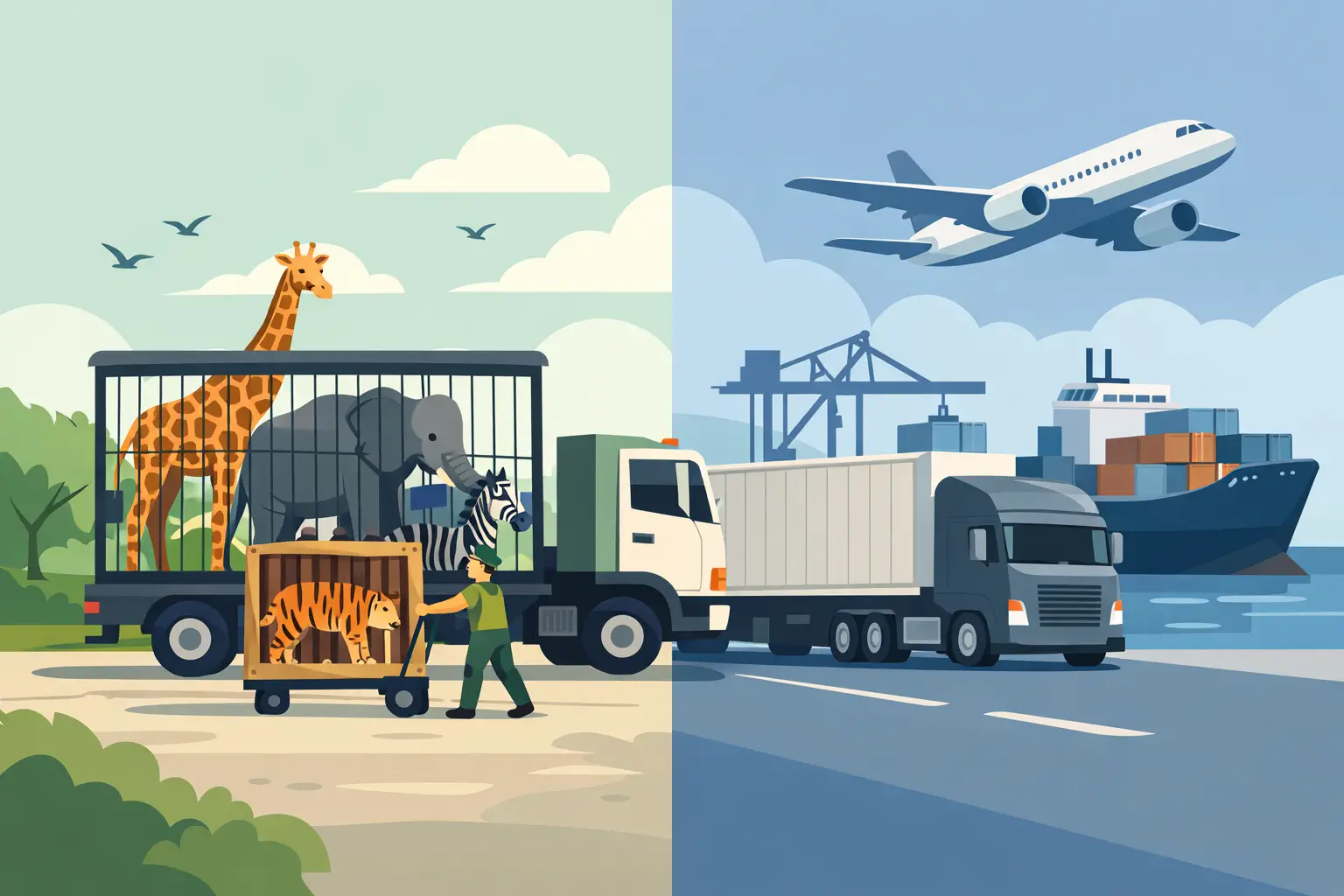
Zoo Transport Versus Commercial Freight
A shipment of retail goods can tolerate a delayed transfer, a temperature fluctuation, or a rough stretch of road. A live animal often cannot. Zoo transport versus commercial freight is not simply a question of selecting a larger vehicle or booking cargo space. It is a fundamentally different operation, built around animal welfare, species behavior, regulatory compliance, and continuous accountability from collection through arrival.
For zoos, aquariums, conservation programs, and animal institutions, transport may support breeding recommendations, veterinary care, exhibit development, rescue work, or species preservation. Each move must protect the animal while meeting a tightly coordinated set of operational requirements. The freight is alive, responsive, and dependent on the people managing every stage of the journey.
Zoo Transport Versus Commercial Freight: The Core Difference
Commercial freight systems are designed to move standardized goods efficiently. Pallets, machinery, consumer products, and dry cargo can be measured, packed, labeled, loaded, and transferred through established networks. Their handling plans focus on weight, dimensions, route efficiency, insurance, security, and delivery schedules.
Zoo transport begins with different questions: What conditions will keep this species calm and medically stable? How will the animal enter and exit its enclosure? What is the safest route if a connection changes? Who is qualified to monitor behavior, hydration, ventilation, and crate integrity? Those questions shape the entire transport plan.
A zoological shipment may involve a single animal, a bonded pair, a breeding group, or an aquatic collection with very specific water-quality needs. Large mammals may require custom-built containment, trained handlers, specialized loading equipment, and veterinary oversight. Reptiles, birds, primates, and small exotic mammals each bring different environmental, behavioral, and documentation requirements.
The goal is not merely to deliver the shipment on schedule. The goal is to deliver each animal safely, humanely, and in condition to transition successfully into its new environment.
Animal Welfare Is Part of the Logistics Plan
With ordinary freight, packaging protects the product. With live animals, the transport enclosure is a temporary habitat. It must provide appropriate space, structural strength, ventilation, secure access, and species-appropriate footing or bedding. It also needs to support safe inspection, feeding, hydration, and cleaning when required by the journey length and animal’s needs.
Crate design cannot be treated as an afterthought. An enclosure that is too restrictive can cause distress or injury; one that is oversized may allow unsafe movement during transit. The animal’s size, posture, temperament, travel duration, climate exposure, and mode of transport all influence the final design.
Temperature management is equally specific. Some animals are highly vulnerable to heat, cold, humidity changes, or direct airflow. Aquatic transport adds another layer, since water temperature, dissolved oxygen, salinity, filtration, and stocking density can determine whether fish or marine animals travel successfully. A commercial freight process may offer general climate control, but specialized animal logistics plans for the conditions an individual species requires.
Behavior matters as much as physical condition. Certain animals need visual barriers to reduce stimulation. Others must remain with a familiar companion, keeper, or social group. Some require conditioning before travel so they can enter a crate voluntarily and remain calmer during handling. These details are central to humane transport, not optional extras.
Qualified Handling Reduces Avoidable Stress
Zoo animal transport relies on personnel who understand how animals respond to unfamiliar sights, sounds, movement, and human contact. A handler’s timing, positioning, and communication can influence whether loading is controlled or stressful.
This is why a specialized provider coordinates closely with animal care teams, veterinarians, airline cargo operations, ground crews, and destination staff. Every handoff should be planned in advance, with clear responsibilities and contingency procedures. General freight personnel may be highly skilled at cargo operations, but they are not automatically trained to manage the welfare needs of a rhinoceros, penguin, primate, venomous reptile, or sensitive marine species.
Documentation and Compliance Are More Complex
Commercial freight documentation is significant, especially for international shipments, but live-animal moves carry additional legal and welfare obligations. Depending on the species and destination, a transport plan may require health certificates, import and export permits, customs documentation, veterinary records, species identification, and approvals related to protected wildlife.
International zoo transport can also involve wildlife trade regulations, destination-specific quarantine protocols, airline acceptance requirements, and timing restrictions connected to temperature or routing. A permit that is delayed, incomplete, or mismatched to the shipment can interrupt the journey and place animals in an unsuitable holding situation.
A professional transport coordinator reviews requirements early because paperwork affects operational choices. It can determine the travel date, approved port of entry, route, carrier, inspection process, and post-arrival arrangements. This planning protects the institution, but more importantly, it helps prevent an animal from facing unnecessary delays or repeated handling.
Planning for the Journey, Not Just the Departure
The safest animal moves account for the full chain of custody. That includes pickup from the originating facility, staging, ground transport, airport or port procedures, loading, transit monitoring, connections, customs clearance, delivery, and receiving at the destination.
A strong plan addresses the practical points most likely to create stress or delay:
- Species-specific container and vehicle requirements
- Weather and seasonal routing considerations
- Feeding, hydration, rest, and observation schedules
- Emergency contacts, veterinary support, and backup routing
- Destination readiness, including secure receiving areas and trained staff
Commercial freight often relies on interchangeability. If one truck, terminal, or carrier changes, the cargo can generally continue through another standard process. In zoo transport, each change must be assessed for the animal’s welfare. An alternate route may introduce excessive heat, longer ground time, inadequate holding conditions, or staff unfamiliar with the shipment.
That does not mean every zoological move requires a charter aircraft or exclusive vehicle. The right solution depends on species, distance, timing, group size, regulatory requirements, and risk tolerance. Scheduled air cargo, dedicated ground transport, ocean charter options, or carefully coordinated multimodal service may all be appropriate in the right circumstances. The difference is that the mode is selected around the animal, rather than asking the animal to fit a standard freight system.
When Commercial Freight Practices Still Help
Commercial logistics has valuable lessons for animal transportation. Route optimization, shipment visibility, cargo security, scheduling discipline, and clear chain-of-custody records all improve reliability. Specialized animal transport providers use these operational principles while adapting them to live-animal care.
The concern arises when commercial efficiency becomes the only measure of success. The least expensive route is not always the safest route. A short connection can look efficient on paper but leave no margin for inspections, weather disruption, crate checks, or careful transfer. Likewise, maximizing load capacity may conflict with the space, ventilation, or separation a species needs.
For institutional clients, the best plan balances welfare, compliance, timing, and cost. That balance requires honest assessment. A simple move involving an acclimated animal and experienced receiving teams may have a straightforward path. A cross-border relocation involving protected species, large mammals, or aquatic life deserves deeper planning and broader contingency support.
Choosing a Provider for Zoological Transport
A zoo or conservation organization should look beyond a carrier’s general cargo capacity. Ask whether the transport team has experience with the relevant species category, understands current documentation requirements, and can coordinate with veterinary and animal care personnel. Confirm how they manage environmental controls, transfer points, emergency communication, and destination delivery.
Responsiveness also matters. Transport conditions can change quickly due to weather, carrier restrictions, permits, or an animal’s health status. A dependable provider needs the operational reach to adjust plans without losing sight of welfare standards.
Global Animal Transport approaches zoological moves as specialized care logistics. From large mammals and exotic species to aquatic animals and fish, each transport plan is developed around safe containment, qualified coordination, and responsible handling across domestic and international routes.
When a living animal is entrusted to a transport team, the standard should be higher than successful delivery. The right partner helps create a journey in which the animal’s safety, comfort, and future well-being remain the priority at every mile.
