
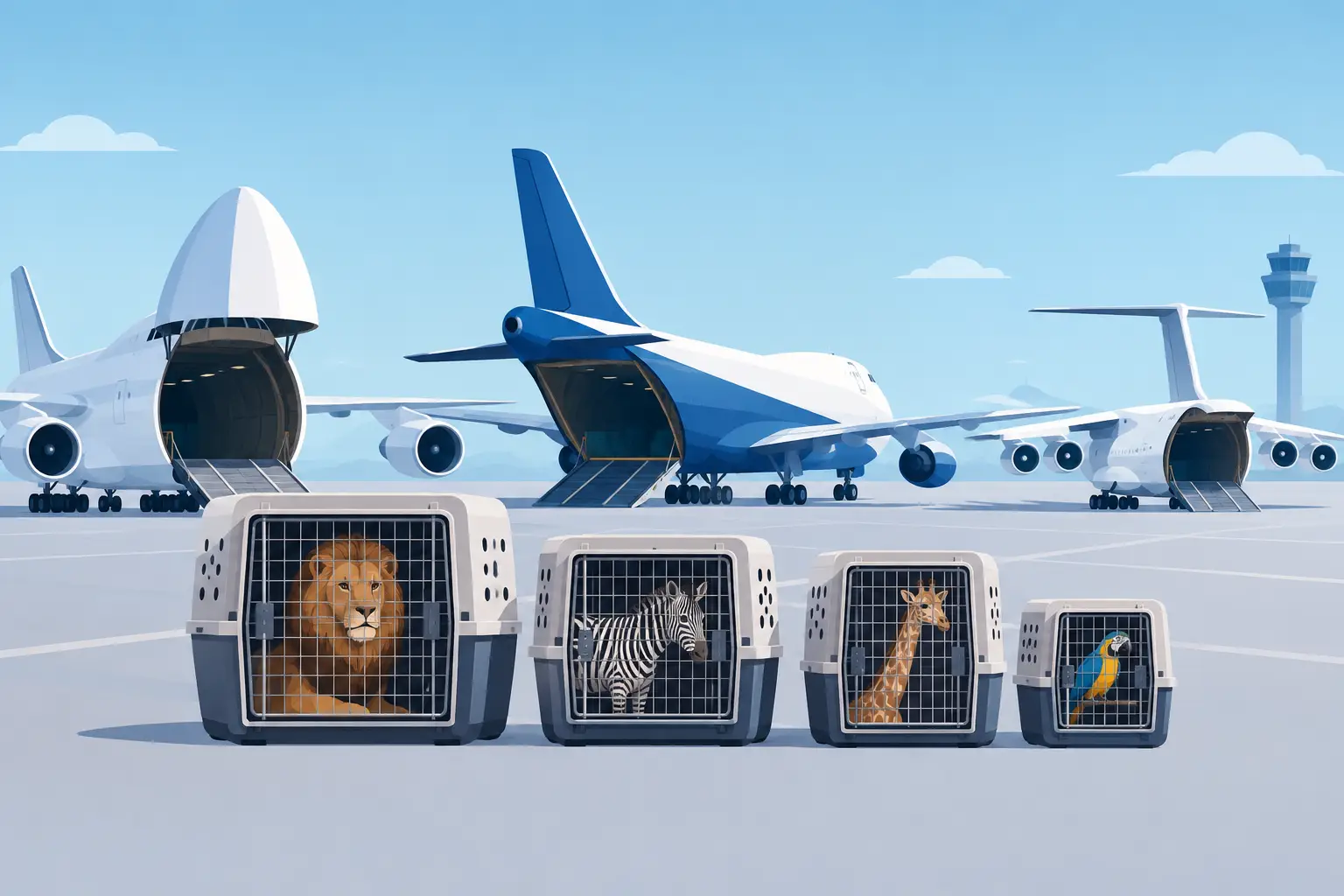
Cargo Aircraft Comparison for Live Animal Transport
A meaningful cargo aircraft comparison for live animal transport is not about choosing the largest airplane or the lowest rate. It is about selecting an aircraft, route, loading process, and support plan that protect an animal’s health from collection through final delivery. For a family pet, that may mean avoiding a long connection during hot weather. For zoo animals, livestock, or aquatic shipments, it may require a dedicated freighter, custom support equipment, veterinarian coordination, and carefully timed ground handling.
Aircraft capacity matters, but so do the conditions inside the cargo hold, the time spent on the ramp, the availability of trained handlers, and the requirements at each airport. The right answer depends on the species, crate or container design, shipment size, origin, destination, season, and urgency.
Cargo Aircraft Comparison: The Main Transport Options
Live animals commonly travel by air in one of three ways: in the temperature-controlled cargo hold of a passenger aircraft, on a scheduled cargo freighter, or through a dedicated aircraft charter. Each option can be appropriate when planned correctly. The difference is the amount of space, flexibility, control, and specialized support available.
Passenger aircraft cargo holds
Many domestic and international pet moves take place in the live-animal cargo compartments of passenger aircraft. These shipments travel beneath the main cabin, typically in a designated area that is pressurized and temperature controlled during flight. This can be a practical, reliable option for dogs, cats, and smaller animals when the route is available and airline acceptance rules are met.
The main benefit is access to established scheduled service. Passenger routes can offer frequent departures between major cities, which may reduce waiting time and make it easier to choose a routing with fewer connections. For an individual pet relocation, this is often more economical than chartering an aircraft.
There are limits. Cargo space can be restricted, seasonal embargoes may apply during extreme temperatures, and not every aircraft type or airline accepts every species or kennel size. A very large crate, brachycephalic breed, pregnant animal, animal requiring intensive monitoring, or animal traveling to a remote location may need another solution. The animal’s time on the ground also deserves as much attention as its time in the air.
Scheduled cargo freighters
Cargo freighters are purpose-built to carry goods rather than passengers. They generally provide more volume and can accept larger, heavier, or more specialized shipments than passenger aircraft. Their main decks may be accessed through large cargo doors, allowing the loading of oversized crates, livestock modules, aquarium systems, and other equipment that cannot fit through a passenger aircraft’s lower-hold doors.
For large animals, group shipments, zoological relocations, or aquatic transport, this additional capacity can be decisive. A freighter may accommodate purpose-built stalls, reinforced containers, water filtration equipment, oxygen systems, or climate-sensitive support materials. It can also be a better fit when the shipment includes substantial handling equipment that must travel with the animals.
Freighter service is not automatically better for every animal. Scheduled cargo routes may have fewer departures, more limited airport options, and different transit patterns. A direct passenger service can be the gentler choice for a single pet if it avoids a long layover. The safest plan is the one that minimizes avoidable handling while meeting the animal’s physical and behavioral needs.
Dedicated aircraft charters
A dedicated charter offers the highest level of control. The aircraft, departure time, loading sequence, routing, and onboard cargo arrangement can be planned around the shipment. This is especially valuable for time-critical relocations, large groups of animals, conservation transfers, high-value breeding stock, zoo animals, and shipments requiring a coordinated team of veterinarians, keepers, grooms, or technical specialists.
Charters can reduce unnecessary connections and allow ground crews to work within a controlled schedule. They may also make it possible to fly directly to an airport closer to the final destination, reducing road-transfer time. For animals that are sensitive to repeated loading, unfamiliar environments, or prolonged confinement, those advantages can materially improve welfare.
The trade-off is cost. A charter is a major operational commitment, and the aircraft must be compatible with the shipment’s weight, dimensions, loading requirements, and airport restrictions. It is most appropriate when its added control supports a clear welfare, timing, security, or capacity need.
What Matters Beyond the Aircraft Model
The aircraft is only one part of a humane transport plan. An animal can travel on a suitable airplane and still face unnecessary stress if documentation, crate preparation, airport handling, or destination arrangements are not properly coordinated.
Temperature management is a central concern. Live-animal shipments are exposed to changing conditions during check-in, security screening, loading, taxiing, connections, unloading, and customs clearance. Airline restrictions related to heat and cold are designed to manage these risks, but they also require careful booking decisions. Departure time, airport climate, ramp exposure, and contingency options should be considered before a booking is confirmed.
Container selection is equally important. A crate for a household pet must provide sufficient room, ventilation, secure closure, and appropriate labeling. Larger species may require custom stalls or reinforced enclosures designed for their size, movement, and temperament. Aquatic animals may need insulated transport systems, water-quality support, oxygenation, and fast transfer between aircraft and receiving facilities.
Routing is often more important than speed on paper. A one-stop route with a short, well-managed connection may be preferable to a technically faster itinerary that requires a long airport transfer or a poorly timed layover. For international shipments, the route must also account for veterinary certificates, import permits, inspections, customs procedures, and destination quarantine requirements where applicable.
Matching Aircraft Capacity to Animal Needs
A small companion animal traveling in an approved crate does not need the same aircraft solution as a group of horses, a livestock consignment, or a marine-life shipment. The planning question is not simply, “Can the aircraft carry it?” It is, “Can this aircraft and its ground network support the animal safely at every stage?”
For pets, the priorities are usually an airline-approved kennel, suitable temperature conditions, a practical route, and dependable handoffs. Pet owners should also consider the animal’s age, health, breed characteristics, and ability to tolerate travel. A veterinarian can help determine whether air transport is appropriate and whether any health documentation or special precautions are needed.
For livestock and large animals, loading access, restraint systems, stable flooring, ventilation, weight distribution, and experienced attendants become more prominent. The aircraft must accommodate the transport units safely, while the ground plan must account for specialized vehicles, staging areas, feed and water needs, and prompt transfer at arrival.
For zoological and exotic species, planning may involve behavior specialists, veterinary teams, government permits, biosecurity protocols, and species-specific environmental controls. These shipments are rarely routine. The aircraft selection should follow a detailed review of the animal’s needs rather than a standard cargo quote.
Questions to Ask During an Aircraft Review
A responsible transport provider should be able to explain why a particular aircraft option fits the shipment. Ask whether the route is direct or involves connections, how long the animal may be exposed during ground handling, and whether the airline accepts the species and container type. Confirm who is responsible for delivery to the airport, acceptance, customs coordination, clearance, and final transfer.
It is also appropriate to ask about contingency planning. Weather disruptions, mechanical delays, missed connections, and document issues can happen. A professional plan identifies how the animal will be protected if the original flight cannot operate as scheduled. That may include access to an approved holding facility, local animal-care support, alternate routing, or rebooking procedures.
Price should be transparent, but it should not be the sole deciding factor. A low initial quote may not include specialized crate preparation, ground transport, export documentation, destination handling, customs assistance, or after-hours coordination. Comparing complete plans is more useful than comparing a single airfreight number.
Professional Coordination Protects Animal Welfare
Global Animal Transport evaluates aircraft and routing choices as part of the full relocation process, not as an isolated booking. Our planning considers animal type, travel conditions, documentation, equipment, timing, and the people responsible at each handoff. That coordination is essential whether the shipment involves one beloved pet or a complex international movement of animals requiring specialized care.
The best aircraft choice is the one that gives your animal a safe, humane, and well-managed journey from the first pickup to the final handoff. When the details are planned around the animal rather than the cargo schedule, every decision serves a more important purpose: arriving in good condition and ready to settle into the next chapter.
