
Equine Air Transport Review for Safe Horse Travel
A horse does not experience air travel as a simple change of location. Loading, unfamiliar sounds, changes in routine, climate conditions, and separation from a familiar barn environment all require careful management. This equine air transport review explains what responsible owners, breeders, competition teams, and institutions should expect when arranging domestic or international horse flights.
The best air transport plan is not defined by speed alone. It is defined by welfare-focused handling, suitable aircraft arrangements, knowledgeable grooms, regulatory accuracy, and clear coordination from stable pickup through arrival. Each horse has a different travel history, temperament, health profile, and destination requirement. Those details should shape the plan.
What Equine Air Transport Actually Involves
Equine air transport is a coordinated logistics service, not simply an airline booking. Horses may travel on scheduled cargo services, dedicated livestock flights, or aircraft charters, depending on the route, number of horses, timing, and handling needs. Before departure, the transport team must coordinate ground movement, flight reservations, stall configurations, export paperwork, health requirements, and receiving arrangements.
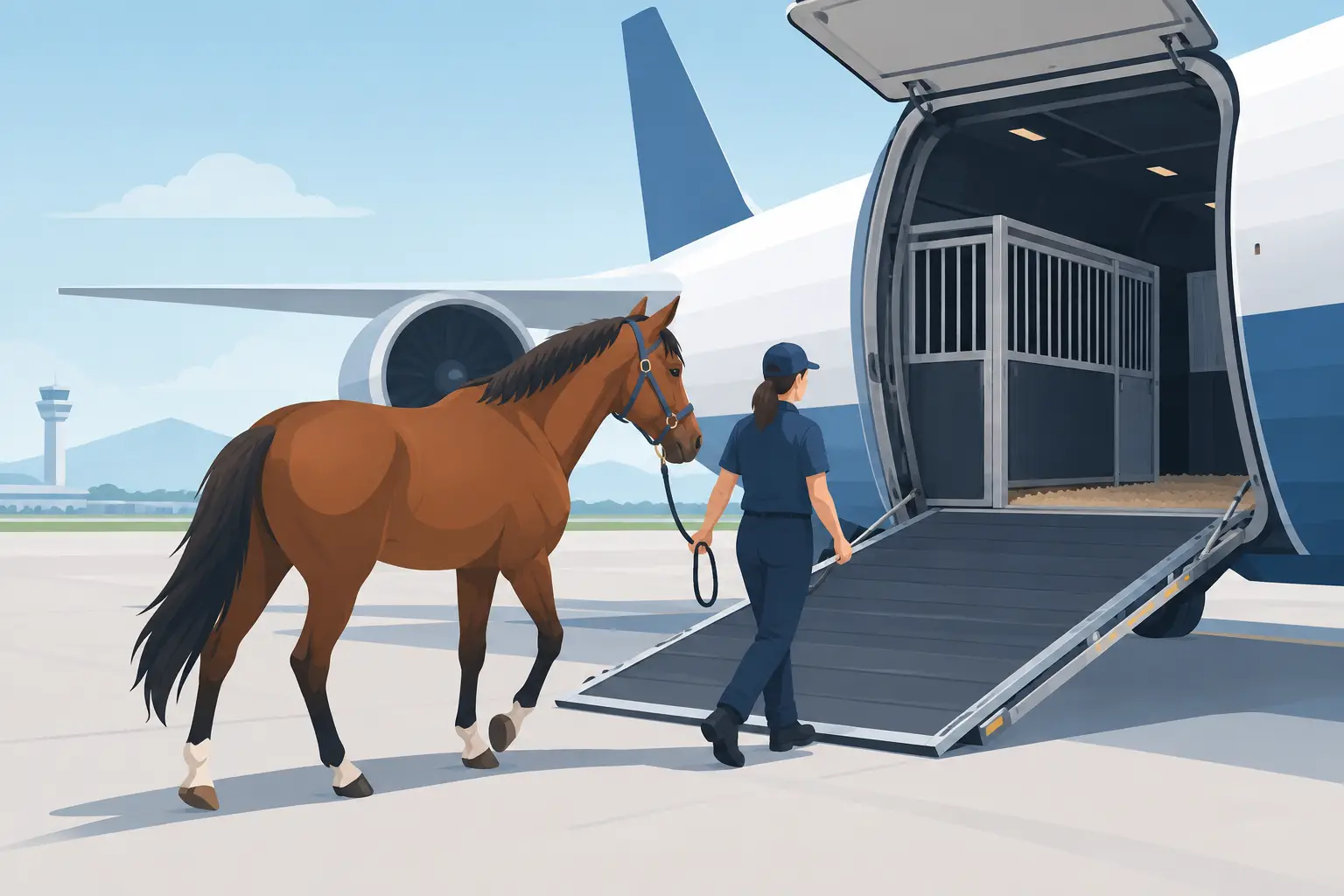
For many international moves, horses travel in specialized air stalls designed to provide support and controlled separation during flight. Depending on the aircraft and shipment plan, a stall may accommodate one, two, or three horses. The appropriate configuration depends on the horse’s size, behavior, familiarity with other horses, veterinary guidance, and the carrier’s operating procedures.
Professional equine grooms or attendants are a central part of safe transport. They monitor horses during loading and flight, offer water and feed according to the travel plan, observe behavior, and communicate concerns to the appropriate flight and veterinary personnel. Their experience matters most when a horse is anxious, inexperienced, valuable, or traveling a long international route.
Equine Air Transport Review: The Standards That Matter
A meaningful equine air transport review should look beyond the advertised flight schedule. The real measure of a provider is how it manages the points where stress and risk can develop.
First, assess species-specific expertise. Horses require different handling methods, containment equipment, feeding plans, and loading procedures than companion animals, livestock, or other large animals. A transport coordinator should be able to discuss your horse’s age, breed, size, temperament, medical history, training, and previous travel experience before recommending an option.
Second, examine the pre-flight process. Responsible transportation begins well before the airport. A horse may need conditioning for travel, familiarization with loading ramps, careful scheduling of meals and exercise, and a stable-to-airport route that avoids unnecessary delays. International shipments often require official veterinary examinations, laboratory testing, import permits, export certificates, and quarantine planning. Missing or incorrect documents can delay departure or create serious problems at the destination.
Third, ask how welfare is protected during transitions. Airport ground time can be just as significant as time in the air. Horses need a managed environment while awaiting loading, with attention to weather, ventilation, access to water, handling continuity, and security. At arrival, the plan should specify who receives the horse, how customs and inspection procedures are handled, and how onward transport to the final stable will be organized.
Finally, consider communication. Owners and managers should not be left trying to interpret airline updates or government requirements on their own. A capable provider gives clear timelines, identifies paperwork deadlines early, explains possible variables, and remains available when schedules change.
Aircraft Choice, Route Planning, and Trade-Offs
The fastest-looking route is not always the best route for the horse. A direct flight may reduce transit time, but it may not be available from the nearest airport or may require a longer ground journey. A connecting route can sometimes offer better livestock facilities, more suitable departure timing, or a more practical arrival airport. The right decision depends on the individual shipment.
Scheduled cargo flights can be a cost-effective option for individual horses or smaller groups traveling on established international lanes. They operate on fixed schedules, so flexibility is limited and space must be reserved well in advance. Dedicated charter aircraft offer greater control over departure time, routing, and group configuration. They may be appropriate for multiple sport horses, breeding stock, racehorses, zoo-managed equids, or movements where timing is operationally critical. Chartering is usually a larger financial commitment, but it can reduce coordination challenges for complex group moves.
Climate and seasonal conditions also deserve attention. A summer departure from a hot region or a winter arrival in a cold climate can affect loading windows, ground handling procedures, and onward transport timing. A transport plan should account for local weather rather than treating every airport transfer as identical.
Health Preparation Should Be Individualized
A veterinarian familiar with the horse’s condition should guide fitness-to-travel decisions. This is especially important for young horses, senior horses, pregnant mares, horses recovering from illness or injury, and animals with respiratory, digestive, or behavioral concerns. Transport personnel can coordinate requirements, but they should never substitute generalized advice for veterinary assessment.
Hydration, respiratory health, and recovery time are common considerations. Horses should arrive at the airport appropriately prepared, but travel-day routines should not be changed abruptly without a reason. Feed, water, medication, protective equipment, and post-arrival care should be discussed in advance with the veterinarian, trainer, and transport coordinator.
Sedation is another area where caution is warranted. It is not a routine answer to travel anxiety. Sedation can affect balance, coordination, and a horse’s ability to respond normally during loading and flight. Any decision involving medication must be made by the attending veterinarian and communicated clearly to the transportation team.
Documentation Is Part of Animal Welfare
Paperwork may feel separate from care, but in equine transport it directly affects welfare. A documentation error can lead to prolonged holding, denied entry, unplanned quarantine, or a return shipment. Those outcomes can add stress for the horse and expense for the owner.
Requirements vary by destination and can change based on disease status, import policy, breed registry needs, intended use, and whether the horse is traveling temporarily or permanently. Typical requirements may include identification records, vaccination history, health certificates, import permits, diagnostic testing results, customs declarations, and proof of ownership. Competition horses may also need additional documents to preserve eligibility or support temporary admission.
The safest approach is to begin documentation planning early. Some tests and certificates have strict validity periods, while permits can take time to issue. A specialist transport team coordinates the schedule so that veterinary work, airline acceptance, government approvals, and flight dates remain aligned.
Questions to Ask Before You Approve a Flight Plan
Before committing to a provider, ask who will manage airport handling at both ends, whether experienced equine attendants will travel with the shipment, and how the company handles a missed connection or flight disruption. You should also understand the stall configuration, ground transport plan, veterinary documentation responsibilities, and expected communication during the journey.
Price deserves a clear conversation as well. A lower quote may exclude ground transfers, stall charges, customs support, quarantine arrangements, insurance options, or destination handling. A complete proposal should identify what is included and where costs may change. For a valuable horse or a beloved lifelong companion, clarity is more useful than a headline price that leaves critical services undefined.
Global Animal Transport approaches equine relocations as living-animal operations requiring detailed planning, humane handling, and dependable coordination. Whether the move involves one horse or a larger international shipment, the transportation plan should be built around the animal’s needs and the realities of the route.
A well-managed flight gives a horse the best possible start at its new destination. Choose a transport partner that asks careful questions, plans for the full journey rather than only the flight, and treats every handoff as part of the horse’s care.
