
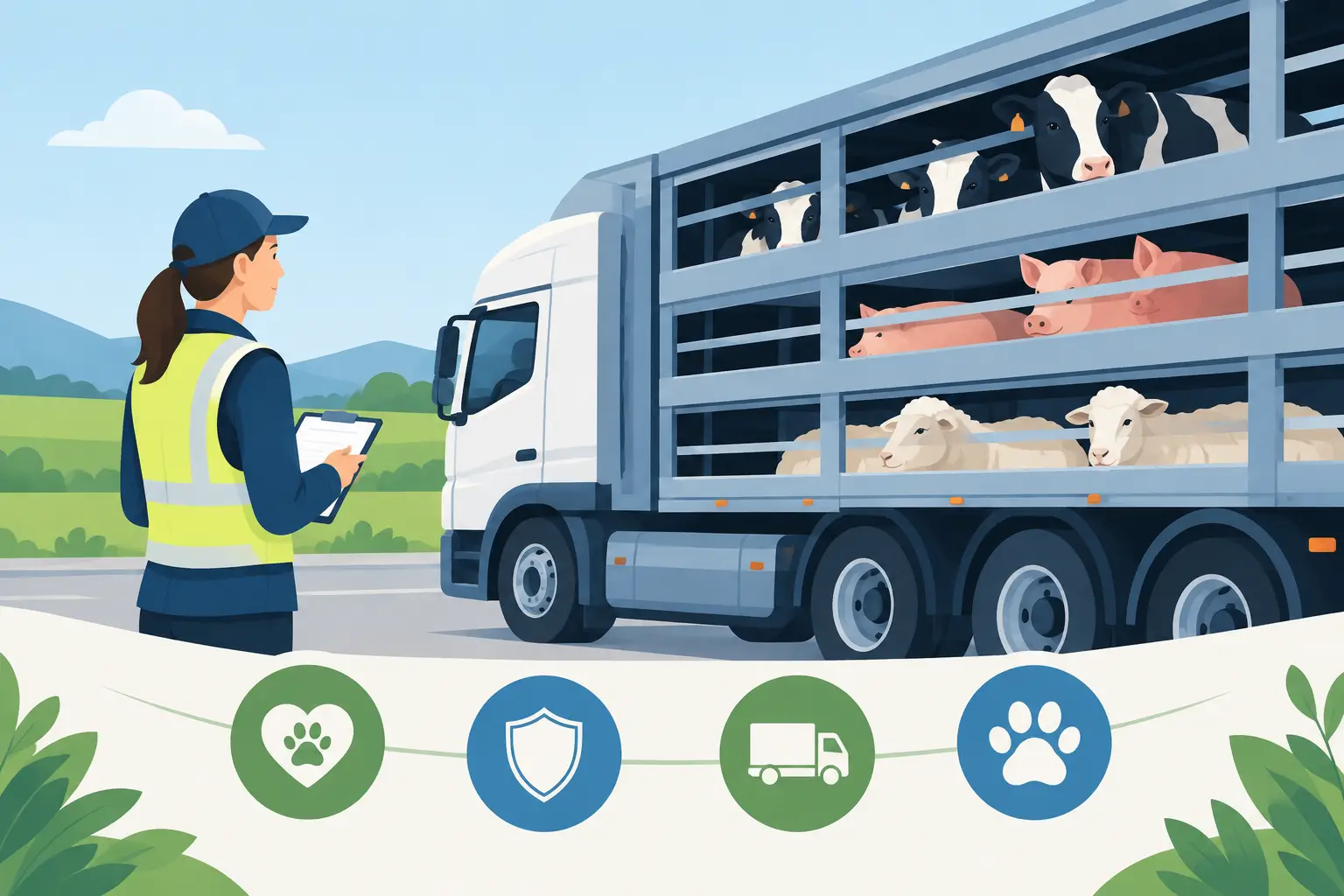
Top Animal Welfare Standards for Safe Transport
A transport crate closing is not the beginning of animal welfare planning. By that point, the animal’s route, enclosure, feeding schedule, climate needs, handling plan, and required documentation should already be in place. The top animal welfare standards in transport are not limited to getting an animal from origin to destination. They protect the animal’s physical condition and reduce avoidable stress at every handoff along the way.
For a family relocating with a dog, a livestock operator coordinating a shipment, or a zoo moving a valuable species, the details differ. The responsibility does not. Safe transport requires species knowledge, careful coordination, and decisions that put humane handling ahead of convenience.
What Top Animal Welfare Standards Require
Animal welfare in transportation rests on a simple principle: each animal must be fit to travel and supported in conditions appropriate to its species, age, health, behavior, and journey length. A plan that is suitable for a healthy adult cat may be unsafe for a brachycephalic dog, a mare and foal, tropical fish, or a temperature-sensitive reptile.
Leading standards bring together regulatory compliance and practical care. International shipments may involve airline rules, import permits, veterinary certificates, quarantine requirements, and country-specific restrictions. Those documents matter, but paperwork alone does not make a shipment humane. Welfare depends on how the animal is prepared, contained, monitored, loaded, transferred, and received.
A professional plan also accounts for what can go wrong. Weather delays, missed connections, airport congestion, road closures, and changes in an animal’s condition can happen. The right provider builds contingency procedures before departure, with clear responsibility for communication and care.
Fitness to Travel Comes First
The most humane shipment is sometimes the one that is postponed. Animals that are ill, injured, heavily sedated, in late pregnancy, extremely young, or recovering from a procedure may not be suitable for transport. A veterinarian should assess health and travel readiness when required or when there is any concern.
Fitness is more than the absence of visible illness. It includes hydration, respiratory function, mobility, temperament, and the animal’s ability to tolerate confinement and handling. For large animals, secure footing and loading tolerance are essential. For aquatic animals, water quality and oxygen demand can determine whether a route is viable. For exotic species, a small change in temperature or humidity can create serious risk.
Sedation deserves particular caution. It may seem like a compassionate way to calm an anxious animal, but it can affect balance, breathing, body temperature regulation, and the ability to respond normally during transit. Sedation should never be treated as a standard transport solution. Any medication decision belongs with a qualified veterinarian and must be considered against the specific travel conditions.
Species-Appropriate Enclosures and Support Systems
An enclosure is not simply a container. It is the animal’s immediate environment during a period when normal routines are disrupted. It must prevent escape and injury while allowing safe ventilation, appropriate posture, and protection from weather, noise, and unnecessary disturbance.
For many companion animals, that means an airline-compliant crate sized so the animal can stand naturally, turn around, and lie down comfortably. The crate must be secure, clean, well ventilated, and clearly identified. Familiarization before travel can reduce stress significantly. A pet introduced to its crate only on departure day is likely to experience more anxiety than one given time to rest in it voluntarily at home.
The standard changes with the species. Livestock may require non-slip flooring, partitions, safe loading ramps, and enough headroom to maintain balance. Zoological animals may need custom-built containment that supports natural posture and minimizes visual stress. Fish and other aquatic species require stable water conditions, temperature control, oxygen management, and carefully calculated stocking density.
More space is not always automatically better if it allows an animal to be thrown off balance during movement. The goal is secure, species-appropriate positioning rather than a one-size-fits-all enclosure rule.
Climate, Ventilation, and Timing Are Welfare Decisions
Temperature exposure is one of the most underestimated transport risks. An animal may be comfortable inside a climate-controlled home, then face extreme heat or cold during vehicle loading, cargo transfer, customs processing, or a delay on the tarmac. Welfare-focused planning considers the full route, not just the flight or drive itself.
This includes selecting departure times, routing through appropriate hubs, arranging suitable vehicles, and limiting time in uncontrolled environments. Seasonal restrictions and airline temperature embargoes can be frustrating, but they exist for a reason. When environmental conditions exceed safe limits, changing the travel date or route is often the responsible decision.
Ventilation must be maintained without exposing the animal to excessive drafts or unsafe temperatures. The right balance depends on the animal and the mode of transport. A short domestic move may require a different setup than a multi-leg international relocation with customs clearance and overnight care requirements.
Humane Handling at Every Transfer Point
Even a perfectly prepared shipment can be compromised by poor handling. Animals should be moved by trained personnel who understand safe lifting, loading, restraint, and species-specific behavior. Quiet, deliberate handling reduces injury risk and helps prevent panic.
Transfer points deserve special attention because they create unfamiliar sounds, people, surfaces, and routines. A welfare-centered plan limits unnecessary handling and avoids leaving animals unattended. It also establishes who is authorized to make decisions if the itinerary changes or the animal needs immediate care.
For institutional movements, chain-of-custody procedures are especially valuable. They confirm which team has responsibility at each stage and ensure that records, feeding instructions, medication information, and emergency contacts travel with the animal. For pet owners, clear updates can provide needed reassurance without creating false certainty during time-sensitive operations.
Food, Water, Rest, and Sanitation
Feeding and watering instructions should be based on the species, age, health, and expected transit duration. Overfeeding immediately before travel can be as problematic as underfeeding, particularly when motion sickness or digestive sensitivity is a concern. Access to water must be planned in a way that is practical for the enclosure and the journey.
Longer routes may require scheduled rest, cleaning, watering, feeding, or welfare checks. These arrangements should be confirmed in advance, not improvised after a delay. For livestock, the need for rest intervals and appropriate care may be governed by route-specific rules. For aquatic shipments, care may involve managing oxygen, water chemistry, and temperature rather than conventional feeding stops.
Sanitation protects both welfare and biosecurity. Enclosures, vehicles, and support equipment should be cleaned and maintained appropriately between uses. Waste management and disease-control practices are particularly important for agricultural animals, zoological collections, and shipments crossing borders.
Documentation Supports Animal Welfare
Permits, health certificates, vaccination records, microchip details, customs declarations, and import approvals can feel administrative, but incomplete documents can result in delays, refusal of entry, extended holding, or quarantine complications. Those outcomes directly affect animal welfare.
Requirements vary by destination, species, and purpose of travel. A pet relocation, breeding movement, conservation transfer, and commercial livestock shipment may each follow different rules. Working from current requirements matters because regulations can change, and a document accepted for one country or carrier may not satisfy another.
Accurate identification is equally critical. Clear crate labels, animal records, contact information, feeding instructions, and destination details help prevent mishandling during a complex move. For shipments involving multiple animals, individual identification and a precise manifest protect both welfare and accountability.
Choosing a Transport Partner That Meets the Standard
Transport providers should be evaluated on more than price or route availability. Ask how they assess fitness to travel, select enclosures, manage weather risk, coordinate veterinary documentation, and respond to delays. A credible provider should be able to explain its process in practical terms, including the limits of what can safely be promised.
Experience with the specific animal category matters. Moving a household pet is not the same as transporting horses, aquarium life, livestock, or zoological species. Each requires different equipment, regulations, handling methods, and support arrangements. Global Animal Transport plans domestic and international movements around those distinctions, with species-specific coordination from pickup through final delivery.
The best animal transport plan is one that makes careful decisions before the journey becomes urgent. When welfare standards shape the route, timing, containment, and care plan from the start, animals arrive with the best possible protection from avoidable stress and risk.
