
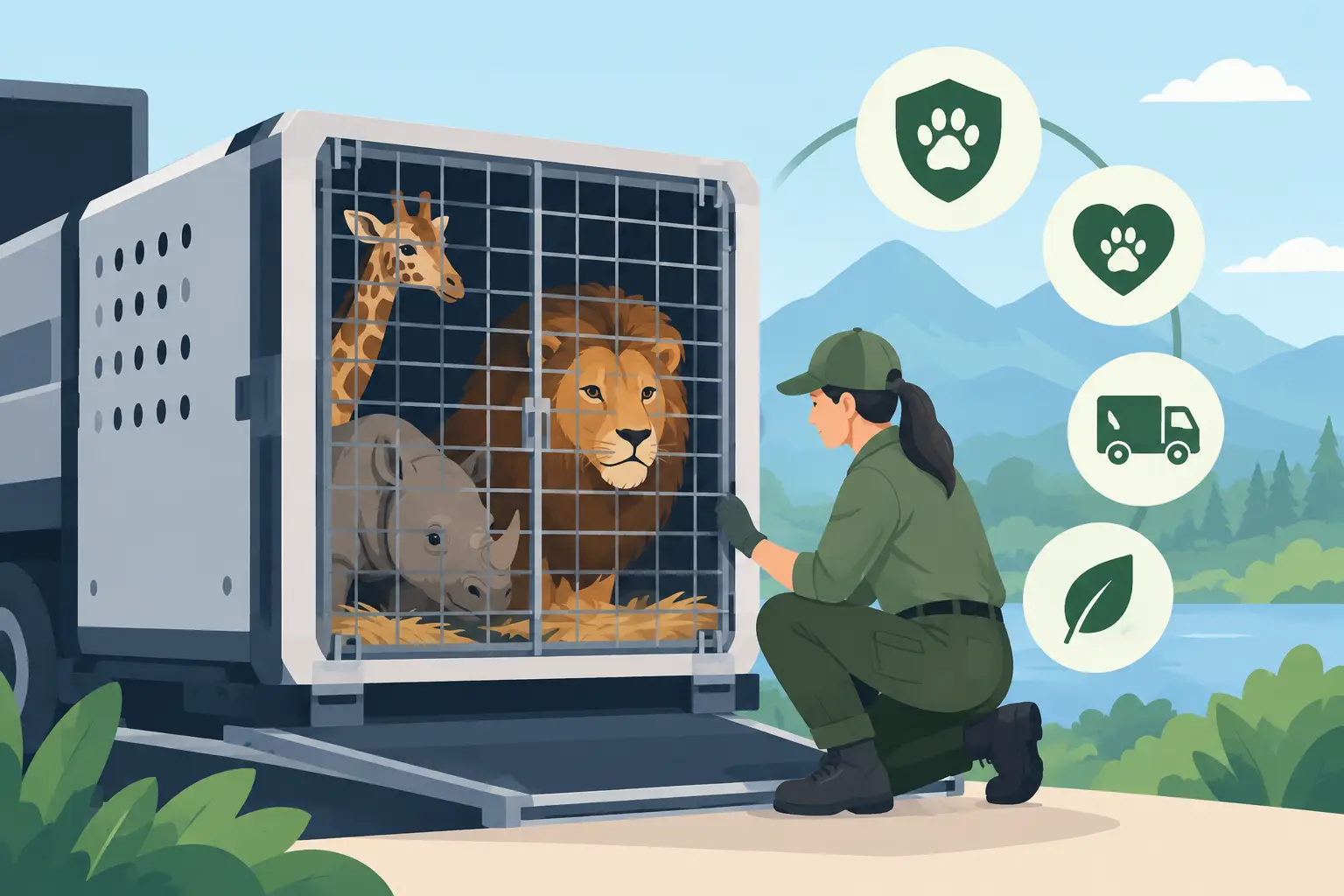
Top Wildlife Transport Safeguards That Protect Animals
A wildlife shipment can be compromised long before an aircraft departs or a vehicle leaves the facility. A missed permit, an unsuitable crate, an unplanned temperature change, or an inexperienced handoff can create unnecessary stress and real welfare risks. The top wildlife transport safeguards address the entire journey, from species assessment and regulatory planning to arrival coordination and post-transit observation.
For zoos, aquariums, conservation organizations, breeders, and private owners, safe transport is not a standard freight exercise. Each animal has physical, behavioral, environmental, and legal needs that must be accounted for before movement begins. The right plan protects the animal while giving caretakers and receiving teams clear confidence in every stage of the relocation.
Start With a Species-Specific Transport Plan
No two wildlife movements should be treated as interchangeable. A primate, a large cat, a raptor, a sea turtle, and a group of ornamental fish may all travel by air, but their transport requirements differ significantly. Species, age, health status, social dynamics, temperament, size, climate tolerance, feeding schedule, and the expected duration of travel all shape the plan.
A proper assessment also considers why the animal is moving. A conservation transfer, veterinary referral, breeding placement, exhibit relocation, rescue response, or international import may carry different handling requirements and timelines. For bonded animals, keeping compatible companions together may reduce stress. In other cases, separation is necessary to prevent injury or aggression.
The safest approach is to establish the route, equipment, personnel, contingencies, and care instructions before booking transportation. Last-minute changes can sometimes be managed, but they should never become the operating model for live-animal transport.
Secure Permits and Documentation Before Scheduling
Wildlife transport frequently involves a layered set of regulations. Depending on the species and origin or destination, documentation may include health certificates, import or export permits, ownership records, veterinary statements, quarantine arrangements, and wildlife trade documentation. International moves may also require coordination with customs officials, government agencies, and receiving facilities.
Documentation is more than administrative work. An incomplete or inaccurate file can delay clearance, hold an animal in an unsuitable location, or prevent a shipment from departing altogether. Those outcomes can affect welfare, particularly for animals with narrow temperature, hydration, or handling tolerances.
Experienced coordination helps align document validity dates with the actual travel schedule. Some health certificates and permits have limited windows, while inspections and endorsements may need to occur in a specific sequence. A transport team should verify requirements early and allow time for agency processing, veterinary appointments, and route adjustments.
Plan for Border Delays, Not Just Ideal Timing
Even well-prepared shipments can encounter weather disruptions, flight changes, inspections, or congestion at a port of entry. Responsible planning includes realistic layover windows, suitable holding arrangements, accessible contact information, and clear authority for decision-making if the original schedule changes.
For sensitive species, the best route is not always the shortest route on paper. A slightly longer itinerary with reliable ground handling, climate-controlled facilities, and fewer transfers may be the safer choice.
Use Properly Engineered, Species-Appropriate Containment
The transport container is one of the most visible safeguards, but it is only effective when selected for the individual animal and mode of travel. Appropriate containment must provide security, ventilation, structural integrity, safe loading access, and enough room for the animal to maintain a natural, stable posture where applicable.
Container design should prevent escape and injury without creating sharp edges, pinch points, or excessive restriction. Flooring may need to provide traction, absorb moisture, support bedding, or allow waste management. For certain species, visual barriers can reduce stimulation. For others, visibility and airflow are more important. Aquatic shipments require dependable water-quality management, oxygenation, insulation, and packaging that accounts for movement during transit.
Container familiarization can be valuable when timing allows. Animals that have been calmly introduced to a travel crate or stall before the move may enter with less resistance and lower stress. This is especially useful for animals accustomed to routine husbandry and positive reinforcement.
Protect Temperature, Air Quality, and Hydration
Environmental control is central to wildlife welfare in transit. Exposure to heat, cold, poor ventilation, direct sun, or abrupt temperature swings can become dangerous quickly, especially for young, elderly, medically sensitive, tropical, aquatic, or high-metabolism animals.
Transport planning should account for conditions at every point, not only during flight or vehicle movement. The transfer from enclosure to vehicle, time on a loading ramp, a stop at a cargo terminal, and arrival-side ground transport all matter. Seasonal weather, airport infrastructure, regional climate, and time of day can influence routing decisions.
Hydration and feeding plans must be species-specific and veterinarian-informed. More food is not automatically safer. Some animals may require pre-travel feeding adjustments, while others need carefully managed access to water or moisture-rich foods. The aim is to maintain welfare without creating choking, contamination, digestive, or sanitation concerns inside the container.
Continuous Monitoring Requires Clear Action Thresholds
Monitoring is useful only when someone knows what to do with the information. Temperature indicators, inspections, and handler observations should be tied to documented response steps. If conditions move outside an acceptable range, the team needs authority and resources to relocate the animal, adjust the environment, contact veterinary support, or change the route.
Limit Handling and Keep Chain of Custody Clear
Every unnecessary transfer introduces risk. Wildlife may react unpredictably to unfamiliar people, noise, scents, equipment, or confinement. The transport plan should minimize touchpoints and identify exactly who is responsible at each handoff.
This is especially critical when shipments involve multiple carriers, border crossings, specialized vehicles, or overnight holding. A clear chain of custody confirms who has possession of the animal, who can access the container, what care has been provided, and who must be notified of changes.
Handlers should be trained in the species or work under the direction of qualified animal professionals. Calm, deliberate handling is not simply a courtesy. It reduces the chance of escape, injury, overheating, and stress-related complications. Sedation is not a routine shortcut for transport and should only be considered under veterinary direction when the benefits clearly outweigh the risks.
Build Veterinary Oversight Into the Move
A pre-travel veterinary evaluation helps determine whether an animal is fit to travel and identifies conditions that may require special precautions. It can also ensure medications, health records, feeding directions, and emergency contacts are current before departure.
Veterinary planning is particularly important for animals with chronic conditions, recent procedures, reproductive concerns, advanced age, or a history of transport stress. For high-value zoological, breeding, or conservation animals, a detailed medical contingency plan can be as essential as the flight schedule.
The receiving facility should be ready before the animal arrives. That includes appropriate housing, trained staff, food and water, quarantine procedures where required, and a plan for observation after unloading. Arrival is a transition period, not the end of the welfare obligation.
Top Wildlife Transport Safeguards Depend on Communication
The strongest safeguards connect experienced people with current information. Animal caretakers, veterinarians, transport coordinators, handlers, carriers, regulatory contacts, and receiving teams need consistent instructions and a reliable way to communicate changes. A single outdated phone number or unclear care note can cause problems at the worst possible moment.
For complex domestic and international relocations, Global Animal Transport coordinates the operational details that protect live animals throughout the journey. That includes matching transport methods and support systems to the needs of pets, livestock, aquatic life, exotic species, and zoological animals.
The right question is not simply whether an animal can be moved. It is whether every person, document, container, and care decision is prepared to support that animal safely from departure through settling in at its destination.
