
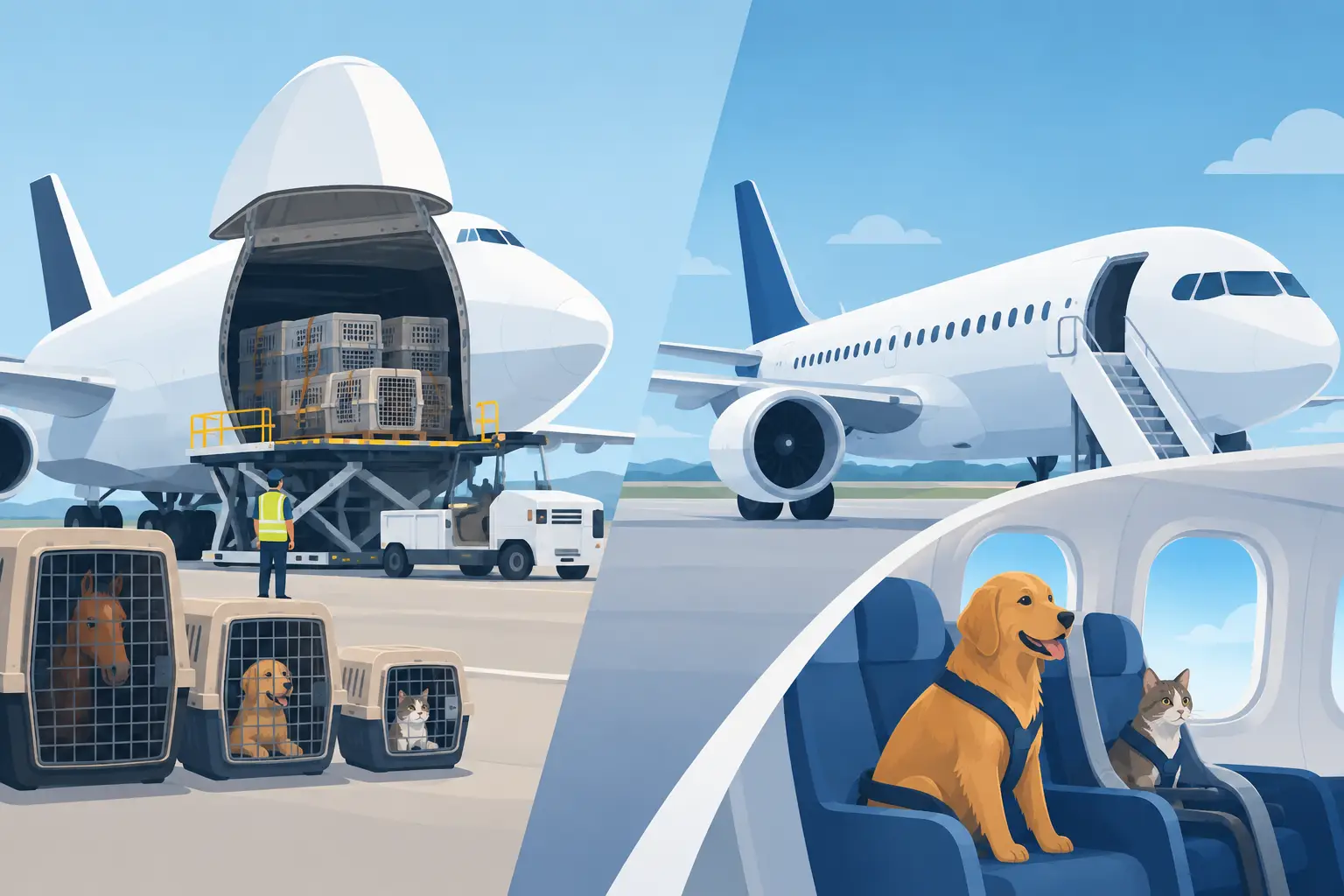
Cargo Freighter Versus Passenger Aircraft for Animals
A flight that looks efficient on a booking screen can be the wrong choice for a live animal. In the cargo freighter versus passenger aircraft decision, the priority is not simply finding available space. It is selecting an aircraft, route, ground team, crate plan, and handling process that protect the animal’s welfare from pickup through final delivery.
For a healthy family pet traveling on a well-served route, a passenger aircraft may be an appropriate option. For a group of zoo animals, livestock, aquatic life, oversized crates, or a move requiring dedicated schedules and specialized loading, a freighter or charter may offer better control. The right answer depends on the species, the shipment size, the season, the route, and the capabilities of the carrier at every point of the journey.
Cargo Freighter Versus Passenger Aircraft: The Core Difference
Passenger aircraft are designed first to carry travelers. Many have a designated, pressurized cargo hold where approved live animals may travel in airline-compliant crates. The animal is not in the cabin unless it meets the airline’s limited in-cabin requirements. Cargo capacity is shared with baggage, mail, and commercial shipments, so space and acceptance rules can change by aircraft type and flight schedule.
Cargo freighters are built to move freight. Their main decks can accommodate larger loads, more varied container configurations, and equipment that would not fit through a passenger aircraft’s smaller cargo doors. This makes freighters particularly relevant for large kennels, multiple animals, livestock units, zoological consignments, and specialized aquatic transport systems.
That difference does not mean a freighter is automatically safer, or that a passenger flight is automatically more comfortable. A suitable movement requires a carrier that accepts the particular species, an aircraft with appropriate environmental conditions, trained ground handling, and a route that limits avoidable stress. Some freighter operators do not accept live animals at all. Some passenger carriers maintain excellent live-animal programs, while others restrict them by route, season, breed, or destination.
When a Passenger Aircraft Can Be the Better Fit
For individual dogs, cats, and small companion animals, scheduled passenger service can provide practical advantages. It may offer more direct city pairs, more frequent departures, and shorter total transit times. A direct overnight flight, supported by experienced origin and destination handlers, can be preferable to a longer itinerary with multiple transfers simply because it is easier to coordinate and exposes the animal to fewer handoffs.
Passenger service can also be the most sensible choice when an owner is relocating on the same itinerary, although the animal’s transport requirements remain separate from the owner’s ticket. Airline cargo acceptance, crate dimensions, veterinary documentation, import permits, and arrival procedures must still be confirmed well in advance.
There are limits. Passenger aircraft may have narrow door dimensions and restricted hold capacity, making large crates or unusual species impractical. Certain temperature-sensitive breeds and animals with respiratory concerns may face seasonal embargoes. A flight with a short connection might look efficient, but it can leave too little margin for safe transfer, customs processing, or weather delays.
For companion animals, the goal is usually not the cheapest available flight. It is the itinerary with the best balance of direct routing, confirmed live-animal acceptance, appropriate environmental controls, and reliable care during ground handling.
The hold environment matters more than the label
Animals approved to travel in a passenger aircraft’s hold are typically placed in a designated cargo compartment that is pressurized and temperature controlled. However, conditions can vary by aircraft model and carrier procedure. The relevant question is not whether a plane is a passenger jet. It is whether the specific flight’s animal compartment is approved and suitable for that animal.
A professional transport plan verifies crate orientation, ventilation clearance, loading procedures, and restrictions for the scheduled equipment. It also accounts for time on the ramp, where outdoor temperatures can become the controlling risk rather than the conditions in flight.
When a Cargo Freighter Is the Better Choice
A cargo freighter is often the more capable platform when animal shipments are large, complex, or physically oversized. Freighters can provide the door size and floor space needed for large animal containers, multiple units, livestock pens, or purpose-built aquatic systems. They can also support charter planning when a scheduled commercial itinerary cannot meet the required timing or handling standard.
For zoological and conservation movements, the shipment may involve multiple species, specialized containers, veterinary support, and coordinated arrival access at a secure facility. Large mammals may require reinforced crates, carefully controlled loading, and equipment that must be positioned before the animals arrive. Aquatic animals and fish may travel with life-support systems that demand stable planning, rapid transfers, and close attention to total transit time.
Freighters can also be valuable when a shipper needs greater control over the operating plan. A charter can be timed around an animal’s readiness, a receiving facility’s availability, or a carefully managed weather window. For a high-value breeding program, a livestock move, or an urgent conservation relocation, that control can be decisive.
Yet freighter transport has its own trade-offs. Scheduled freighter networks do not serve every airport or operate every day. The closest freighter gateway may require a longer ground transfer. Cargo operations can have different warehouse procedures and cut-off times than passenger terminals. The planning team must evaluate the complete journey, not only the airborne segment.
Specialized space does not replace specialized care
More room is useful only when it supports a well-designed animal transport plan. A large crate must still meet species-specific requirements for strength, ventilation, drainage, access, and safe loading. The animal may need acclimation to the container before travel, especially when it is unfamiliar with confinement or when the journey involves a long international route.
Freighter moves also require clear responsibility for monitoring and handoffs. Who receives the animal at the origin facility? Who confirms the unit is loaded? Who meets the shipment at destination, manages customs clearance, and provides onward transport? These details are central to humane handling, not administrative extras.
The Factors That Should Drive the Decision
Aircraft choice should follow the animal’s needs, not a standard shipping formula. Species, age, health status, temperament, size, and tolerance for confinement all influence the plan. A young puppy, a brachycephalic dog, a breeding stallion, a school of tropical fish, and a pair of endangered primates cannot be managed under the same assumptions.
The route is equally important. Direct service is generally desirable, but only if the carrier can safely accept the animal and the destination procedures are ready. In some cases, a slightly longer route through an experienced animal gateway is safer than a direct flight through an airport with limited live-animal infrastructure.
Timing matters as well. Extreme heat, cold weather, holiday congestion, and overnight warehouse schedules can affect acceptance and welfare. International transport adds veterinary certificates, import permits, inspections, quarantine requirements, and country-specific restrictions. A missing document can turn a carefully booked flight into an extended, stressful delay.
The crate or transport container is another deciding factor. It must be correctly sized, secure, and appropriate to the species. An animal should be able to stand naturally, turn around, and lie down comfortably when applicable. For larger or exotic species, container engineering may be a major part of the transport operation rather than a simple pre-flight purchase.
Planning for a Safe, Humane Air Movement
The strongest plans begin before a flight is reserved. First, assess the animal and the destination requirements. Veterinary guidance may be needed to determine fitness to fly, while import regulations establish the health records, permits, and timing requirements for entry.
Next, identify aircraft and carrier options based on real operating conditions. This includes live-animal acceptance, aircraft suitability, route length, connection time, seasonal restrictions, and available handling support. A quoted itinerary should be checked for more than departure and arrival times.
Then coordinate the ground movement. Safe transport includes pickup, pre-flight holding, airline delivery, loading, customs clearance, arrival collection, and final delivery. For sensitive species, the plan may include controlled vehicles, veterinary oversight, prearranged feeding or watering instructions, and immediate transfer from the airport.
Communication is vital throughout. Owners and institutional teams deserve clear expectations about preparation, documentation, timing, and potential contingencies. Animals do not benefit from last-minute improvisation. They benefit from a team that anticipates disruption and has practical alternatives ready.
Choose the Aircraft Around the Animal
The cargo freighter versus passenger aircraft question is best answered case by case. Passenger service may be ideal for a straightforward pet relocation on a reliable direct route. A freighter or charter may be the responsible choice when the shipment is large, specialized, time-sensitive, or requires equipment and handling beyond passenger-aircraft limits.
Global Animal Transport approaches aircraft selection as one part of a complete welfare-focused operation. The most appropriate flight is the one supported by correct documentation, species-appropriate containment, experienced handlers, and a destination plan that keeps the animal moving safely forward. When a living animal is in transit, thoughtful planning is the care that travels with them.
