
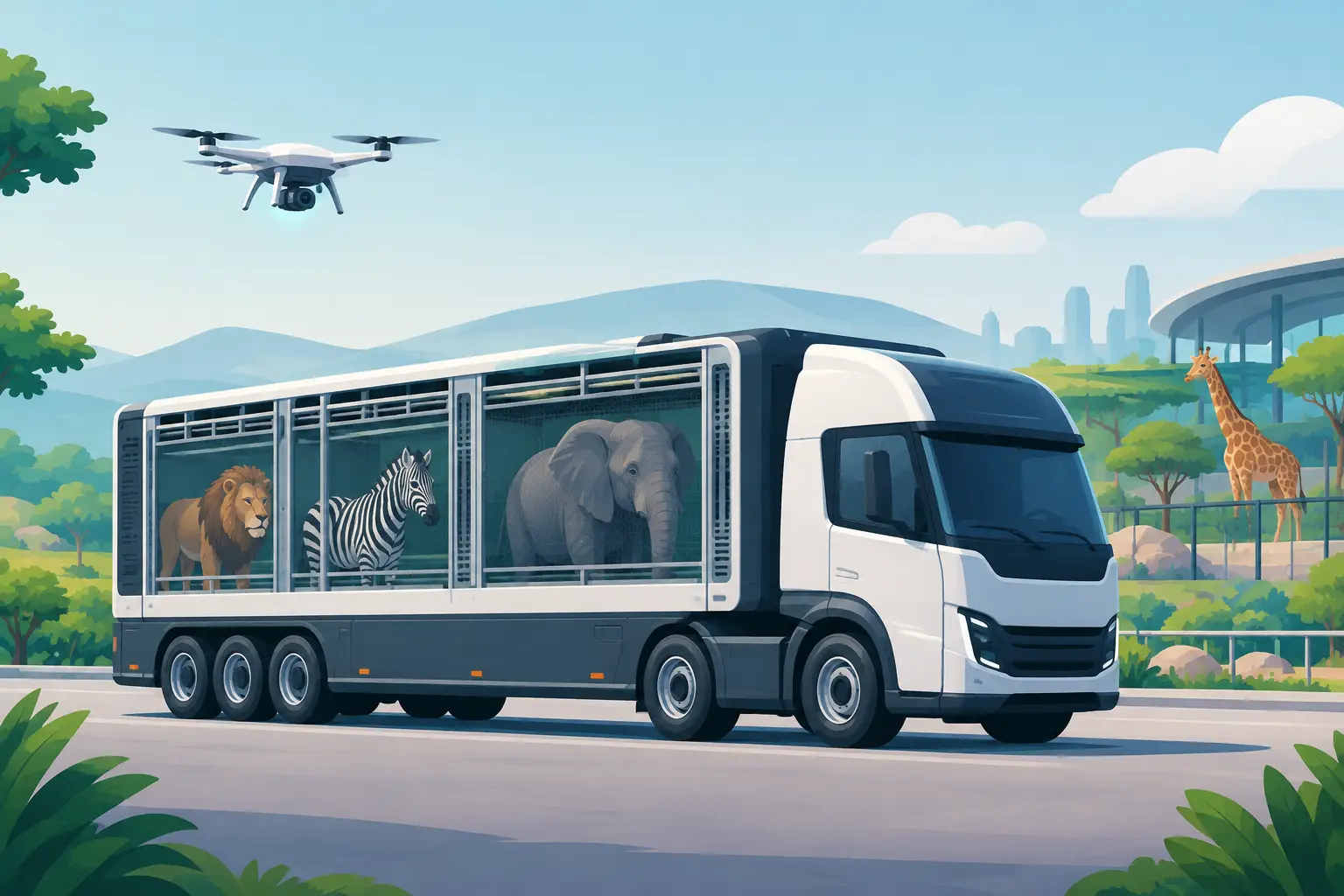
Future Trends in Zoo Transport That Matter
A zoo animal shipment is never simply a matter of moving an animal from one facility to another. It may support a breeding recommendation, a conservation partnership, specialized veterinary care, or the long-term welfare of an individual animal. The future trends in zoo transport point toward the same priority: using better planning and better technology to reduce uncertainty and protect animal welfare at every stage.
For zoos, aquariums, and conservation organizations, that means transport decisions will become more individualized, data-informed, and closely coordinated across animal care, veterinary, regulatory, and logistics teams. The aircraft, vehicle, crate, or vessel still matters. But the quality of the plan around it matters just as much.
Future Trends in Zoo Transport Start With Individual Welfare
The most significant change is a move away from standardized assumptions. Species-specific handling has long been central to professional zoological transport, but future planning will go further by accounting for the individual animal’s history, temperament, age, health status, social needs, and previous experience with crates or travel.
A healthy adult animal that has been conditioned to enter a transport enclosure may require a very different approach than a geriatric animal, a nursing female, or an animal undergoing a sensitive introduction to a new social group. The safest plan is not automatically the shortest route or the lowest-cost option. It is the plan that best manages the animal’s known needs and the risks associated with the journey.
Behavioral conditioning will continue to become a larger part of pre-transport preparation. Positive training can help animals voluntarily enter crates, become familiar with routine handling, and tolerate veterinary checks with less stress. This work requires time and coordination well before departure, but it can improve both welfare and operational predictability on travel day.
Transport Enclosures Will Become More Adaptive
Transport containers must provide security, ventilation, safe footing, access for observation, and appropriate space without creating unnecessary movement or injury risk. Future enclosure designs are likely to include more modular features that allow qualified teams to adjust partitions, feeding access, visual barriers, and climate support for the species and trip profile.
For some animals, reducing visual stimulation is beneficial. For others, careful visibility may support monitoring or minimize distress. Similarly, more interior space is not always better if it allows an animal to lose balance during turbulence or vehicle movement. Experienced planning considers those trade-offs rather than relying on a single container formula.
Real-Time Monitoring Will Improve Transport Decisions
Environmental monitoring is becoming more precise and more practical. Sensors can track temperature, humidity, light, vibration, air quality indicators, and location throughout a shipment. For live animal transport, the value is not merely having more data. It is knowing which conditions require action and ensuring the right people can respond.
A temperature alert inside a crate, for example, may call for a different response depending on the species, the duration of exposure, the animal’s health, and the surrounding cargo environment. Monitoring systems must be paired with clear escalation procedures, trained escorts or handlers when required, and reliable communication between the transport provider, carrier, and receiving institution.
Video technology may also have a growing role in selected movements, particularly when it supports observation without repeatedly disturbing an animal. However, it is not appropriate or necessary for every shipment. Cameras add equipment, power, data-management, and privacy considerations. They should complement direct professional observation, not replace it.
Smarter Routing Means Fewer Avoidable Stressors
Future zoo transport planning will increasingly assess a route as a complete welfare experience, not only an itinerary. That includes ground transit time, airport infrastructure, weather exposure, layover conditions, cargo acceptance timelines, customs clearance, and the availability of secure holding areas.
Direct flights can reduce total travel time, but they are not always the best option if departure or arrival conditions are poorly suited to the animal. A carefully managed connection with experienced ground handling may be preferable to a direct route involving excessive tarmac exposure or limited access to a climate-controlled facility. The answer depends on the species, season, origin and destination requirements, and the animal’s individual condition.
Contingency planning will become even more detailed as weather patterns, airline schedules, and border processes remain variable. A professional plan should identify alternate flights, safe holding options, veterinary contacts, backup equipment, and decision-makers before the animal begins the journey. When conditions change, prepared teams can act calmly instead of improvising under pressure.
Regulation and Conservation Coordination Will Remain Essential
Technology cannot simplify the legal and ethical responsibilities associated with moving zoological animals. International transport may involve wildlife permits, health certificates, import approvals, export clearances, carrier requirements, quarantine arrangements, and institutional documentation. For endangered or protected species, a missing or inaccurate document can delay a movement and create serious welfare concerns.
One emerging trend is closer coordination between transport planning and conservation program timelines. Breeding and species-management decisions often depend on animals arriving safely within a particular window, yet welfare cannot be compromised to meet an administrative target. Early collaboration gives institutions more options and reduces the chance that a last-minute change will place animals in unsuitable travel conditions.
Digital document management can improve visibility among approved stakeholders, particularly for complex international shipments. Still, original documents, permit validity, and jurisdiction-specific rules remain critical. Systems can make coordination more efficient, but experienced review is what prevents a small error from becoming a major delay.
Lower-Impact Logistics Need Practical Solutions
Sustainability is becoming a more prominent consideration in animal logistics, including zoo transport. Institutions may seek to reduce unnecessary repositioning, consolidate compatible planning activities, select efficient routes, and use reusable equipment when hygiene and safety requirements allow.
There are limits to this approach. Animals should never be grouped, delayed, or routed through unsuitable locations simply to reduce emissions or costs. Welfare, compliance, and species-specific care remain the foundation of every movement. The practical opportunity is to make better decisions earlier, such as coordinating schedules across institutions and avoiding preventable last-minute routing changes.
For aquatic animals, sustainability discussions may also include water management, filtration support, temperature control, and the careful use of life-support equipment. These shipments demand specialized expertise because water quality and oxygenation can change rapidly. The future will bring improved systems, but success will still depend on knowledgeable teams monitoring the entire journey.
The Human Element Will Define the Best Outcomes
Automation, sensors, and digital platforms will improve visibility, but zoological transport will remain a people-centered service. Animal care professionals understand behavior. Veterinarians assess medical risk. logistics specialists coordinate carriers, permits, equipment, and contingency plans. Skilled handlers recognize when an animal’s behavior calls for a pause, adjustment, or veterinary consultation.
The strongest transport programs will bring these perspectives together early. Rather than treating animal care as separate from logistics, they will build welfare considerations into every operational decision, from crate design and route selection to receiving protocols and post-arrival observation.
Receiving facilities will also place greater emphasis on arrival planning. Quiet unloading areas, prepared habitats or holding spaces, familiar diet items, appropriate social introductions, and veterinary observation can make the transition easier after travel. A successful shipment is measured not at touchdown, but when the animal has safely settled into appropriate care.
For institutions managing complex moves, the most valuable next step is early consultation with a specialized transport partner. Global Animal Transport helps coordinate species-specific planning, global routing, regulatory requirements, and humane handling so each movement can be built around the animal, not forced into a generic logistics process.
