
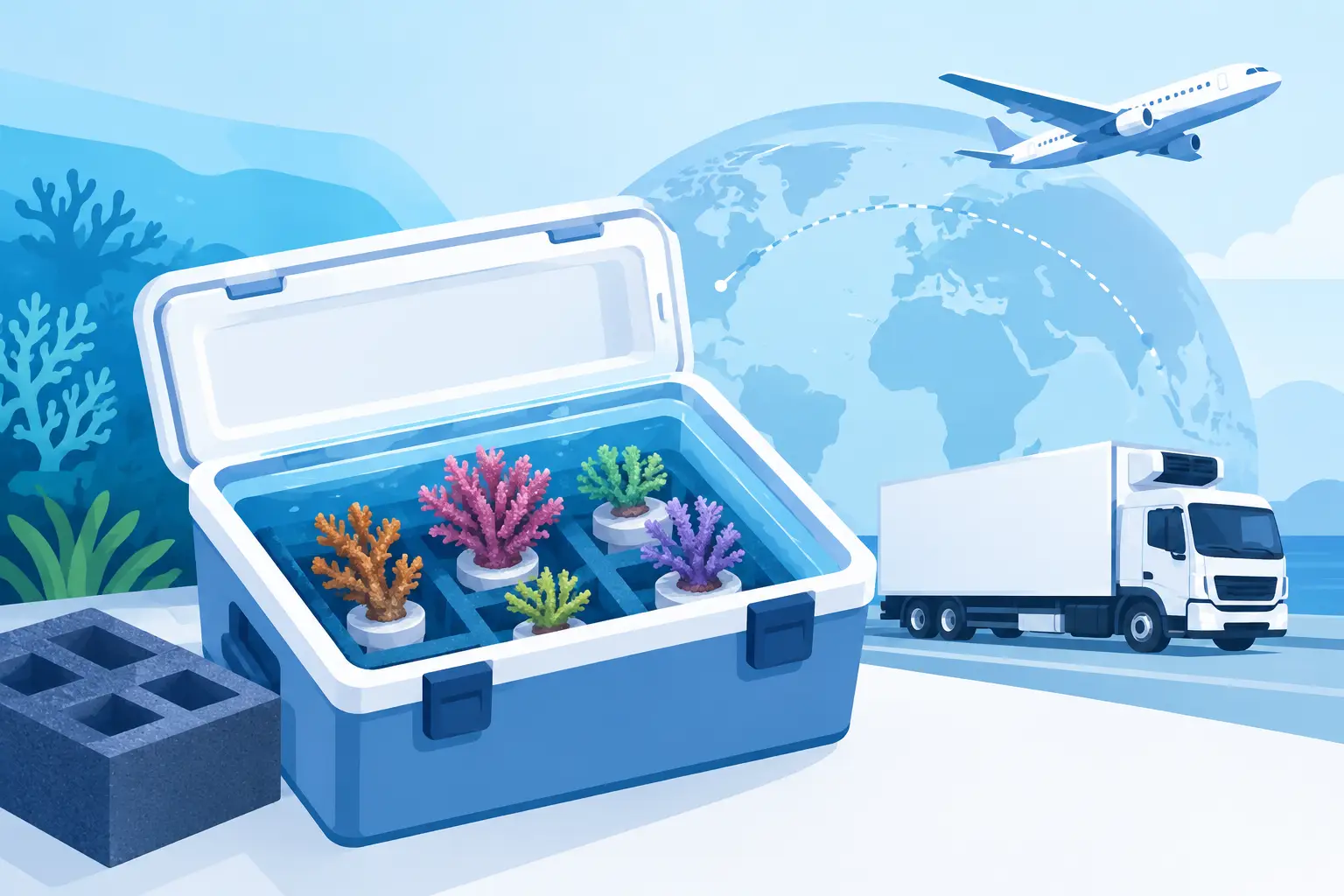
How to Transport Live Corals Safely Across Distances
Live corals are not ordinary freight. They are living reef animals with narrow tolerances for temperature, oxygen, water quality, handling, and time in transit. Knowing how to transport live corals means planning around those needs from the moment a colony is removed from its system until it is acclimated at its destination.
For a short local move, a careful aquarium owner may be able to prepare and transport hardy specimens safely. For interstate, international, commercial, conservation, or aquarium shipments, professional coordination is usually the responsible choice. The more valuable, sensitive, regulated, or time-critical the coral, the less room there is for improvisation.
Start With the Coral’s Health and Travel Readiness
Only transport corals that are stable, healthy, and showing normal tissue extension and color for their species. A colony already experiencing bleaching, tissue recession, pest damage, or sudden changes in water chemistry may not tolerate shipping stress well. If a move can be postponed until the coral has recovered, postponement is often the safer decision.
Preparation should begin before packing day. Maintain stable aquarium conditions, avoid unnecessary handling, and confirm the coral has adequate reserves. Some experienced shippers reduce feeding shortly before transit to limit waste production in the shipping water, but the right approach depends on the species, size, health condition, and expected journey length.
Fragile branching corals, large-polyp stony corals, and species with sharp skeletons require especially thoughtful handling. Their tissue can be damaged by abrasion, while their skeletons can puncture packaging if they shift during movement. Soft corals have different risks: they may release mucus, foul water quickly, or react poorly to compression and temperature swings.
Match the Transport Method to Transit Time
The safest method depends largely on how long the coral will be outside a controlled aquarium environment. A one-hour move across town is fundamentally different from a two-day air shipment involving customs clearance and final delivery.
For local transport, corals are commonly moved in clean, insulated containers using water from their established system. Keep the route direct, protect the containers from sunlight and cold vehicle surfaces, and avoid opening them unnecessarily. The goal is to preserve stable conditions, not to inspect the coral repeatedly during the trip.
For longer journeys, individually bagged transport is often more appropriate. Each specimen or carefully grouped compatible pieces should be secured so it cannot roll, collide, or rub against the bag. The bag is then placed inside an insulated outer container designed to reduce temperature movement and protect it from impact.
Air transport can shorten total travel time, but it also adds handoffs, cargo acceptance deadlines, screening requirements, and possible flight disruptions. Ocean transport may suit certain large-scale aquatic movements when a purpose-built, life-support-equipped system is used, but it is not a simple substitute for air freight. The transport plan must reflect the species, shipment volume, origin and destination infrastructure, and available monitoring capacity.
Control Temperature, Oxygen, and Water Quality
Temperature stability is one of the central requirements when transporting live corals. Even brief exposure to excessive heat or cold can create stress that is not immediately visible on arrival. Insulated shipping boxes, conditioned staging areas, and carefully selected seasonal routing all help reduce exposure.
Heat packs and cold packs can be useful, but they should never be placed directly against coral bags. Their output can be unpredictable inside a sealed box, particularly if the shipment is delayed. Professional shippers account for ambient weather, transit duration, package insulation, and the needs of the particular coral species before selecting temperature-control materials.
Oxygen availability matters as well. For longer bagged shipments, the headspace may be filled with oxygen rather than ordinary air. The bag must be properly sealed and sized to create an appropriate water-to-gas ratio. Overfilling a bag with water can leave too little oxygen reserve, while too little water may expose the coral to unnecessary movement or instability.
Water quality deteriorates as animals respire and release waste. Clean, stable source water, minimal contamination, appropriate packing density, and a realistic transit window are essential. Packing too many specimens together may reduce box count, but it can increase the risk of injury, oxygen depletion, and rapid water-quality decline. Saving space is not a sound reason to compromise animal welfare.
Package Each Coral to Prevent Injury
Secure containment prevents many avoidable losses. Corals should not be allowed to bounce freely during transport, and sharp or heavy skeletal structures should not rest directly against thin bag material.
Depending on the species, a coral may be attached to a stable plug, mounted on a transport support, or separated from other specimens using protective materials suitable for aquatic shipment. The objective is to prevent tissue abrasion and punctures without trapping the animal in a way that restricts water circulation or causes pressure damage.
Use new, durable bags rated for live aquatic transport, with a secondary bag as protection against leaks. Place bags upright in a rigid insulated container and use packing material to stop them from shifting. The outer container should be clearly identified for appropriate handling, while also complying with carrier and regulatory labeling requirements.
Do not rely on a standard cooler or cardboard box alone for a long trip. Insulation, structural strength, leak containment, orientation, and security all matter. A package can look intact externally while conditions inside have become unsafe.
Plan for Permits and Regulatory Requirements
Coral transport can involve complex legal requirements, particularly when crossing state or international borders. Many stony corals are regulated under the Convention on International Trade in Endangered Species of Wild Fauna and Flora, commonly called CITES. Import and export documentation, wildlife declarations, inspections, country-specific restrictions, and airline acceptance rules may apply.
Captive-bred corals may still require documentation. The scientific name, source, quantity, country of origin, intended destination, and purpose of movement can all affect the permits and declarations required. Rules may differ for commercial sales, aquarium transfers, research, conservation work, and personal relocation.
Never assume a coral shipment can be cleared simply because it was legally purchased. Incomplete paperwork can cause delays at the worst possible moment, leaving living animals in an unsuitable holding environment. Confirm requirements well before the shipping date, including destination rules and any permits needed for transshipment through another country.
Build a Contingency Plan Before Departure
A reliable live-coral transport plan accounts for what happens when the trip does not go exactly as scheduled. Weather holds, missed connections, customs inspections, vehicle problems, and delivery delays are real operational risks. A shipment that is safe for six hours may not be safe for 24.
Before departure, identify who can receive the shipment, what facility can temporarily hold it if needed, and how the recipient will acclimate it on arrival. Confirm contact numbers, flight or vehicle milestones, receiving hours, and after-hours escalation procedures. For high-value, sensitive, or institutional shipments, continuous communication and trained oversight are part of responsible logistics rather than optional extras.
The destination aquarium should be ready before the coral leaves the origin. This includes stable salinity, temperature, lighting, circulation, and quarantine capacity where appropriate. Arriving to an unprepared tank adds a second major stress event immediately after transit.
Acclimate Slowly After Arrival
Arrival is not the end of the transport process. Inspect the outer package first, then carefully assess bag temperature, water condition, and the coral’s appearance. If water parameters differ significantly from the destination system, gradual acclimation may help reduce shock.
Avoid placing a newly arrived coral directly under intense lighting. After a dark, confined journey, sudden high light can compound stress. Begin with lower light or a shaded placement, then adjust over several days as the coral recovers. Monitor for tissue recession, unusual mucus production, bleaching, or failure to open, and respond promptly if warning signs appear.
When Professional Coral Transport Is the Right Choice
Professional support is especially valuable for international moves, large-volume shipments, public aquariums, reef-restoration programs, zoological institutions, and high-value collections. These movements require more than careful packing. They need species-specific planning, compliant documentation, coordinated routing, contingency management, and humane handling at every transfer point.
Global Animal Transport helps coordinate complex live-animal logistics with a welfare-first approach, including specialized planning for aquatic animals and fish. A transport provider should be able to discuss the coral species, journey length, environmental controls, required permits, receiving plan, and emergency procedures before offering a solution.
The most protective choice is often the one made before the coral is ever packed: allow enough time to prepare, use an appropriate transport method, and involve qualified specialists whenever the journey carries meaningful risk. Corals can survive travel successfully, but they depend entirely on the people moving them to make every hour of the journey count.
