
A Guide for Emergency Zoo Evacuation Planning
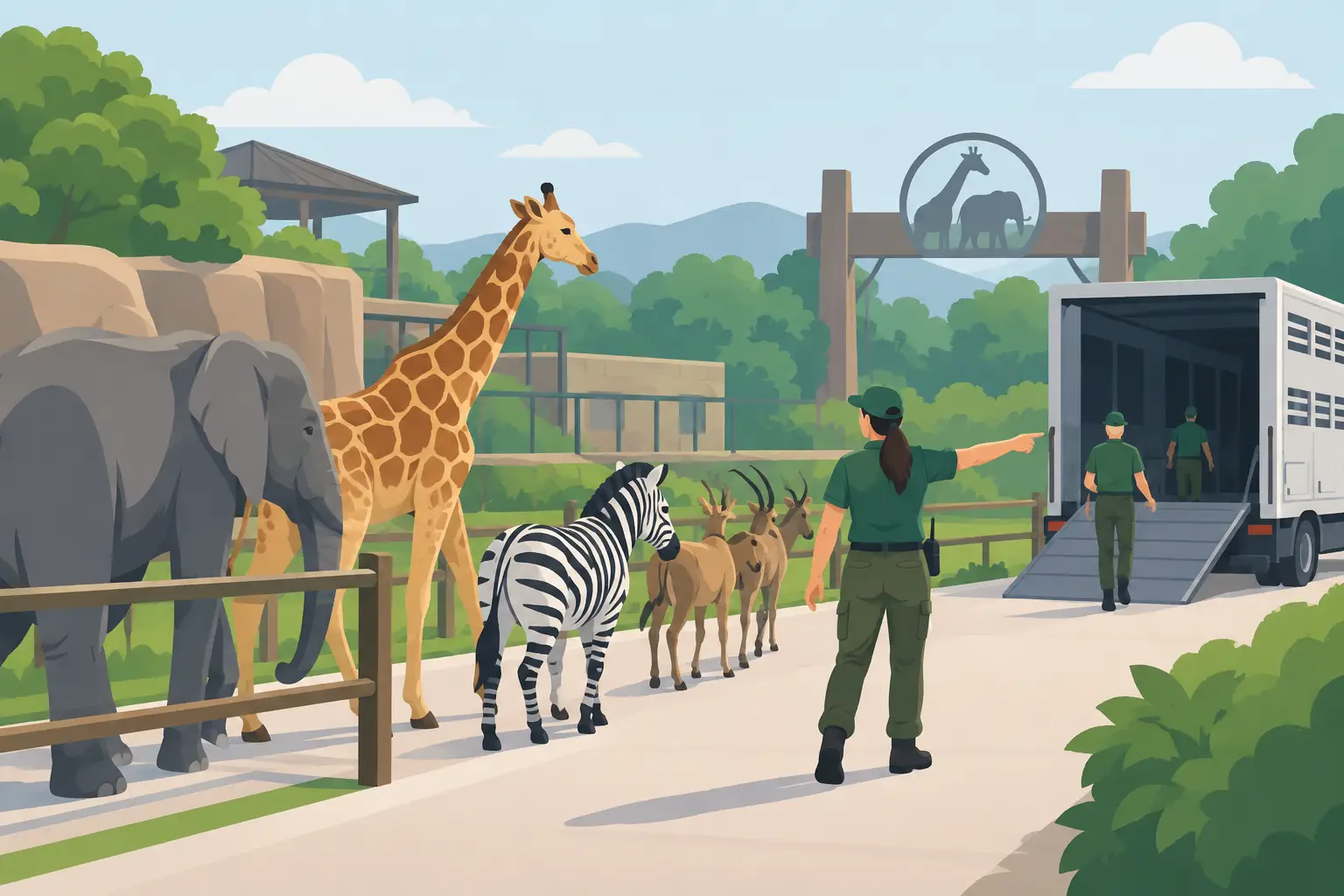
When a wildfire changes direction, floodwater reaches a service road, or structural damage makes an exhibit unsafe, a zoo cannot begin planning from scratch. A guide for emergency zoo evacuation must turn a fast-moving threat into clear decisions: which animals move first, where they can go, how they will travel, and who is authorized to make each call.
For zoos, aquariums, sanctuaries, and conservation facilities, evacuation is not simply a transportation task. It is an animal welfare operation with security, veterinary, staffing, regulatory, and public safety consequences. The strongest plans are built well before an emergency and practiced often enough that the team can act without confusion when time is limited.
Build the Emergency Zoo Evacuation Plan Before a Threat
An effective evacuation plan begins with a realistic hazard assessment. Facilities should identify the events most likely to disrupt operations, including wildfire, hurricanes, floods, severe storms, earthquakes, hazardous material incidents, utility failures, and nearby civil emergencies. Each hazard creates different travel constraints. A hurricane may allow several days of preparation, while a fire or chemical release may require movement within hours.
The written plan should assign authority clearly. One incident leader must have the ability to activate the plan, suspend normal operations, and prioritize animal movement. That person needs direct support from veterinary leadership, animal care managers, security, facilities, transport coordinators, and communications staff. If authority is unclear, valuable time is lost while teams wait for approvals.
Animal records must be current, accessible offline, and organized for rapid use. This includes identification, species, sex, age, medical history, behavioral notes, diet, medication schedules, enclosure requirements, social groupings, reproductive status, and legal documentation. A backup plan should never depend on a single computer system, staff member, or locked office.
Prioritize Animals With Welfare and Safety in Mind
Not every animal can or should move at the same time. Evacuation triage should weigh immediate danger against the risks created by capture, crating, travel, and temporary housing. Large mammals, venomous reptiles, dangerous carnivores, marine animals, primates, animals with critical medical needs, and highly stress-sensitive species often require specialized preparation and equipment.
A practical triage system places animals into tiers based on threat exposure, transport feasibility, and available destination capacity. Animals in vulnerable structures or areas likely to lose power, water, temperature control, or perimeter security may be moved first. Animals that can safely shelter in reinforced, secure holding areas may remain on site if moving them would create greater welfare risk.
Social dynamics matter as much as species category. Separating bonded pairs, established breeding groups, or dependent young can produce distress and create handling complications. At the same time, some individuals must travel separately because of aggression, disease protocols, or incompatible medical requirements. These decisions should be documented before an emergency, not debated at the loading area.
Secure Receiving Sites and Transportation Capacity
A destination is not a destination until it has confirmed space, appropriate barriers, trained personnel, feed and water capacity, veterinary support, and permission to receive the animals. Mutual-aid relationships with other accredited facilities, sanctuaries, breeding centers, and species-appropriate partners should be established in advance. Those agreements should identify likely species placements, contact methods, costs, documentation expectations, and authority to accept animals during an emergency.
Transport planning must account for the full journey, not just the vehicle. Teams need suitable crates or containers, loading equipment, safe routes, fuel access, driver and handler availability, rest procedures, emergency veterinary contacts, and alternate destinations if roads close. For international movements or cross-border relocations, permit requirements and inspection procedures can add significant time. Even domestic travel may involve state entry rules, health certificates, or species-specific restrictions.
The mode of transport depends on the animal, distance, urgency, and access conditions. Ground transport is often the most practical option for regional moves, provided roads remain open and vehicles can safely support the necessary environmental controls. Aircraft charters may be appropriate when distance, geography, or time make road transport unsuitable. Aquatic species require a separate logistical approach, with water quality, oxygenation, temperature stability, tank loading, and continuous monitoring treated as mission-critical conditions.
Global Animal Transport can support facilities facing these complex decisions with species-specific planning, specialized equipment coordination, and emergency transport capability for zoological, exotic, large-animal, and aquatic shipments.
Prepare Crates, Supplies, and Holding Areas
Emergency readiness depends on equipment that is already selected, maintained, and labeled. Custom or species-appropriate transport containers should be inspected routinely and stored where staff can access them without entering hazardous areas. Crates must balance containment, ventilation, visibility control, drainage, secure doors, and safe handling. A container that works for a routine transfer may not be appropriate for a long emergency relocation.
Each animal or travel group needs an accompanying care packet. This should include identification, feeding instructions, medications, veterinary notes, emergency contacts, destination details, and handling warnings. Duplicate copies should travel with the animal and remain with the command team. Digital records are useful, but paper backups remain essential during power or network outages.
Supply caches should include species-appropriate feed, water systems, bedding, enrichment where practical, restraint tools, personal protective equipment, flashlights, batteries, fuel, first-aid supplies, sanitation materials, and climate-control backups. The amount of reserve inventory depends on the facility and threat profile. A short local move may need only a day of provisions, while a regional disaster can disrupt supply chains for much longer.
Protect Staff, Visitors, and Site Security
Animal evacuation cannot proceed safely if personnel are exposed to avoidable danger. The incident leader should establish weather thresholds, evacuation routes, check-in procedures, and stop-work authority for staff. No animal movement plan justifies sending people into flooded areas, unstable structures, active fire zones, or locations affected by hazardous materials.
Public management is equally important. If visitors are on site when an emergency develops, their evacuation must be coordinated separately from animal operations. Clear public messaging reduces interference, prevents misinformation, and protects the privacy and security of animal holding locations. Staff should not share destination details broadly, especially for high-value, endangered, or potentially dangerous species.
Security teams should also plan for partial evacuation. Animals remaining on site may require enhanced perimeter checks, backup locks, generator support, remote monitoring, and emergency feeding access. A facility that evacuates only some animals is still responsible for the welfare and containment of every animal left behind.
Train for the Decisions That Become Hard Under Pressure
A written plan is only useful if staff can execute it. Tabletop exercises help leaders test authority, contacts, transport assumptions, and decision points. Functional drills test whether teams can locate crates, load equipment, assemble records, communicate across departments, and prepare animals without disrupting normal welfare routines.
Full-scale drills may not be appropriate for every species, particularly animals for whom repeated crating creates unnecessary stress. Instead, facilities can train with empty containers, simulated animal records, or carefully selected animals accustomed to voluntary crate entry. The goal is not to create a dramatic exercise. It is to find the weak points before a real emergency exposes them.
After every drill, incident, or near miss, revise the plan. A destination may no longer be available, a road route may prove unreliable, a crate design may need improvement, or a medication inventory may be too limited. Continuous improvement is part of responsible animal care, not an administrative extra.
Recovery Starts at Arrival
Evacuation does not end when an animal reaches a temporary site. Receiving teams should confirm identity, assess health, document behavior, provide water and appropriate nutrition, and monitor for signs of injury, dehydration, overheating, respiratory distress, or stress-related illness. Quarantine and biosecurity decisions must be coordinated with veterinary teams, particularly when animals from multiple institutions are housed nearby.
Return planning should be deliberate. Facilities should not move animals back simply because the immediate threat has passed. Enclosures, utilities, water systems, perimeter fencing, air handling, food supply, staffing levels, and local access routes all need review. Returning too early can turn one emergency move into two.
The most humane emergency zoo evacuation plans make room for imperfect conditions while protecting the essentials: competent people, secure containment, species-specific care, reliable communication, and decisions guided by animal welfare. Build those foundations before the next alert, and your team will have more than a plan on paper. It will have the confidence to protect the animals entrusted to its care.
