
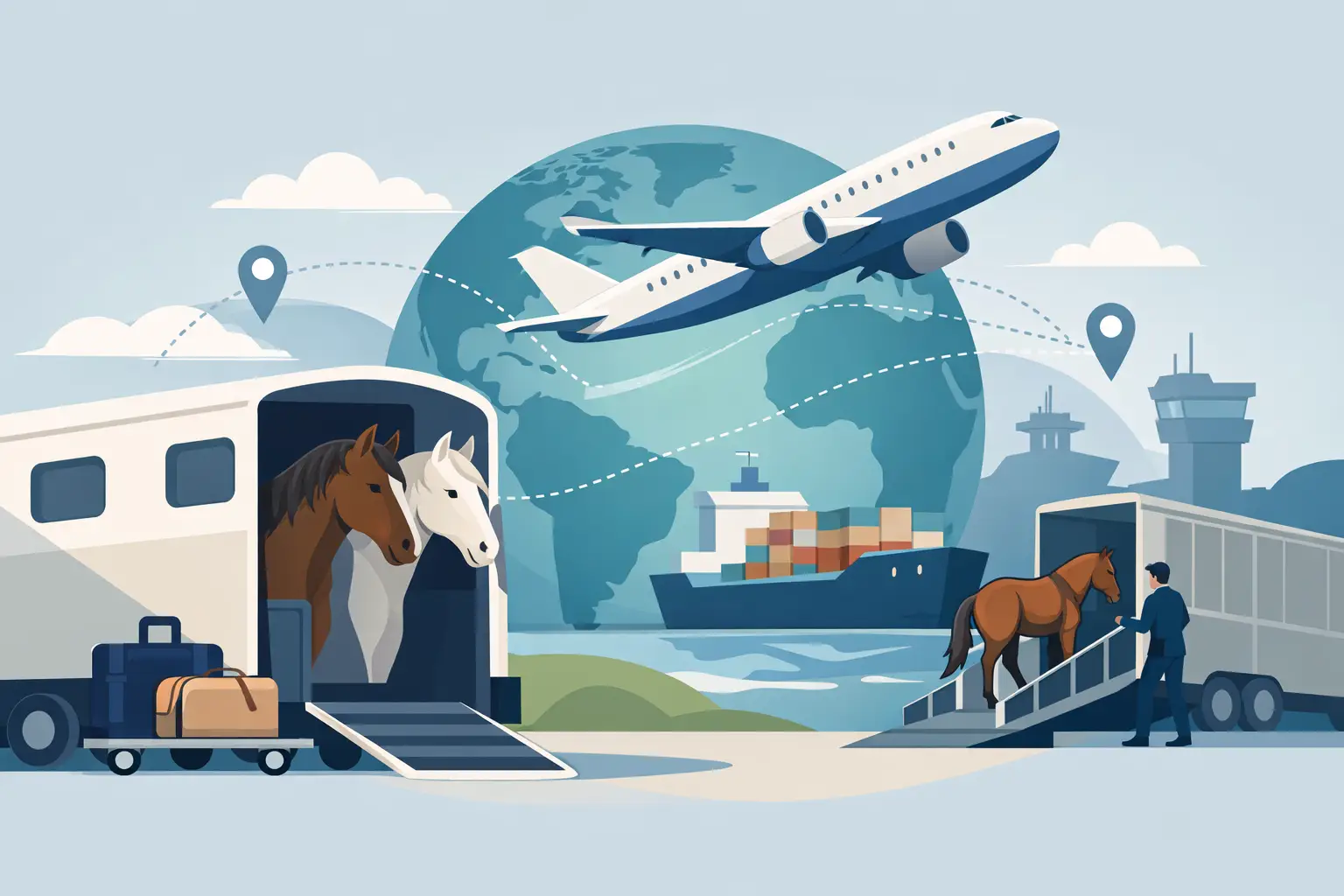
How to Move Horses Internationally
Moving a horse across borders is not just a shipping job. It is a welfare decision, a regulatory process, and a logistics project that has to work on the first try. If you are researching how to move horses internationally, the right plan starts long before travel day. Every detail matters, from veterinary timing and import rules to crate setup, airport coordination, and what happens when your horse lands.
For owners, breeders, competitors, and equine facilities, the biggest mistake is assuming international horse transport works like standard cargo. It does not. Horses require species-specific handling, route planning that reduces stress, and close management of paperwork that can change by country, airline, and even season. A sound transport plan protects both the animal and your timeline.
How to move horses internationally without avoidable delays
The process begins with the destination country, not the plane. Import rules determine what tests are required, whether quarantine applies, how health certificates must be issued, and what type of transport arrangements are acceptable. Some countries have straightforward entry requirements. Others have narrow testing windows, mandatory pre-export isolation, or limited arrival ports for live animals.
That is why timing is one of the most important parts of the move. A horse may be healthy, fit to travel, and ready to go, but if one document is issued too early or one test falls outside the accepted validity period, the shipment can be delayed or denied. In equine transport, compliance is not a back-office detail. It is part of animal welfare, because missed timing can leave a horse waiting in holding, rescheduled for a later flight, or exposed to unnecessary stress.
A professional transport plan usually starts with a review of the horse’s age, breed, sex, travel history, current location, destination, and intended purpose. A horse traveling for competition may face a different timeline than one being sold, relocated for breeding, or imported permanently. The route also matters. A direct flight is not always available, and the best option is not automatically the cheapest one. In many cases, the safer choice is the route with better equine handling infrastructure and more dependable coordination.
The health and documentation side of international horse shipping
Before a horse can travel internationally, veterinary and government paperwork must be prepared correctly. This commonly includes an international health certificate, proof of ownership or transfer documents, vaccination records where required, blood testing, and destination-specific import permits. Depending on the country, there may also be USDA endorsement requirements and official inspection steps close to departure.
This is where many private owners run into trouble. The paperwork is not difficult because it is complicated in theory. It is difficult because every document has to match exactly. Names, microchip or identification details, test dates, consignor information, destination addresses, and transport details must be consistent across forms. Small discrepancies can create major clearance issues.
Some shipments also require quarantine before departure, after arrival, or both. That requirement depends on origin and destination rules, disease-control policies, and the horse’s status. Quarantine is not automatically a red flag. In many cases, it is simply part of a safe and compliant import process. What matters is that it is arranged properly, with appropriate monitoring, feeding, hydration, and handling support.
A reliable transporter coordinates closely with the attending veterinarian, regulatory authorities, airline cargo teams, and receiving parties. That coordination reduces the risk of last-minute document corrections or missed acceptance windows at the airport.
Air travel logistics for horses
Most international horse moves happen by air because transit time matters. Horses are typically transported in specialized air stalls designed to provide stability, ventilation, and safe containment during loading, flight, and unloading. These stalls are managed by trained personnel who understand equine behavior and know how to reduce loading stress.
Not every horse responds to travel the same way. Temperament, age, previous shipping experience, and physical condition all affect how a horse should be prepared. Some travel quietly with minimal intervention. Others need a more carefully staged approach, including pre-travel conditioning, familiar handling routines, and close veterinary guidance. Sedation is not a routine shortcut and should only be addressed through veterinary direction based on the individual animal and route.
Ground transport on either side of the flight is just as important as the flight itself. Horses may need transport from a farm, training facility, sales barn, quarantine station, or competition venue to the airport, then again from the arrival airport to the final destination. If the ground segment is poorly managed, it can undermine an otherwise strong international plan. Equipment quality, driver experience, loading practices, rest timing, and stable support all matter.
Preparing the horse for departure
A horse should travel in suitable physical condition, with feeding and hydration planned carefully around the route. The goal is not simply to get the horse on the aircraft. The goal is to keep the horse stable, calm, and well managed from the first pickup through final delivery.
That often means confirming the horse is accustomed to haltering, leading, standing quietly, and loading in a controlled environment. It also means identifying any medical history, special feeding needs, or behavioral concerns early. A transporter cannot build the right handling plan if those details are shared too late.
Owners also benefit from asking practical questions before travel day. Who is monitoring the horse during each segment? Where will the horse rest if there is a connection? What happens if a flight is delayed? How are emergency veterinary needs handled in transit? Good international horse shipping is built around these operational details, not general promises.
Choosing the right route and service level
There is rarely a one-size-fits-all answer. A valuable sport horse, breeding stallion, mare with foal, or senior horse may require a different routing strategy than a younger, experienced traveler. Institutional shipments can be even more specialized when multiple animals move together or when scheduling must align with breeding seasons, events, or facility intake windows.
Cost is always part of the conversation, but it should be viewed in context. Lower pricing can sometimes reflect more handoffs, longer layovers, less flexibility, or thinner support around documentation and care. For a live animal, those trade-offs deserve careful review. The strongest transport partners explain what is included, where risk points exist, and how they manage them.
What owners and organizations should look for in a horse transport provider
When evaluating who should handle an international equine move, experience with live animal logistics matters more than general freight experience. Horses are not standard cargo, and international shipments depend on more than booking space on an aircraft. The provider should understand equine handling, import compliance, airport processes, contingency planning, and destination coordination.
Look for a team that can manage the move end to end. That includes route planning, paperwork guidance, veterinary coordination, flight arrangements, ground transport, quarantine support when required, and communication throughout the shipment. If responsibility is fragmented across too many parties, the chance of miscommunication increases.
Responsiveness also matters. International animal transport often involves time-sensitive approvals, carrier schedules, and changing conditions. A dependable provider should be able to answer practical questions clearly and quickly. Confidence comes from operational control, not vague reassurance.
For more complex movements, such as breeding programs, high-value sales, or institutional relocations, species-specific planning becomes even more important. Global Animal Transport supports animal moves that require this level of detail, with a focus on humane handling, compliance, and tightly managed international coordination.
Common issues that affect international horse transport
Even well-planned shipments can face variables. Weather can affect aircraft operations. Airline acceptance procedures can shift. Government processing can take longer than expected. Destination countries may update requirements with little notice. The right response is not panic. It is having a transport plan built with enough oversight and flexibility to adapt.
Another common issue is underestimating recovery after arrival. A horse may clear customs and reach the destination facility, but that does not mean the process is over. Post-arrival monitoring, hydration, feeding adjustment, rest, and gradual reintroduction to training or breeding activity are all part of a responsible move. The transport itself may take a day or two. Full adjustment can take longer, depending on the horse and route.
The most successful international shipments are usually the ones that seem uneventful from the outside. That calm result comes from detailed planning behind the scenes, informed veterinary coordination, and handlers who know how to move horses with care.
If you need to move a horse internationally, start early and treat the process as both a logistics operation and a welfare commitment. The right team will help you protect your horse, meet regulatory requirements, and move forward with confidence when the route is too important to leave to chance.
