
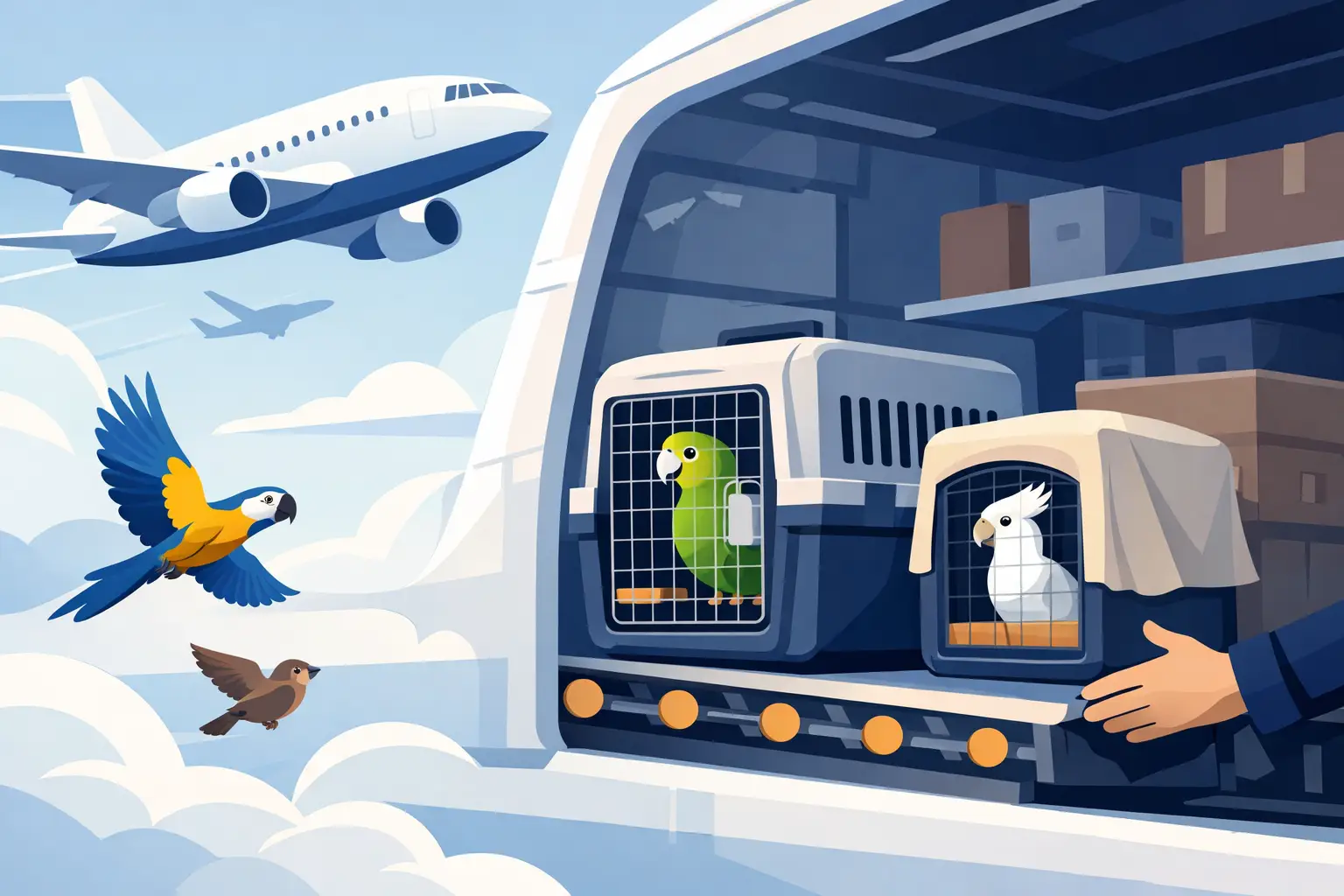
Moving Birds on Commercial Airlines
A bird’s travel day can go wrong long before the flight ever leaves the ground. The real pressure points are usually paperwork, carrier selection, airport timing, temperature restrictions, and how well the bird is prepared for handling and transit. When people ask about moving birds on commercial airlines, they are often thinking about a simple booking. In practice, safe avian transport is a coordinated process that has to balance airline rules, animal welfare, and species-specific handling.
Some birds can travel successfully on commercial routes with the right planning. Others may require a different transport setup because of size, stress sensitivity, conservation status, destination rules, or climate concerns. That distinction matters. A small companion parrot, a breeding pair of finches, and a zoological bird under permit do not move under the same conditions, even if they are all technically flying.
What moving birds on commercial airlines really involves
Commercial airline transport for birds is shaped by more than ticket availability. Airlines may have limits on species, crate dimensions, routing, seasonal embargoes, and whether birds can travel in cabin, checked baggage, or manifest cargo. Many carriers do not accept birds on every route, and some only accept them under very narrow conditions.
For that reason, the first step is never just choosing a flight. It is confirming whether the specific bird, itinerary, and destination can be supported safely and legally. Domestic transport may be more straightforward, but international moves often involve import permits, health certificates, inspection requirements, and additional coordination with brokers, quarantine facilities, or receiving institutions.
Bird transport also needs to account for the animal’s respiratory sensitivity and stress response. Birds are vulnerable to sudden temperature changes, poor ventilation, rough handling, and prolonged delays. A route that looks efficient on paper may be a poor choice if it includes long layovers, congested transfer points, or climates outside the bird’s tolerance range.
Airline acceptance depends on the bird and the route
One of the most common misunderstandings is assuming that if an airline accepts pets, it accepts birds. Many do not, or they limit acceptance to certain species. Poultry, companion birds, exotic birds, and protected species may each fall under different handling and regulatory frameworks.
Route structure matters just as much as airline policy. Direct flights are often preferred because each transfer increases handling events and the potential for delays. That said, a direct route is not automatically the best option if departure temperatures, cargo facility conditions, or airport infrastructure are unsuitable. Good transport planning looks at the full chain, not just airtime.
International transport adds another layer. Some countries place tight controls on psittacines, poultry-related species, or birds subject to wildlife protection rules. CITES permits, veterinary certifications, disease control measures, and customs clearance may all be required depending on species and destination. Missing one document can stop a shipment at acceptance or arrival.
Crate standards are central to safe bird transport
For birds, the travel enclosure is not a small detail. It is one of the most important welfare controls in the entire move. The crate must be appropriately sized for the species, allow ventilation, prevent escape, and protect the bird from injury during loading, transit, and unloading.
A carrier that is too large can be as problematic as one that is too small. Excess space may allow a bird to thrash during turbulence or handling. Too little space can interfere with posture, balance, and comfort. Perching species may need properly installed perches suited to their grip and size, while some birds travel better without them depending on species, age, and behavior.
Feeding and watering arrangements also require care. Spillage, contamination, and dehydration are all concerns. Some shipments need attached dishes or hydration systems that can be serviced safely. Others require precise feeding instructions timed around departure and arrival. These decisions should reflect the species, length of journey, and airline handling environment.
Health, documentation, and compliance come first
A healthy bird still may not be fit to fly without current documentation. Airlines and destination authorities commonly require a veterinary health certificate, and international shipments may need additional disease testing, import permits, declarations, or agency approvals.
This is where experience matters. Documentation is not just a stack of forms. Dates must align, species names must be accurate, microchip or band information must match, and endorsements may be required within a tight time window before departure. Errors create real risk because live animal bookings operate under strict acceptance standards.
There is also a welfare judgment involved. Not every bird should travel on every day. Age, recent illness, molting, breeding condition, and acclimation to handling can all affect transport readiness. Sedation is generally a poor choice for avian air transport unless specifically directed by an avian veterinarian under unusual circumstances. In most cases, stable handling, proper containment, and carefully managed routing are safer than trying to suppress stress pharmacologically.
Stress reduction starts before airport day
Birds do not benefit from last-minute preparation. The days leading up to transport should be used to acclimate the animal to the approved carrier when possible, stabilize feeding routines, and minimize unnecessary environmental disruption. A bird that has never seen its travel crate before departure is more likely to panic during loading.
Noise and novelty are major stressors. Companion birds that are highly bonded to their owners may become distressed during separation. Breeding or collection birds may react differently, especially when transported in pairs or groups. There is no one-size-fits-all avian travel plan. The handling strategy should reflect the species’ behavior, social structure, and stress profile.
Timing also matters. Early coordination allows room to avoid avoidable risks such as heat embargo periods, holiday cargo congestion, and poor transfer windows. Rushed bookings tend to reduce options and increase exposure to complications.
When commercial airlines are a good fit – and when they are not
Commercial airline transport can be a strong option for many bird moves, especially when the route is supported, documentation is in order, and the species can travel safely within airline conditions. It may offer efficient long-distance movement and broad geographic reach.
But it is not always the right answer. Large birds, highly sensitive exotic species, high-value breeding stock, zoological shipments, or moves involving difficult import conditions may be better served through customized cargo planning, specialized escorts, charter arrangements, or tightly managed institutional coordination. The safest transport method is the one that fits the bird’s needs, not the one that appears simplest.
That is why professional planning is often the difference between a manageable relocation and a preventable problem. A specialized animal transport provider can assess airline compatibility, crate compliance, veterinary timing, destination entry rules, and contingency planning before the bird is ever booked.
Why professional coordination matters for avian shipments
Bird transport leaves little room for assumptions. Airline representatives may not interpret live animal requirements the same way across stations. Airport facilities vary. Seasonal restrictions change. Import rules can shift with disease control policies or wildlife enforcement updates.
Professional coordination helps close those gaps. At Global Animal Transport, that means building each movement around species requirements, regulatory compliance, humane handling, and real operational oversight. For individual bird owners, that can provide clarity and reassurance during a stressful move. For breeders, zoos, and conservation programs, it supports continuity, compliance, and animal welfare at every stage.
The value is not only in booking freight space. It is in anticipating friction points before they become emergencies. That may include confirming crate specs with the accepting carrier, sequencing veterinary documents correctly, aligning pickup and acceptance times, planning for weather issues, and making sure the receiving party is ready at destination.
Planning ahead protects the bird
The best outcomes in moving birds on commercial airlines come from preparation, not improvisation. Birds are highly specialized animals, and their transport should reflect that reality. What works for a dog or cat may be inappropriate for a parrot, songbird, raptor, or zoological specimen.
If a bird needs to travel, the safest path is to start with the animal’s welfare needs and build the logistics around them. Airline rules, documentation, route design, crate setup, and handling plans all need to support the same goal: a secure, humane move with as little stress as possible.
When the planning is done properly, air transport can be safe and effective. The key is treating the bird as a living, sensitive passenger with species-specific needs, not as routine cargo. That mindset protects both the animal and the people responsible for getting it home.
