
How to Relocate a Rabbit Safely
A rabbit can look calm while its stress level climbs fast. That is what makes relocation different from moving a dog or cat. If you are figuring out how to relocate a rabbit safely, the goal is not just getting from one place to another. It is controlling stress, temperature, handling, and timing so your rabbit arrives stable, alert, and able to settle in.
Rabbits are prey animals. Loud noise, sudden restraint, unfamiliar smells, and heat can trigger panic or physical decline more quickly than many owners expect. A safe move starts well before travel day and depends on the rabbit’s age, health, route, and how long the trip will take.
How to relocate a rabbit safely starts with planning
The safest rabbit relocations are planned around the animal, not around convenience. A short local move in a private vehicle has very different requirements than a cross-country transfer or an international shipment with regulatory steps. The common mistake is treating all rabbit moves the same.
Start with the basics. Confirm your rabbit is healthy enough to travel, especially if the rabbit is elderly, very young, recovering from illness, or has a history of GI stasis. Travel stress can reduce appetite, and a rabbit that stops eating can become medically fragile in a short period of time. If there is any concern about fitness for transport, a rabbit-savvy veterinarian should assess the animal before plans are finalized.
The travel method matters just as much. For a local move, direct car transport is usually the least stressful option because it reduces transfers, noise exposure, and time in transit. For longer domestic or international relocation, planning becomes more technical. Crate standards, climate control, route duration, documentation, and handoff procedures all need to be coordinated carefully.
The right carrier matters more than most people think
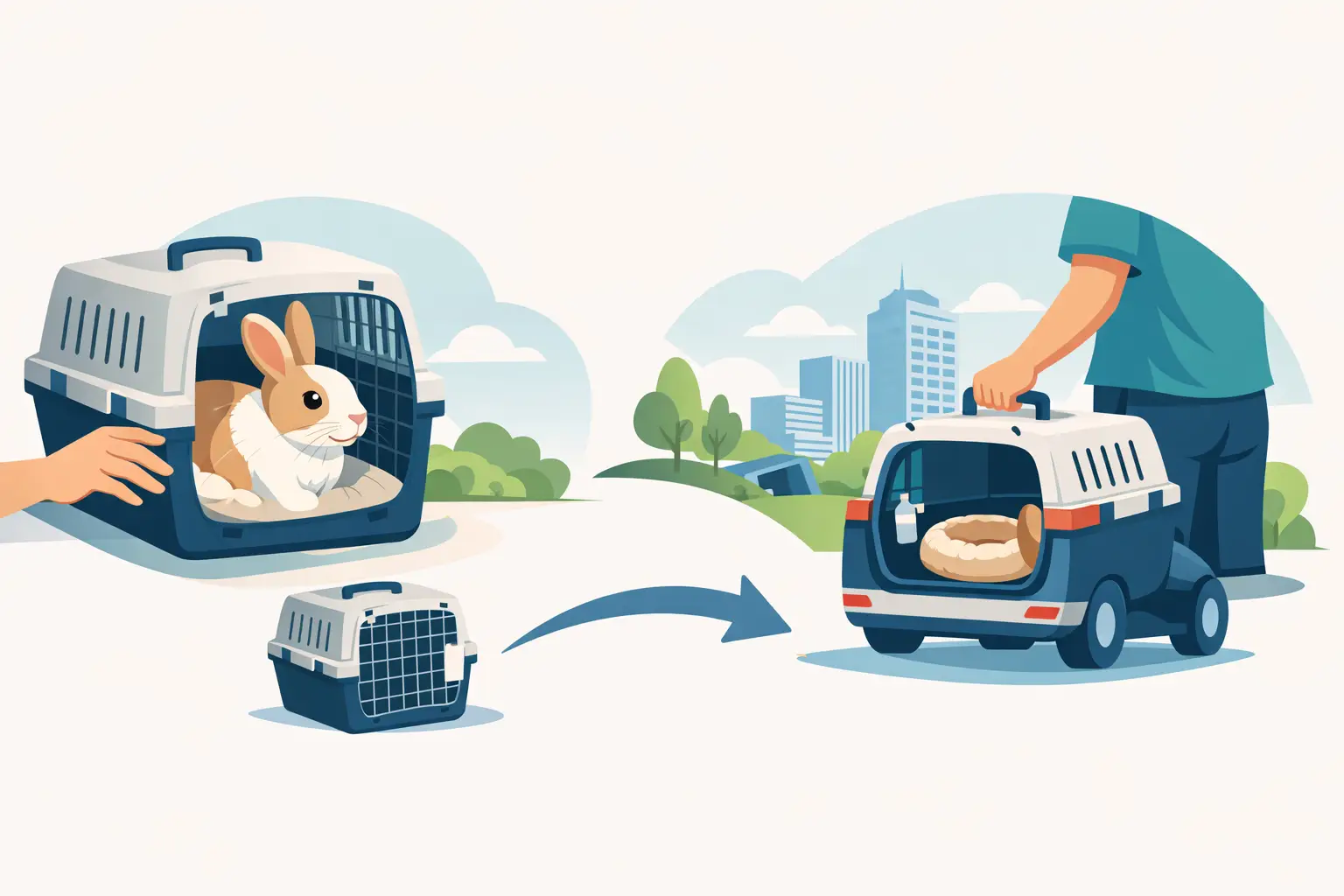
A rabbit should travel in a secure hard-sided carrier or species-appropriate travel crate that allows the animal to sit naturally, turn carefully, and rest without being thrown off balance. Too much extra room can be a problem because the rabbit may slide or injure itself during movement. Too little room creates obvious welfare concerns. The right fit is stable, ventilated, and escape-proof.
The floor should provide traction. A rabbit standing on a slick plastic surface will feel unstable and may panic. Soft absorbent bedding or a non-slip layer helps maintain footing while also managing waste during the trip. At the same time, avoid anything overly fluffy, loose, or likely to shift into the rabbit’s face.
Carrier setup should feel familiar. Place clean hay inside, and if space allows, include a small familiar item with the rabbit’s scent. Strong new smells can add stress, so this is not the time to introduce fresh bedding materials or heavily scented cleaners.
Carrier training lowers stress on travel day
One of the simplest ways to improve rabbit transport is to make the carrier familiar in advance. Leave it open in the rabbit’s environment several days before the move. Let the rabbit explore it voluntarily and place hay or treats inside. This does not eliminate stress, but it can reduce the shock of confinement when travel begins.
Forced loading at the last minute tends to escalate fear. A rabbit that thrashes, kicks, or twists can injure its spine or limbs. Calm handling and gradual carrier familiarity are safer than speed.
Temperature control is a safety issue, not a comfort issue
Rabbits tolerate heat poorly. During relocation, overheating is one of the most serious risks. A carrier should never be left in a parked car, even briefly, and transport should be scheduled to avoid extreme midday temperatures when possible. Good ventilation is essential, but ventilation alone is not enough in a hot environment.
Cold stress can also be a factor, especially for very young, older, or short-coated rabbits, but heat is the more urgent and common transport concern. The rabbit should be protected from direct sun, rapid temperature swings, and drafts from vents blowing directly into the carrier.
For longer or more complex trips, professional transport planning becomes valuable because environmental exposure points are easier to miss than most people realize. Loading, unloading, waiting periods, and transfer delays can all affect temperature stability.
Food, hydration, and gut health during rabbit relocation
A rabbit’s digestive system needs consistency. Fasting is not appropriate before transport. In most cases, hay should remain available during travel because continued fiber intake supports gut function and gives the rabbit something familiar to do. Depending on the route and carrier design, hydration may come from a secured water source, moisture-rich greens offered at safe intervals, or a transport-specific care plan.
This is where duration matters. A short car trip may only require hay and a stable travel setup. A longer trip needs scheduled monitoring and feeding decisions based on conditions and handling access. There is no single rule that fits every route.
Any major diet change before a move is a bad idea. Stick with the rabbit’s normal hay and established foods. Travel already introduces enough variables.
Watch for signs of dangerous stress
A stressed rabbit may go still and quiet, which people sometimes mistake for calm behavior. Warning signs include rapid breathing, lethargy, refusal to eat, unusual posture, drooling, and obvious distress during handling. After arrival, failure to resume eating and passing waste normally is a concern that should not be ignored.
Because rabbits can decline quickly, post-travel monitoring is part of safe relocation, not an afterthought.
Handling should be minimal and controlled
Rabbits are easily injured by improper lifting. During a move, the safest approach is usually minimal handling with full body support when lifting is necessary. Never pick up a rabbit by the ears, scruff, or limbs. Sudden kicking against an unsupported spine can cause severe injury.
For most moves, once the rabbit is calmly inside the carrier, it should remain there until it reaches the next safe, controlled environment. Repeatedly taking the rabbit out to “check on it” often adds stress rather than relieving it.
If there are multiple transfer points, each handoff should be managed by people who understand rabbit behavior and proper restraint. That is especially important in commercial or long-distance transport where poor handling at a single point can undo otherwise careful planning.
How to relocate a rabbit safely over long distances
Long-distance rabbit relocation introduces more risk because travel time increases and control decreases. Delays happen. Weather changes. Transfer windows shift. Documentation requirements may apply depending on destination. That is why long-range transport needs a more structured plan than a same-day local move.
For domestic interstate moves, timing, route design, and vehicle conditions are central. For international moves, entry requirements, health paperwork, airport processes, and species-specific handling protocols can all come into play. Not every transporter is equipped for rabbits, and not every pet-shipping process designed for dogs or cats translates well to a prey species with more delicate stress tolerance.
A professional animal transport partner can be especially valuable when the move involves air transport, cross-border coordination, or tight environmental controls. Companies such as Global Animal Transport build transport plans around the species rather than forcing the animal into a generic shipping process.
When professional help makes the most sense
If your rabbit is traveling a long distance, crossing state or international borders, moving during warm weather, or requiring coordinated handoffs, expert support is often the safer option. The same is true if you are relocating multiple rabbits, transporting a breeding animal, or working within institutional or regulated settings.
Professional coordination does not just save time. It can reduce exposure to preventable errors involving crate setup, compliance, timing, and live-animal handling.
Preparing the new location before the rabbit arrives
Relocation is not finished when the trip ends. Rabbits need a quiet, secure area ready on arrival with familiar hay, water, litter setup, and hiding space. Keep noise low and avoid introducing other pets too quickly. Even a healthy rabbit may need time to decompress before returning to normal behavior.
It is also smart to limit major changes for the first several days. Keep food familiar, maintain routine as much as possible, and watch for appetite, droppings, and overall posture. Some rabbits settle quickly. Others need more time. The point is not to rush the adjustment.
If the move is part of a household relocation, set up the rabbit’s space early rather than trying to build it while the home is still chaotic. Boxes, tools, unfamiliar people, and constant activity can prolong stress.
The safest rabbit move is the one built around the rabbit
There is no single checklist that guarantees a smooth trip because rabbits vary so much in health, temperament, and travel tolerance. But the pattern is consistent. Safe relocation depends on advance planning, a stable carrier, careful temperature control, normal feeding support, limited handling, and a calm arrival environment.
If your route is simple, that may be manageable with careful preparation. If it is complex, professional transport support can add an important layer of safety. Either way, the best decisions come from treating rabbit relocation as a welfare process first and a logistics task second. That mindset makes all the difference when your rabbit is the one making the journey.
