
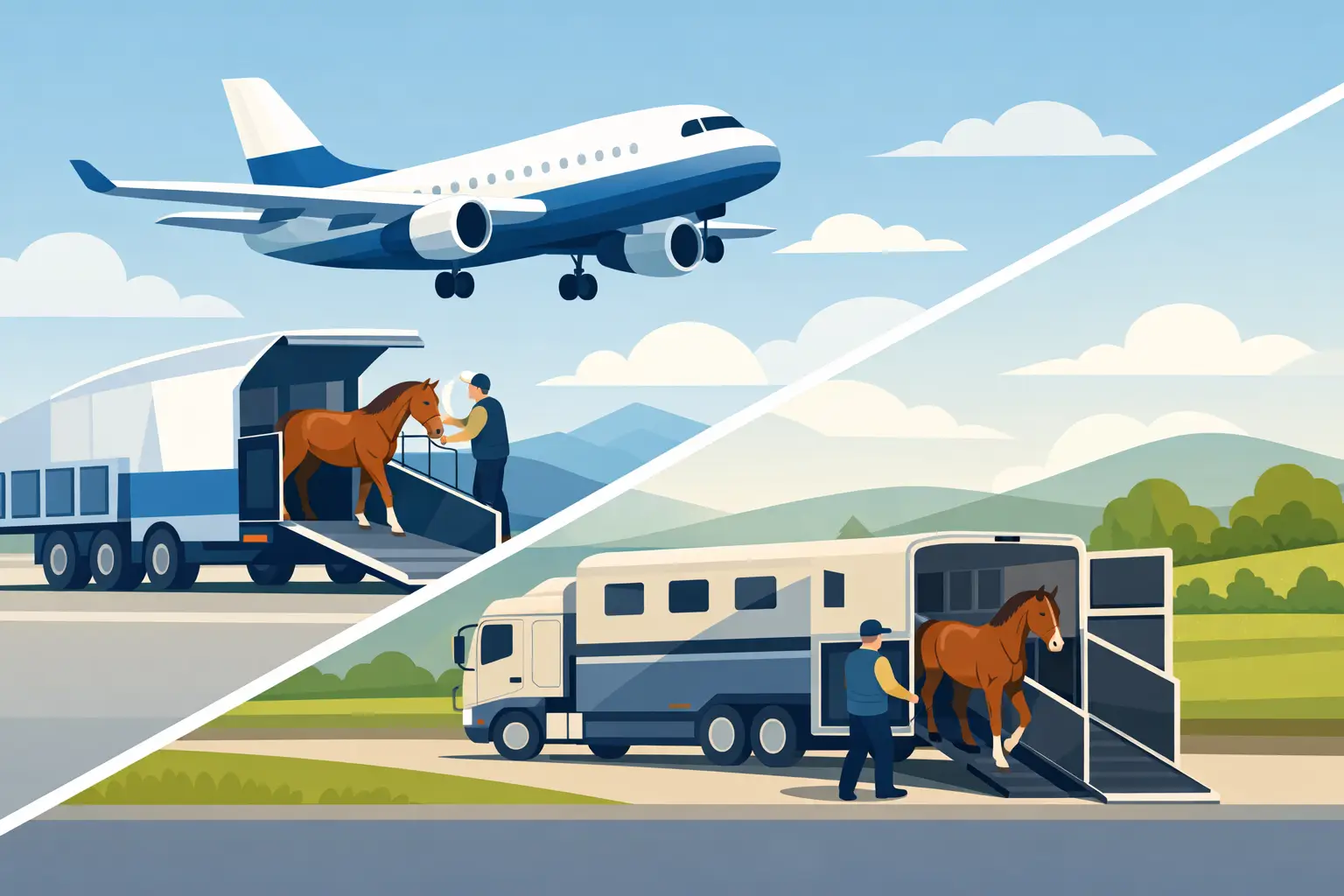
Horse Transport by Air or Ground
A horse that ships well on a short regional trip may struggle on a multi-day haul, while a valuable sport horse flying overseas may need tightly managed timing from barn to tarmac. That is why horse transport by air or ground is never a simple distance decision. The right choice depends on the horse, the route, the schedule, the regulations, and the level of handling required at every stage.
For owners, breeders, trainers, and equine organizations, the real question is not which method sounds faster or cheaper. It is which method protects the horse’s health, supports compliance, and gives the animal the best chance of arriving calm and fit for what comes next. In practice, both air and ground transport can be safe and humane when they are planned correctly. The difference lies in how the journey is structured.
How horse transport by air or ground is decided
The first factor is distance, but distance alone does not tell the full story. A ground move across one or two states may be straightforward for a healthy horse with good travel experience. A cross-country trip can still be managed safely by road, yet it usually requires more rest planning, more route discipline, and closer monitoring for fatigue, dehydration, and shipping stress.
Air transport becomes more relevant when time matters, when the destination is international, or when road travel would expose the horse to unnecessary strain. Horses moving for breeding schedules, competition, sale, relocation, or import requirements often benefit from a shorter total transit window, even if the overall logistics are more complex.
Temperament also matters. Some horses settle into a trailer quickly and tolerate road movement well. Others become anxious during long hours of vibration, stops, and changing road conditions. A horse with limited travel experience may still do well by air if the pre-flight handling, crate or stall setup, and ground transfers are professionally managed. There is no single rule that applies to every animal.
Ground transport: best for flexibility and regional moves
Ground transport is often the most practical option for domestic equine moves. It offers door-to-door flexibility, simpler scheduling in many cases, and fewer transfer points than air cargo. For short to moderate distances, this can reduce handling events and help maintain a more predictable routine.
A well-run ground shipment includes more than a trailer and a driver. It requires route planning, safe loading procedures, proper stall spacing, ventilation, bedding, and careful attention to weather. Horses need clean water access, sensible stop intervals, and handlers who recognize early signs of stress, injury, or illness. For longer trips, rest planning and condition checks become especially important.
Cost is another reason many owners choose road transport. Ground service is typically less expensive than air, particularly within the continental United States. That said, the lowest quote is not always the safest option. Equipment quality, driver experience, insurance, communication, and equine handling standards all affect the outcome.
Ground transport may be the better choice when the horse is traveling a manageable distance, when timing is flexible, or when direct stable-to-stable coordination is the priority. It can also work well for horses that do better with a more gradual journey rather than the concentrated activity of airport handling.
Air transport: best for speed, international moves, and high-stakes schedules
Air transport is often the right solution when horses must move internationally or arrive within a narrow timeframe. This is common for breeding programs, sales, racing, upper-level competition, and complex relocations where quarantine, customs, and veterinary timing all need to align.
The main advantage of air is reduced overall travel duration across long distances. A horse moving from the US to Europe, the Middle East, or another major international destination can avoid the wear of extended overland routing by completing the main leg in a matter of hours rather than days. For some animals, that shorter window can support welfare, provided the airport and onward ground segments are handled correctly.
Air shipment does come with additional layers. Horses usually require specialized airport handling, airline-approved stall configurations, health documentation, and coordination with veterinarians, customs teams, receiving agents, and destination transport providers. The horse is not simply loaded onto a plane and sent on its way. Every transfer point must be controlled.
Cost is higher, and rightly so. Air transport reflects aircraft space, specialized equipment, trained personnel, regulatory administration, and often significant pre-departure planning. For the right case, the value is not just speed. It is precision.
Welfare considerations matter more than the method alone
When clients compare horse transport by air or ground, they often focus first on miles and price. Welfare should come earlier in the conversation. A shorter trip is not automatically less stressful if the horse is poorly handled, and a longer trip is not automatically harmful if the transport plan is professional, attentive, and appropriate to the animal.
Hydration is a major issue in both methods. Horses can become dehydrated during travel, especially if they are anxious, reluctant to drink, or exposed to heat and dry air. Respiratory health also needs close attention. Long periods with the head elevated, dust exposure, and limited rest can increase the risk of shipping fever or other complications.
Fitness to travel should be assessed before any booking is finalized. Age, pregnancy status, recent illness, soundness issues, respiratory history, and prior travel behavior can all affect the decision. A horse recovering from a health event may need a delayed move, a modified route, or veterinary clearance with specific transport instructions.
This is where specialized management matters. The transporter should understand not only how to move a horse, but how to adapt the plan to that horse.
Planning requirements for air and ground horse transport
Documentation is a constant. Domestic road transport often requires a current health certificate and, depending on the route, proof of negative Coggins testing. Interstate requirements can vary, and timing matters because many certificates have limited validity windows.
International air transport involves more extensive compliance. Depending on origin and destination, owners may need import permits, export paperwork, health certifications, testing protocols, vaccination records, customs documentation, and quarantine arrangements. Miss one detail, and the shipment can be delayed or refused.
Scheduling should also account for the horse’s wider routine. Feeding, hydration, exercise, medications, farrier timing, and destination recovery all need to be considered. A horse arriving for a sale, event, breeding appointment, or integration into a new facility should not be planned as if transport ends at arrival. Recovery is part of the move.
Cost, risk, and timing: the practical trade-offs
Ground transport usually wins on cost and flexibility. Air transport usually wins on speed over long distances and on international feasibility. But there are trade-offs in both directions.
A lower-cost road move may become less attractive if the trip length increases stress, requires multiple days in transit, or creates scheduling risk for an important event. A premium air move may be justified if it reduces travel time substantially and supports a tightly managed arrival, but it may not be necessary for a routine domestic relocation.
Risk also looks different depending on the route. Ground transport faces highway variables, traffic delays, weather exposure, and the cumulative strain of hours on the road. Air transport reduces time in motion on long-haul routes, but involves airport logistics, transfer handling, and stricter documentation standards. Neither option is risk-free. The goal is to choose the risk profile that is best controlled for that specific shipment.
Choosing the right transport partner
The provider matters as much as the method. Horse shipping requires species-specific handling, not general freight coordination. Clients should expect clear communication, realistic scheduling, welfare-focused planning, and confidence with both regulatory and operational details.
A qualified transport partner should be able to explain why air or ground is appropriate, what prep the horse needs, how the journey will be monitored, and what contingency planning is in place. If the answers are vague, the service is not specialized enough.
For complex domestic and international moves, many clients work with companies such as Global Animal Transport because the job goes beyond transportation. It includes compliance management, handling standards, transfer coordination, and reliable oversight from origin through arrival.
The right plan for a horse is not always the fastest route or the least expensive one. It is the one built around the animal’s welfare, the realities of the route, and the importance of getting every detail right. When that standard leads the decision, both air and ground transport can serve horses well.
