
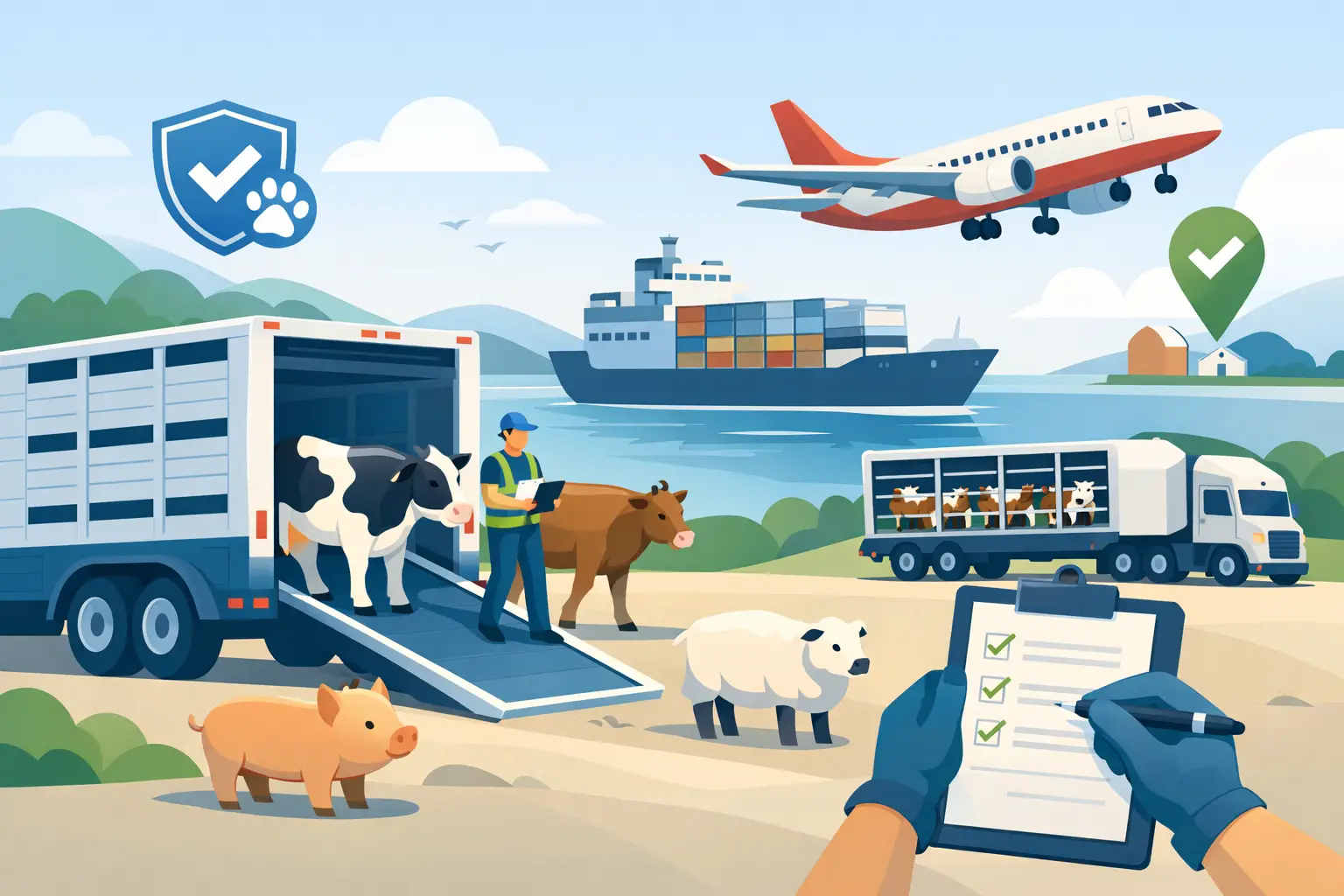
Livestock Shipping Done Safely and Right
A missed health certificate, the wrong trailer setup, or poor timing in extreme weather can turn livestock shipping into a serious welfare and compliance problem fast. Moving cattle, swine, sheep, goats, poultry, or other farm animals is not just freight coordination. It is live animal transport, and every decision affects health, stress levels, legal clearance, and arrival condition.
For producers, breeders, exporters, and institutions, the stakes are high. Animals must be moved humanely, paperwork must be correct, and transit plans must account for species behavior, loading density, rest periods, climate, and destination requirements. Safe transport depends on operational discipline as much as animal care.
What livestock shipping really involves
Livestock shipping is a coordinated process that brings together animal welfare standards, route planning, equipment selection, regulatory compliance, and active shipment oversight. The right plan starts well before loading day. It begins with the species, age, size, health status, trip distance, and the conditions the animals will face from origin to final delivery.
A short domestic move may call for ground transport with tightly managed loading windows and direct routing. A more complex shipment may involve pre-export preparation, airport coordination, approved containment systems, quarantine requirements, customs review, and final-mile delivery after arrival. In either case, livestock are not cargo that can be handled on a standard logistics model.
This is where experience matters. Animals react to noise, heat, confinement, unfamiliar handling, and changes in routine. A plan that looks efficient on paper can still be wrong if it ignores stress triggers or species-specific needs.
Why professional livestock shipping matters
Transport losses, injury, weight shrink, illness, and shipment rejection often trace back to preventable mistakes. Common issues include poor loading density, inadequate ventilation, improper segregation, weak document control, and unrealistic schedules. These problems can affect both animal welfare and business outcomes.
Professional livestock transport is designed to reduce those risks. That means using suitable vehicles or air transport arrangements, maintaining humane handling practices, verifying documentation in advance, and monitoring each stage of movement. It also means preparing for delays instead of assuming everything will go perfectly.
For some clients, speed is the priority. For others, the main concern is preserving breeding value, protecting herd health, or meeting import rules without disruption. The right approach depends on the shipment, but the standard should always stay the same – safe, compliant, and humane transport.
Planning livestock shipping by species and condition
Not all livestock travel the same way, and treating them as one category can create avoidable risk. Cattle may require different spacing, loading design, and transit timing than swine. Sheep and goats often need careful grouping to reduce agitation. Poultry shipments depend heavily on airflow, temperature control, and rapid transfer between points.
Age and condition matter just as much as species. Young animals may be more vulnerable to temperature stress and dehydration. Breeding animals may need additional protection from physical strain. Animals with horns, animals of mixed sizes, or unfamiliar groups may require separation to prevent injury in transit.
The shipment plan should also reflect the purpose of the move. Transporting animals for breeding, agricultural operations, exhibition, or international placement each comes with different handling expectations and documentation needs. There is no one-size-fits-all model that serves every shipment well.
Health, fitness, and pre-transport readiness
Animals should be assessed before travel to confirm they are fit for transport. That includes reviewing general condition, mobility, recent illness, and any veterinary requirements tied to the route or destination. If an animal is compromised before departure, transport can worsen the condition quickly.
Readiness also includes feed and water planning, loading timing, and acclimation when possible. In some situations, a shipment should be delayed rather than forced through poor weather, health concerns, or incomplete paperwork. That decision can protect both the animals and the client from larger losses later.
Compliance is not a side issue
One of the biggest misconceptions about livestock shipping is that transportation is mainly about vehicles and distance. In reality, compliance often determines whether a shipment moves at all. Domestic and international transport may require health certificates, permits, vaccination records, testing, ownership records, import approvals, and species-specific declarations.
International movements add another level of complexity. Rules vary by country, port, and species. Some destinations require quarantine on arrival. Others require advance endorsements, specific timelines for veterinary inspections, or strict routing through approved entry points. A single paperwork error can cause delays, refusal, or costly holding arrangements.
That is why document control should be handled with the same care as loading and transit management. Strong coordination reduces the chance of last-minute problems at checkpoints, terminals, border crossings, and receiving facilities.
The operational side of safe livestock shipping
Good animal transport is built on details that many clients never see. Vehicle condition, bedding, ramp angles, internal partitions, ventilation, crate or pen configuration, staging time, and transfer handling all affect outcomes. So does communication between drivers, coordinators, handlers, airline teams, and receiving parties.
Timing is especially important. Loading in the heat of the day may increase stress and dehydration risk. Long waits on tarmac or at holding areas can undermine an otherwise solid plan. Weather events, traffic conditions, and airport schedules should be evaluated as part of the welfare strategy, not just the logistics schedule.
For long-distance or international moves, contingency planning is essential. If a flight changes, if customs clearance takes longer than expected, or if a receiving facility needs extra time, the shipment still needs animal-appropriate care built into the response. That is the difference between standard transport coordination and specialist live animal logistics.
Ground, air, and sea transport options
Ground transport is often the best fit for regional and domestic livestock moves, especially when direct routing can limit handling events. It offers control over timing and can reduce transfer stress if the route is managed carefully.
Air transport may be necessary for long-distance or international livestock shipping where time, geography, or import requirements make overland movement unrealistic. Air moves require precise planning around containment, documentation, handling windows, and airport coordination.
Sea transport is more specialized and less common for many livestock categories, but it can be appropriate in certain large-scale or route-specific cases. When used, it demands substantial planning around vessel suitability, onboard systems, animal care provisions, and regulatory oversight.
Choosing a livestock shipping partner
A transporter should be evaluated on more than availability and price. The key question is whether the provider understands live animal movement at a professional level. That includes species knowledge, regulatory familiarity, equipment standards, route planning capability, and responsiveness when conditions change.
Clients should expect clear communication about what is required before transport, how the move will be managed, and what safeguards are in place during transit. Confidence comes from process, not promises. If a shipment is complex, the transport partner should be able to explain the plan in practical terms and identify likely pressure points before they become problems.
This is especially important for clients moving high-value breeding stock, institutional herds, or animals across borders. In those situations, inexperience is expensive. A capable shipping partner protects welfare first while keeping the operation on schedule and within regulatory expectations.
At Global Animal Transport, that standard guides every transport category we handle. Livestock movements require the same disciplined planning, humane care, and around-the-clock coordination that define all high-stakes live animal shipping.
When timing, welfare, and oversight all matter
Livestock shipping works best when it is treated as animal care in motion, not just a booking on a route. The trailer, aircraft, charter, paperwork, handlers, weather window, and destination team all have to work together. If one part is weak, the animals feel it first.
Whether the shipment is moving across one state or across international borders, the goal stays the same: protect the animals, meet the requirements, and deliver them in the best possible condition. When that level of care is built into the plan from the start, transport becomes far more predictable and far more humane.
If you are preparing for a livestock move, start early and choose a team that treats transport as both a logistical operation and a welfare responsibility. The right plan protects more than a schedule – it protects the animals in your care.
