
How to Transport Koi Fish Safely Over Distance
A koi may look calm in a pond, but transport places it in a completely different environment. Limited water volume, temperature swings, handling, vibration, and declining oxygen can quickly create stress. Knowing how to transport koi fish safely means planning around those risks well before the fish is removed from its pond or holding system.
For a short move between local ponds, an experienced keeper may be able to manage the process with the right equipment and preparation. For long-distance, commercial, air, or international transport, professional coordination is often the safest option. Koi are valuable living animals, and their welfare depends on more than simply placing them in water for the journey.
Assess the Journey Before Moving the Fish
The right transport method depends on the number and size of the koi, total travel time, weather conditions, and destination requirements. A single small koi traveling across town has different needs than several mature show-quality fish moving across state lines or internationally.
Start by calculating the full door-to-door timeline, not only time spent in a vehicle or aircraft. Include catching the fish, packing, loading, transit, inspections, unloading, acclimation, and the time needed to prepare the receiving pond or quarantine system. Delays are possible, particularly during airport handling, border inspections, or adverse weather, so transport capacity must account for a reasonable contingency period.
The destination should be fully prepared before the koi leave. Water should be dechlorinated, filtered, aerated, and brought as close as practical to the source water temperature. If the koi are entering an established collection, a separate quarantine system may be appropriate to protect both incoming fish and resident stock from disease transmission.
Prepare Koi for Transport
Healthy fish travel better than fish already coping with poor water conditions, injury, or disease. Observe the koi in the days leading up to transport. Fish showing flashing behavior, ulcers, clamped fins, labored breathing, or unusual lethargy should be assessed before a move is attempted.
In many cases, koi are fasted for approximately 24 to 48 hours before travel. This reduces waste production inside the transport container and helps preserve water quality. The ideal fasting period depends on water temperature, fish condition, and anticipated journey length. Avoid excessive fasting without professional guidance, especially for smaller fish, compromised animals, or extended scheduling delays.
Do not make unnecessary changes immediately before departure. A sudden medication treatment, major water change, or aggressive handling can add stress at the wrong time. Instead, maintain stable water quality and use calm, controlled handling when the fish are collected.
Handle Fish With Care
Use soft, fish-safe nets sized appropriately for the koi. Avoid chasing fish around the pond for long periods, as this can cause exhaustion and injury. Large koi may need a bowl net or specialized handling sling that supports the body while the fish is moved from pond to container.
Keep handling time out of water as brief as possible. Koi have a protective slime coat that can be damaged by rough contact, dry surfaces, or unsuitable nets. Clean, wet equipment and trained handlers reduce the risk of skin damage that may later lead to infection.
Choose the Correct Transport Container
For most short local journeys, insulated transport tubs or purpose-built fish transport containers can provide a stable environment. These containers should be clean, secure, protected from direct sunlight, and fitted with a reliable aeration system when appropriate.
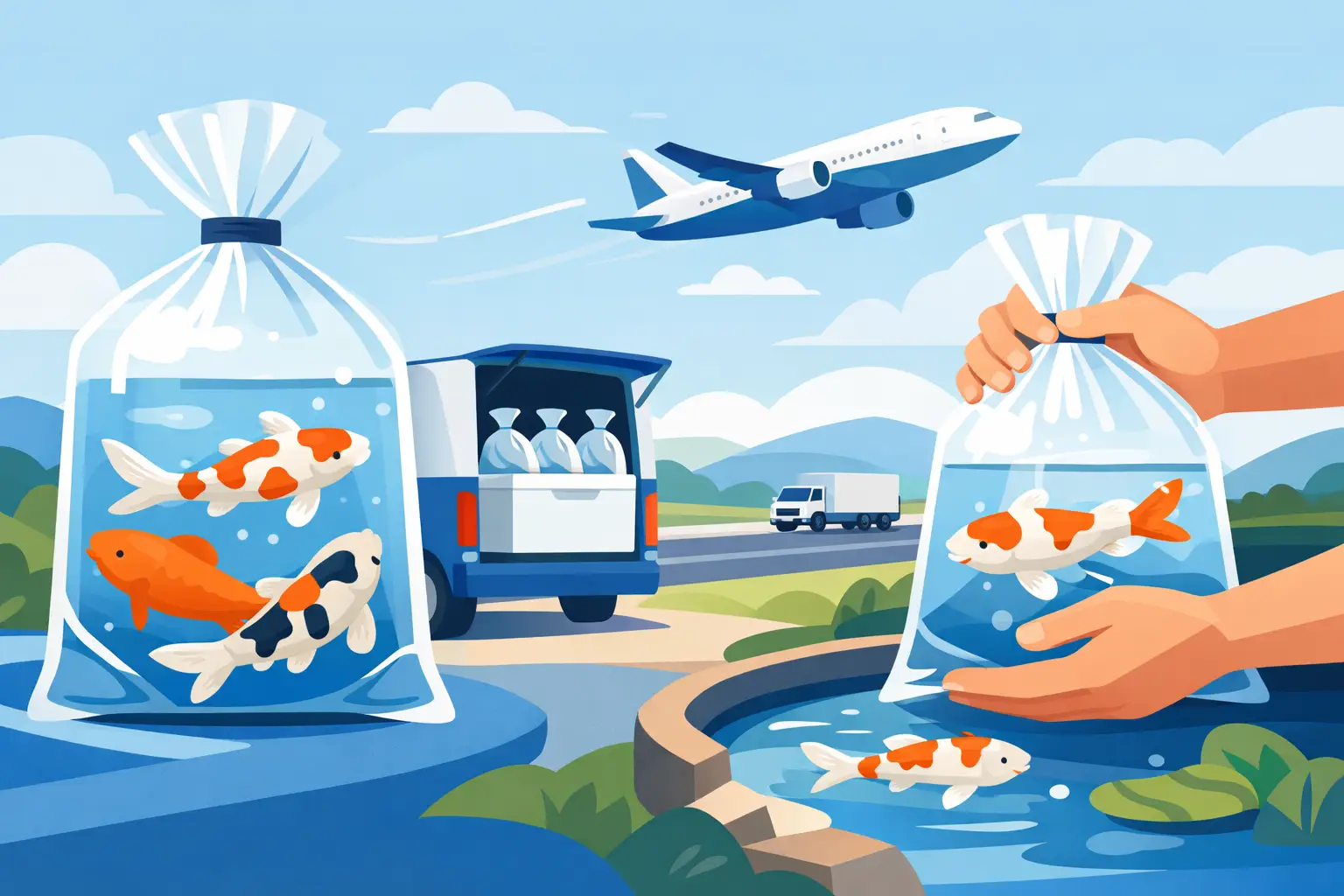
For longer journeys, koi are commonly transported individually or in compatible small groups in heavy-duty fish bags placed inside insulated boxes. Bags are generally filled with a controlled amount of conditioned water and oxygen, then secured to prevent leakage and limit excessive movement. The correct water-to-oxygen ratio, bag size, and stocking density are technical decisions that should reflect fish size and estimated duration.
Overcrowding is one of the most serious avoidable mistakes in koi transport. More fish in one container may appear efficient, but it increases oxygen demand, waste accumulation, and the chance of physical injury. Mature koi also need room to remain supported and avoid repeated contact with container walls.
For valuable specimens, sensitive shipments, or longer-distance moves, individual packing may offer the greatest protection. It requires more materials and careful coordination, but it can reduce injury risk and make it easier to monitor each animal.
Control Water Quality, Oxygen, and Temperature
Koi transport water changes quickly. Fish consume oxygen and release carbon dioxide and ammonia. As conditions deteriorate, the fish can become distressed even if the container still appears adequately filled with water.
Oxygen support is essential for many moves. A battery-powered aerator may be useful for local transport in a rigid container, while professional fish shipments often use oxygen-filled bags or specialized life-support systems. Never assume that an open container alone provides enough gas exchange for a long journey.
Temperature stability matters just as much. Koi tolerate a range of water temperatures in their normal environment, but rapid changes during transport can be harmful. Insulated containers help protect fish from hot vehicles, cold loading areas, and direct sun. During warm weather, ice packs may be used outside the inner fish bag or container to manage heat, but they should never create direct cold shock.
Water conditioners and ammonia-control products can be useful in some circumstances, but they are not a substitute for correct stocking density and transit planning. Product choice must be compatible with the transport method and any water testing or regulatory requirements at the destination.
Secure the Vehicle and Minimize Disturbance
Transport containers should be placed on a flat, stable surface and secured so they cannot slide, tip, or shift during braking. Keep the vehicle interior at a controlled temperature, and avoid leaving koi unattended in a parked vehicle. Even mild outdoor temperatures can become dangerous inside a closed vehicle within a short period.
Drive smoothly and avoid unnecessary stops. Loud noise, vibration, and repeated opening of containers add stress without helping the fish. It may be tempting to check on koi frequently, but opening a bag or lid can release oxygen, expose fish to temperature changes, and increase the risk of spills.
If a trip is long enough to require overnight staging, arrange a properly equipped temporary holding system rather than keeping koi packed beyond the planned transit window. This system should include adequate water volume, filtration, aeration, temperature control, and secure biosecurity practices.
Plan for Interstate and International Requirements
Moving koi across state or national borders may involve permits, health documentation, import restrictions, inspections, airline acceptance rules, and declarations related to aquatic animal health. Requirements vary by origin, destination, shipment purpose, and species classification.
International moves require particular attention. The shipment may need approved routing, customs coordination, species-specific packaging, veterinary documentation, and a receiving party prepared to clear and collect the fish promptly. A small paperwork error can turn a well-planned transport into an extended delay, which is exactly what live fish shipments should avoid.
Professional animal logistics support becomes especially valuable when transport involves airports, ocean freight, institutional collections, commercial breeders, or multiple jurisdictions. Global Animal Transport coordinates customized live-animal transport planning with welfare, handling, timing, and compliance at the center of the process.
Acclimate Koi Carefully at Arrival
Arrival is not the end of the transport process. Before releasing koi into the destination pond or system, inspect each fish for visible injury, unusual behavior, or signs of respiratory distress. Give the receiving water time to stabilize if there is any question about filtration, oxygen, or temperature.
Acclimation should be gradual. Temperature and water chemistry differences between the transport water and destination water can cause shock if fish are released too quickly. The exact approach depends on the type of container, transit duration, and water parameters, but rushing this step can undo careful preparation.
A quarantine period is strongly recommended when fish are entering a collection with other koi. Monitor appetite, swimming behavior, gill movement, skin condition, and water quality closely in the first days after arrival. A calm environment, clean water, and minimal disturbance give koi the best opportunity to recover from travel.
The safest koi transport plan is the one that treats every stage as connected: healthy fish, suitable packing, stable conditions, trained handling, and a ready destination. When the journey is complex or the fish are especially valuable, expert coordination protects more than a shipment – it protects the animals entrusted to your care.
