
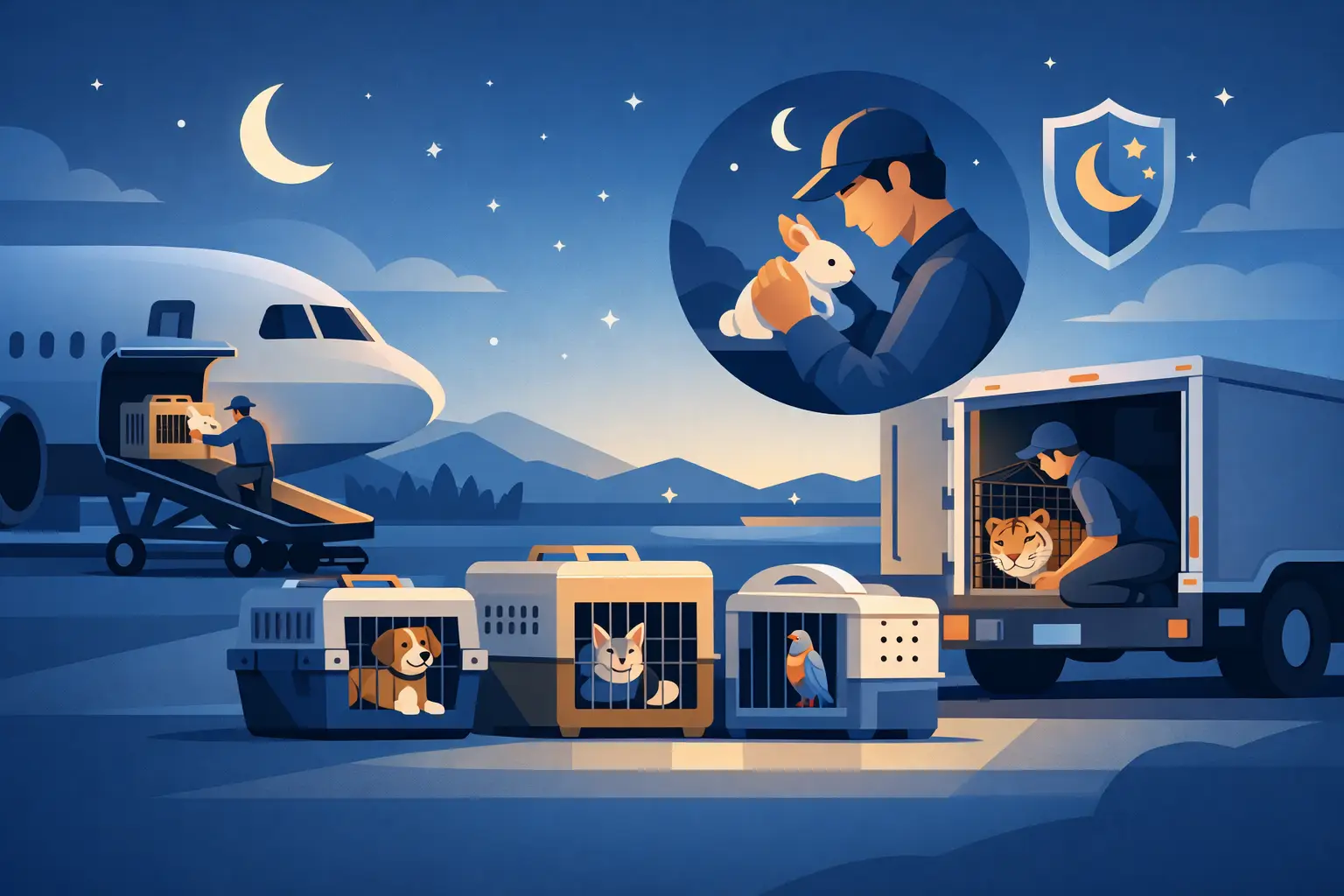
Overnight Care During Animal Transit That Protects
A flight connection that becomes an overnight hold, a cross-country road route that requires a scheduled rest stop, or a weather delay at a cargo terminal can change an animal’s travel plan quickly. Overnight care during animal transit is not simply a matter of finding a place to keep an animal until morning. It is a controlled welfare operation involving secure housing, trained personnel, species-appropriate feeding and hydration, health observation, and documented handoffs between every responsible party.
For a family relocating with a dog or cat, the concern is deeply personal. For zoos, aquariums, breeders, livestock operators, and conservation programs, an overnight hold can also affect animal health, permits, exhibit schedules, breeding plans, and institutional responsibilities. In every case, the standard should be the same: the animal’s needs must remain central when the transportation schedule pauses.
Why Overnight Holds Need Their Own Care Plan
Animals do not experience a delay as a line item on a shipping itinerary. They experience a change in temperature, light, noise, routine, handling, and human contact. An otherwise well-planned trip can become stressful when overnight arrangements are improvised or when the receiving team lacks clear instructions.
A professional transport plan anticipates the possibility of an overnight stay before departure. That means identifying approved facilities or secure staging areas along the route, confirming who is responsible for care, and establishing escalation procedures if an animal shows signs of distress. The plan should also account for local entry rules, airport or port operating hours, veterinary availability, and the time required for customs or agriculture clearance.
The right arrangement depends on the species and the mode of transport. A dog traveling by air may require climate-controlled kennel accommodation near the cargo terminal. Horses may need a properly bedded stable with safe loading access, fresh water, and supervision. Fish and other aquatic animals may remain in specialized life-support containers, where water quality, oxygenation, temperature, and stocking density require continuous attention. A secure overnight location is necessary, but it is only one part of appropriate care.
What Safe Overnight Care During Animal Transit Includes
Reliable overnight care begins with a written animal profile. This profile should travel with the shipment and clearly state feeding instructions, water requirements, medication schedules, behavioral considerations, handling restrictions, emergency contacts, and veterinary information. For regulated or sensitive species, it should also identify permit conditions and any quarantine-related requirements.
Housing must protect both physical safety and welfare. Enclosures should be correctly sized, clean, escape-resistant, and suited to the animal’s normal movement and resting needs. Temperature, ventilation, humidity, and lighting need to be monitored, particularly for young animals, brachycephalic breeds, reptiles, birds, aquatic species, and animals with known health concerns. A quiet, low-traffic environment can make a meaningful difference for animals that are sensitive to unfamiliar sounds and activity.
Care teams should conduct regular visual checks rather than assuming an animal is comfortable because its container remains closed and secure. Trained handlers look for changes in posture, respiration, alertness, appetite, water consumption, elimination, temperature tolerance, or behavior. For some animals, direct handling may increase stress and should be limited. For others, such as social pets, calm and appropriate interaction can be reassuring. Species expertise determines the right approach.
Feeding decisions also require judgment. Some animals need scheduled meals to maintain stability, while others may travel more safely with carefully managed feeding before and after transit. Feeding at the wrong time, changing a familiar diet, or offering too much food can create avoidable digestive issues. Water access must be equally deliberate. The care team needs to know whether water should be continuously available, offered at set intervals, delivered through a specific system, or managed in a way that prevents spills and contamination during onward travel.
The Handoff Is Where Details Matter Most
Many transport problems occur not during the main journey, but at the transition between teams. An animal may move from an airline to a ground handler, from a port facility to a charter vehicle, or from an overnight care site to the final delivery team. Each handoff creates the risk that a feeding instruction, medication note, or behavioral warning will be missed.
Strong operational coordination prevents that gap. Every transfer should confirm the animal’s identity, condition, container security, documentation, departure time, and outstanding care needs. Care records should show when the animal was checked, offered water or food, exercised where appropriate, or given medication. If there has been any deviation from the plan, the next team must know before accepting custody.
For owners and institutional clients, communication is part of care. A timely update can confirm that an animal has arrived at the overnight facility, been checked by trained staff, and is scheduled for the next movement. The level of reporting may vary by shipment, but uncertainty should not. When a delay occurs, clients deserve a clear explanation of what is happening, what care is being provided, and what conditions must be met before transit resumes.
Different Animals, Different Overnight Requirements
There is no universal overnight protocol for live-animal transport. A plan that is appropriate for a healthy adult cat may be unsuitable for a litter of young animals, a pregnant mare, a shipment of tropical fish, or a protected zoological species.
Pet transport often centers on familiar routines, low-stress handling, secure individual accommodation, and clear owner instructions. Pets with anxiety, age-related needs, mobility concerns, or prescribed medication may need additional planning before travel is approved. In some cases, a direct route with a longer single transit period may be preferable to an itinerary that introduces an unnecessary overnight transfer. The best option depends on the animal, the route, weather conditions, and available care infrastructure.
Large-animal and livestock movements require particular attention to safe unloading, footing, ventilation, space, hydration, and biosecurity. Overnight facilities must be equipped to manage the size, strength, and behavioral needs of the animals involved. Transport teams also need a plan for separation, grouping, and containment to reduce injury risk and prevent inappropriate mixing.
Aquatic and exotic animal shipments demand even more specialized controls. Water chemistry, oxygen supply, filtration or life-support equipment, temperature stability, and backup power may be central to the animal’s welfare. For reptiles, amphibians, and birds, carefully controlled environmental conditions and minimal disruption can be essential. These shipments should be managed by personnel who understand the species rather than by a general cargo provider.
Preparing Before the Journey Reduces Overnight Risk
The safest overnight stay is one that has been planned as carefully as the transport itself. Before departure, the transport coordinator should review the full route for likely delay points and confirm where animals can be cared for if schedules shift. International moves require additional attention because customs inspections, permit checks, border operating hours, and airline restrictions can affect timing.
Owners can help by providing complete and current information. Share normal feeding routines, medication instructions, recent health changes, temperament concerns, and the contact details for the animal’s veterinarian. Do not make last-minute changes to food, medication, or crate arrangements without discussing them with the transport team. Familiar bedding or an approved comfort item may help some pets, but it must not compromise sanitation, airway safety, or container security.
A qualified provider will also know when an overnight itinerary is not appropriate. An animal with an unstable medical condition, a species with narrow environmental tolerances, or a shipment facing extreme weather may require a different routing, a specialized charter arrangement, veterinary oversight, or a postponed departure. Humane transport is not about forcing a schedule to work. It is about making sound decisions when conditions change.
Choosing a Transport Partner for Overnight Support
When evaluating animal transport services, ask direct questions about overnight contingencies. Who takes physical custody of the animal? Is the facility climate-controlled and secure? How often are animals checked? What records are kept? Is veterinary support available if needed? How are owners or institutional contacts updated? A provider should answer clearly and explain how its process changes for the species, route, and regulatory requirements involved.
Global Animal Transport approaches overnight planning as part of the full relocation process, not as an afterthought once a delay occurs. Coordinated care, experienced handling, and species-specific planning help protect animals through every stage of a domestic or international move.
The goal is never merely to get an animal to the next departure point. It is to ensure that, when morning comes and the journey continues, the animal is safe, properly cared for, and ready for the next leg of travel.
