
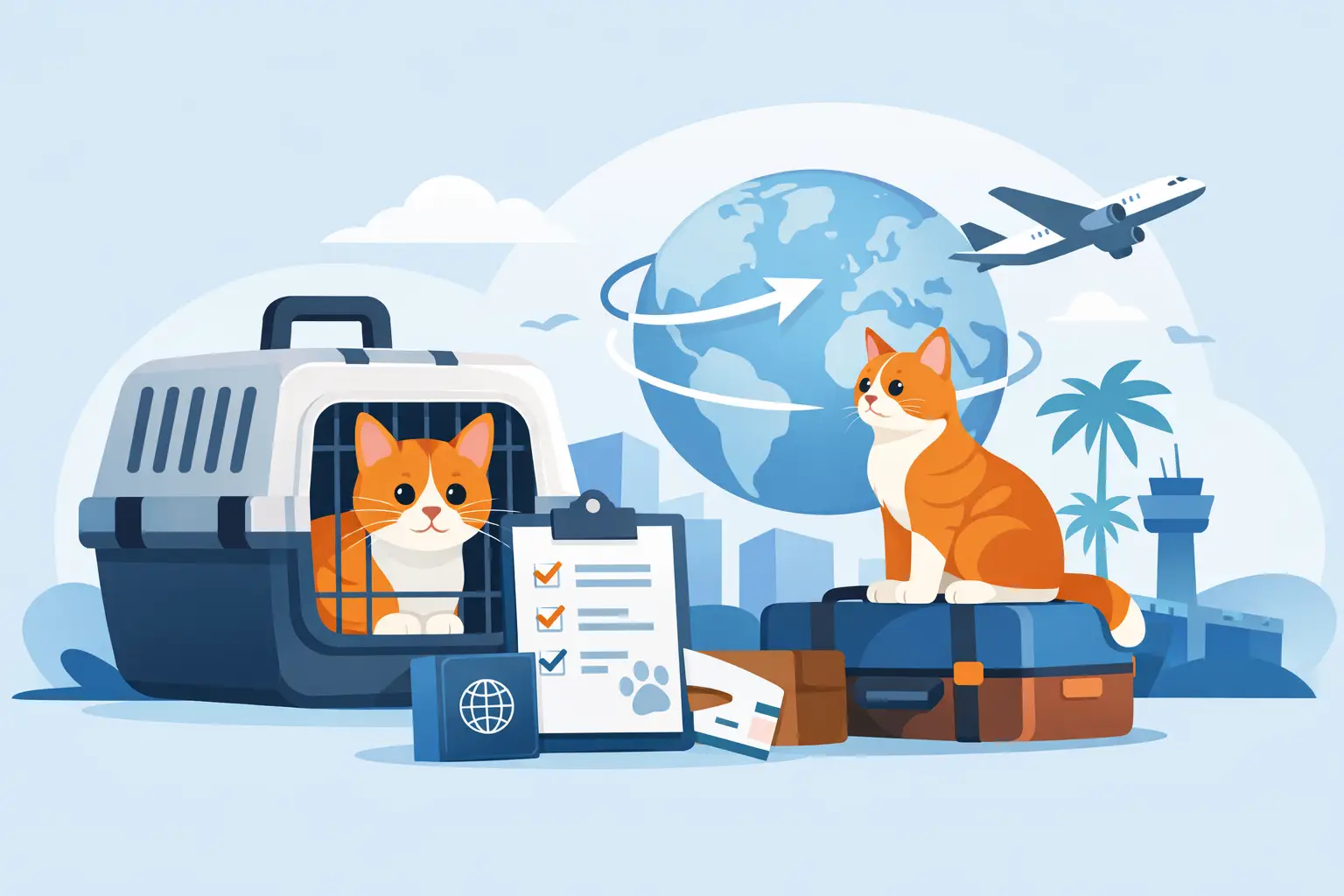
Do Cats Need Export Permits? What Owners Must Know
An international move can turn a simple question into a time-sensitive compliance issue: do cats need export permits? Often, a healthy household cat does not need a separate export permit. However, that does not mean the cat can travel with only an airline booking. Export rules, veterinary certificates, government endorsements, import permits, and transit requirements all depend on the countries involved.
For a family moving with one cat, the paperwork may be relatively straightforward. For breeders, rescue organizations, commercial shipments, or moves involving restricted breeds, multiple cats, or unusual routing, the requirements can become much more detailed. The safest approach is to treat each relocation as its own regulated travel plan.
Do Cats Need Export Permits From the United States?
In many cases, pet cats leaving the United States do not require a federal export permit solely because they are cats. What they usually need is documentation that satisfies the destination country’s import rules. Those rules may include a current rabies vaccination record, an international health certificate completed by an accredited veterinarian, microchip documentation, parasite treatment records, laboratory testing, and an official government endorsement of the health certificate.
The distinction matters. An export permit is a formal authorization to send an animal out of the country. A health certificate is a veterinary document confirming the animal meets stated health conditions. A government endorsement verifies that the certificate has been reviewed or issued in accordance with the importing country’s requirements. A cat may not need the first document but still require the other two before an airline will accept the shipment.
Requirements also change. Some destinations have relatively accessible entry procedures for cats arriving from the United States. Others require advance import approval, a rabies antibody titer test performed months before travel, quarantine arrangements, or very specific certificate language. Missing one detail can lead to denied boarding, refusal at arrival, extended holding, or quarantine at the owner’s expense.
When an export permit may be required
A permit is more likely to be needed when a cat is not traveling as a typical personal pet, when the export involves commercial activity, or when another regulation applies. For example, a breeding program sending cats internationally may face additional requirements from the destination country. A rescue organization relocating several cats may be subject to commercial movement rules rather than personal-pet rules.
Special circumstances can also change the answer. A cat traveling with protected animal materials, a specimen, or documentation tied to a regulated species may trigger separate wildlife or customs controls. While domestic cats are generally not subject to wildlife export permitting, a transport professional should review any unusual species classification, hybrid status, ownership purpose, or shipment type before plans are finalized.
The Destination Country Usually Drives the Process
The question is not only whether the United States requires an export permit. It is also what the receiving country requires before it will allow the cat to enter. In practice, an import permit issued by the destination country can be just as critical as any export document.
Countries with strict biosecurity programs may require an import permit before travel is booked. They may specify the approved laboratory for rabies testing, the date range for vaccinations, the type of microchip, the treatment required for parasites, and the exact timeframe for the final veterinary examination. Some countries require notice before arrival or limit entry to designated airports.
A cat moving from the United States to a country with lower-risk requirements may only need a properly timed health certificate and proof of vaccination. A cat moving to an island nation or a country with stringent rabies controls may need months of preparation. The animal’s age matters as well. Kittens may be too young to meet rabies vaccination or waiting-period rules, even if they are otherwise healthy and ready to travel.
Transit countries deserve the same attention. A routing that includes a long layover or airport transfer may create transit documentation requirements, particularly if the cat must be moved between terminals, cleared through customs, or held outside a secure airside facility. The most efficient flight route is not always the most compliant one.
Documents Most Cats Need for International Travel
Although each destination sets its own rules, most international cat relocations involve a core set of records. The cat’s microchip information must match all other paperwork exactly. A single incorrect digit, name variation, or date inconsistency can delay endorsement or cause problems at inspection.
A current rabies certificate is commonly required, along with records of other vaccinations when requested by the destination. The timing of the rabies vaccine is especially important. Some countries require the vaccination to be administered after microchipping, and many impose a waiting period before entry.
An international veterinary health certificate is also common. It must often be issued within a narrow window before departure, sometimes only a few days. Depending on the country, the certificate may need endorsement by the appropriate government animal health authority. That timing requires coordination between the owner, veterinarian, government office, airline, and transport provider.
Other possible documents include an import permit, rabies titer test results, parasite treatment certification, proof of ownership, airline booking confirmation, and a letter stating the cat is moving as a personal pet. For commercial or multiple-animal moves, additional declarations, invoices, or destination approvals may apply.
Airline Rules Are Separate From Government Rules
Airline acceptance is not the same as legal entry approval. A carrier may have restrictions on the size and type of travel kennel, weather conditions, aircraft type, connection time, and number of live animals accepted on a flight. Some airlines accept cats in cabin on selected routes, while others require pets to travel as checked baggage or air cargo. International and long-distance relocations often require cargo arrangements.
The travel container must meet airline and international live-animal handling standards. It should be correctly sized, well ventilated, secure, and appropriate for the cat’s ability to stand, turn around, and lie down naturally. Food and water provisions, absorbent bedding, identification labels, and handling instructions may also be required.
Sedation is generally not a routine solution for flight anxiety. It can affect a cat’s balance, temperature regulation, and respiratory function at altitude. A veterinarian can advise on the cat’s individual health needs, but travel planning should prioritize acclimating the cat to the kennel, selecting an appropriate route, and reducing avoidable handling and waiting time.
Start Planning Earlier Than You Think
For destinations with straightforward entry rules, preparation may still take several weeks because veterinarian appointments, certificate issuance, airline space, and government endorsements must align. For destinations requiring titers, permits, or quarantine bookings, planning can begin several months in advance.
Do not rely on a previous trip or another pet owner’s experience. Regulations can change, and requirements may differ based on the cat’s country of origin, vaccination history, age, travel purpose, and final destination. A cat returning to the United States may also face entry requirements that should be confirmed before departure, not while abroad.
It is wise to keep both original documents and clear copies available throughout the journey. Place travel papers in a protected, accessible folder rather than packing them in checked luggage. The person delivering or receiving the cat should understand who is responsible for presenting documents at each handoff.
Professional Coordination Protects the Cat and the Schedule
International pet transport is a welfare responsibility as much as a paperwork exercise. A compliant plan helps prevent stressful rebooking, separation from an owner, border delays, and unnecessary quarantine. It also gives the transport team time to select suitable flights, confirm kennel requirements, coordinate veterinary appointments, and prepare for destination clearance.
For complex moves, a specialized animal transport provider can coordinate the required timeline across veterinary, airline, cargo, customs, and destination contacts. This is particularly valuable for multi-cat households, breeding cats, urgent relocations, and journeys involving restrictive import programs. At Global Animal Transport, planning centers on humane handling and accurate documentation so each animal’s route is managed with the care it deserves.
If your cat will travel internationally, begin by confirming the destination’s entry requirements and working backward from the planned arrival date. The right documents are not merely a border requirement – they are part of giving your cat a safer, calmer start in its new home.
