
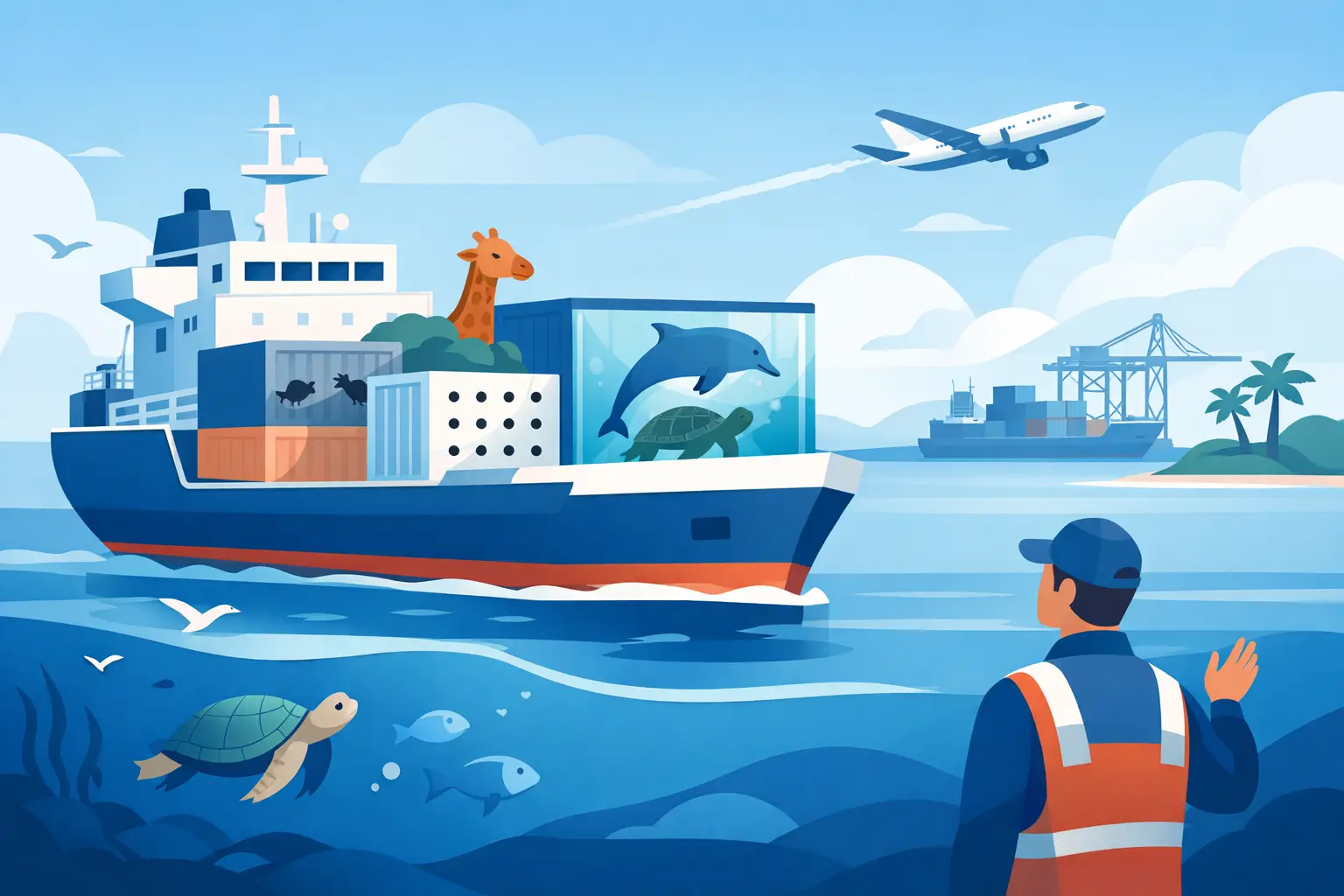
Safe Ocean Transport for Live Animals Worldwide
A sea voyage can last days or weeks, and every hour matters when the cargo is alive. Ocean transport for live animals is not a standard freight booking. It is a carefully controlled operation that must account for an animal’s biology, behavior, enclosure needs, feeding schedule, legal status, and ability to cope with a marine environment.
For the right shipment, ocean transport can provide the capacity, timing, and specialized vessel access that air transport cannot. It is often considered for livestock, large mammals, aquatic species, zoo animals, and conservation relocations. However, it is never a one-size-fits-all solution. The safe choice depends on the species, voyage length, weather exposure, port facilities, veterinary requirements, and the care resources available throughout the trip.
When Ocean Transport for Live Animals Makes Sense
Ocean transportation is generally selected when an animal group is too large, too heavy, or too specialized for conventional air cargo. Livestock movements, aquarium and marine-life transfers, large animal relocations, and dedicated zoological charters may require vessel-based planning. A chartered vessel can also allow for more space, onboard support personnel, and equipment designed around a particular species.
For household pets, sea travel is less common and may not be the most humane or practical option for a long international move. Flight availability, entry requirements, seasonal temperatures, and the pet’s health should all be evaluated before a route is chosen. A professional transport plan begins with the animal’s welfare, not with a preferred mode of transportation.
The value of maritime transport is often its flexibility. A carefully selected vessel may accommodate custom stalls, climate-managed rooms, aquatic life-support systems, feed storage, veterinary supplies, and specialized loading equipment. Those advantages only matter when the vessel, route, crew, and port arrangements are suitable for the animals being moved.
Welfare Planning Begins Before the Vessel Is Booked
Safe transport is built well before departure. First, the transportation team assesses the species, number of animals, age, health condition, temperament, and any special handling concerns. A breeding stallion, a group of dairy cattle, a school of temperature-sensitive fish, and a zoo primate have entirely different requirements. Their transport plans should reflect that reality.
Veterinary review is a central part of this preparation. Depending on the destination and species, animals may need health certificates, diagnostic testing, vaccination records, parasite treatment, quarantine clearance, or export permits. Some protected, exotic, or endangered species require additional authorizations and closely coordinated approvals. Missing paperwork can result in delays at the port, refusal of entry, or unnecessary stress for the animals.
Acclimation can also make a meaningful difference. Animals may need time to become familiar with their travel enclosure, handling routines, water systems, or loading procedures. For sensitive animals, a rushed loading day can increase anxiety and risk. Experienced handlers create a plan that limits noise, crowding, unfamiliar contact, and prolonged waiting periods.
Enclosures Must Protect Without Restricting
A transport enclosure has two jobs: it must keep the animal safe during vessel movement while allowing for normal posture, ventilation, rest, and species-appropriate care. The design varies dramatically by shipment.
Livestock may require secure pens with non-slip flooring, drainage, access to feed and water, and sufficient headroom. Larger animals may need reinforced stalls and loading systems built for their size and strength. Small companion animals need secure, well-ventilated kennels placed in a protected environment. Aquatic animals require transport tanks with controlled temperature, oxygenation, filtration, and water-quality monitoring.
The enclosure also must work within the vessel. Placement affects ventilation, vibration, access for caretakers, exposure to weather, and emergency response. A crate that is suitable on land is not automatically suitable for a sea voyage.
The Vessel and Route Are Part of the Care Plan
Not every ship can carry live animals responsibly. Vessel selection should consider the voyage duration, available animal areas, climate control, power redundancy, sanitation capability, crew experience, access to fresh water, and space for feed, bedding, medications, and veterinary equipment.
Weather is a major operational factor. Rough seas can affect balance, feeding, hydration, and stress levels. Extreme heat, humidity, cold, or storm conditions can change the risk profile of a route quickly. Transport planners review seasonal patterns, likely sea conditions, and port schedules to avoid unnecessary exposure whenever possible.
Route planning also includes the ports themselves. Animals need safe loading and unloading areas, equipment appropriate to their size, reliable ground transportation, and a confirmed destination facility. A vessel arriving at a port without prepared veterinary inspection, customs clearance, or onward transport can create avoidable welfare concerns.
For certain shipments, direct routing may reduce handling and transit time. In other cases, a planned stop may be necessary for fuel, provisions, inspections, or animal care. There is no universal answer. The right route is the one that creates the most controlled and humane path for that specific shipment.
Onboard Care Requires Qualified Oversight
Once a vessel leaves port, animal welfare cannot be treated as a background task. Caretakers must be able to inspect the animals, provide feed and water, clean enclosures, monitor behavior, and respond quickly to health concerns. The frequency and type of monitoring depend on the species and voyage conditions.
A reliable care plan addresses daily feed quantities, water supply, bedding, waste removal, medication protocols, and observation records. For animals with complex medical or behavioral needs, the plan may include a veterinarian or species-trained attendant traveling with the shipment. Aquatic shipments require continuous attention to tank conditions, including dissolved oxygen, temperature, salinity, and filtration performance.
Contingency planning is equally essential. Mechanical issues, weather diversions, port delays, illness, or changes in destination clearance can occur. The transport team should have backup provisions, emergency veterinary contacts, alternate port options when feasible, and clear decision-making procedures. Preparedness protects animals when circumstances change.
Documentation and Compliance Cannot Be an Afterthought
International animal shipping is governed by a mix of export rules, import regulations, veterinary requirements, carrier standards, customs procedures, and species-specific protections. Compliance varies by origin, destination, transit port, and animal category.
For livestock, zoo animals, and exotic species, approvals can take considerable time. Import permits and health protocols may specify testing windows, quarantine periods, identification methods, and approved travel conditions. Marine species may require fisheries, wildlife, or environmental documentation in addition to standard veterinary records.
Accurate paperwork does more than satisfy an agency requirement. It helps maintain continuity of care. Identification records, feeding instructions, medical history, transport manifests, and emergency contacts give every professional involved a clear understanding of the shipment and its needs.
Why Specialized Coordination Matters
Ocean transport combines maritime logistics with animal welfare responsibilities. A carrier may understand vessel operations, while a veterinarian understands animal health, and a port agent understands clearance procedures. A successful movement brings those roles together under one coordinated plan.
Global Animal Transport manages this process by aligning species-specific handling, vessel or charter arrangements, documentation, ground logistics, and around-the-clock communication. That coordination is especially valuable when a shipment involves multiple animal groups, international borders, specialized equipment, or a narrow arrival window.
The lowest transportation quote is not always the safest option. Owners and institutions should ask how the animals will be housed, who will provide onboard care, what happens if the schedule changes, how temperature and ventilation will be managed, and whether the provider has experience with that particular species. Clear answers are a sign of careful planning.
When a sea journey is the right option, the goal is not simply to move animals across an ocean. It is to deliver them in stable condition, with their welfare protected at every stage. A detailed consultation before the voyage can turn a complex maritime move into a controlled, humane plan built around the animals in your care.
