
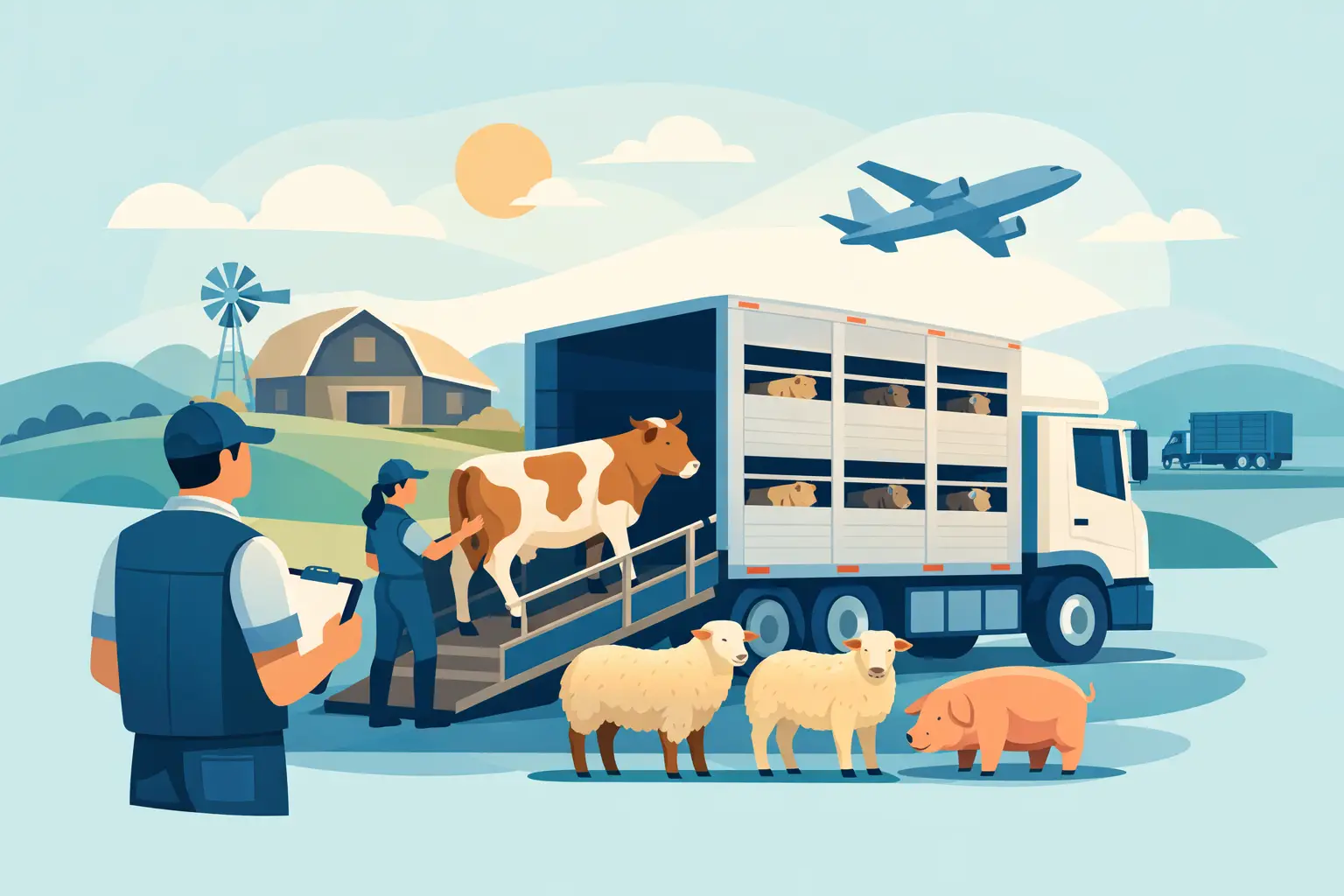
A Practical Guide to Livestock Welfare Transport
A livestock shipment can succeed on paper and still fail the animals if the route, equipment, handling, or timing is wrong. This guide to livestock welfare transport is built around the decisions that protect animal health, reduce stress, and keep operations moving responsibly from loading point to destination.
For cattle, horses, swine, sheep, goats, poultry, and other production animals, transport is not merely a freight task. Each move requires an understanding of species behavior, environmental conditions, loading density, regulatory requirements, and the physical condition of every animal in the shipment. The right plan is always species-specific, route-specific, and weather-specific.
Start With a Fit-to-Travel Assessment
Welfare begins before a vehicle, aircraft, or vessel is scheduled. Animals should be assessed for their ability to travel safely, with attention to mobility, body condition, hydration, pregnancy status, age, injury, illness, and signs of distress. An animal that is lame, severely fatigued, close to giving birth, or clinically unwell may need veterinary review, treatment, or a delayed departure rather than being loaded into a stressful environment.
This assessment is especially important when animals are moving long distances or crossing borders. A shipment may require health certificates, testing, vaccination records, import permits, identification records, or inspection clearance. Documentation should be confirmed well before departure, not assembled while animals are already staged for loading. Delays at a port, airport, border facility, or inspection point can quickly become a welfare issue when animals are confined and waiting.
Grouping also deserves careful attention. Keep compatible animals together whenever practical, and avoid mixing unfamiliar groups that may fight, mount, bully, or become separated from established social companions. Young, small, horned, pregnant, and particularly vulnerable animals may require additional segregation or support.
Plan the Route Around Animal Needs
The shortest route is not always the safest route. A route that avoids severe heat, freezing conditions, rough roads, congested border crossings, or lengthy holding periods may be the better choice, even if it takes longer on a map. Transport planning should account for the full journey, including pre-loading, transfers, inspections, unloading, rest periods, and final delivery.
For longer movements, operators need a clear plan for feed, water, rest, sanitation, and monitoring. The applicable requirements vary by species, jurisdiction, method of travel, and shipment purpose. Rather than relying on a generic schedule, build provisions around the animals’ known needs and the actual transit timeline, allowing a meaningful buffer for traffic, weather, mechanical issues, or clearance delays.
Temperature is one of the most consequential variables. Heat stress can develop rapidly in crowded or poorly ventilated conditions, while cold exposure can be equally dangerous for young, recently shorn, wet, or lightly conditioned animals. The transport schedule may need to shift to cooler hours, and the equipment may need climate controls, ventilation adjustments, bedding, or weather protection. These decisions should be made before loading, not after animals show signs of discomfort.
Build a realistic contingency plan
Every welfare-centered transport plan needs alternatives. Identify safe places to stop, unload, rest, obtain veterinary support, or source feed and water if the primary schedule changes. Confirm who has authority to make decisions during transit and how drivers, handlers, dispatch teams, owners, and receiving facilities will communicate.
A contingency plan should address vehicle breakdowns, canceled flights, road closures, border delays, extreme weather, illness, injury, and equipment failures. The goal is not to assume that something will go wrong. It is to make sure a manageable disruption does not become an animal welfare emergency.
Choose Equipment That Supports Humane Transport
A clean, well-maintained transport unit is the baseline, not a premium feature. Floors must provide secure footing, ramps should have an appropriate incline and non-slip surface, partitions should be secure, and interior surfaces should not expose animals to sharp edges or protrusions. Bedding can improve footing, absorb moisture, and provide thermal comfort, but the right material depends on species, weather, trip duration, and sanitation needs.
Ventilation requires more than opening vents. Airflow must reach animals at all positions within the compartment, including those in the center or lower deck areas. In hot conditions, the combination of humidity, stocking density, body heat, and limited airflow can create dangerous conditions even when the outdoor temperature seems moderate.
Space allowances should permit animals to stand naturally, balance during movement, and access water or rest as the journey requires. Overcrowding increases heat load, slipping, bruising, trampling, and stress. Too much unpartitioned space, however, can also create instability during turns or sudden stops. The right loading density is a welfare decision based on species, size, horn status, temperament, weather, and transport mode.
Handle Animals Calmly From Start to Finish
Loading and unloading are often the highest-risk moments in a livestock move. Animals respond to shadows, noise, unfamiliar surfaces, sharp turns, changes in light, and perceived dead ends. Facilities should be prepared to guide natural movement, with clear pathways, suitable lighting, quiet handling, and trained personnel who understand how the species reacts under pressure.
Rushing animals usually creates more delay. It can lead to slips, refusals, injuries, overheating, and chaotic regrouping. Calm, deliberate handling is safer for both animals and people. Handlers should use low-stress techniques and avoid excessive noise, force, or tools that cause pain or panic.
The loading crew should also watch for early indicators of trouble: open-mouth breathing, excessive vocalization, repeated slipping, reluctance to rise, aggression, separation anxiety, or animals unable to maintain balance. Small interventions at this stage, such as adjusting a group, improving footing, providing a pause, or removing an unfit animal, can prevent larger problems later.
Monitor Welfare Throughout Transit
Once the shipment leaves, welfare management continues. Drivers and attendants should have a defined inspection process that checks animal posture, breathing, movement, temperature conditions, ventilation, water availability, injury, and signs of distress. Monitoring frequency should reflect trip length, species, environmental conditions, and the level of risk involved.
For air and ocean transport, coordination becomes even more critical. Animals may pass through ground handling areas, staging facilities, security processes, and transfer points that are outside the immediate control of the original shipper. Clear handling instructions, species-specific crate or stall specifications, and direct communication among all parties help preserve welfare across those handoffs.
Records matter because they create accountability. Maintain transport times, inspection notes, feed and water provisions, temperature observations where relevant, incidents, and actions taken. Good documentation supports compliance, improves future planning, and provides a clear welfare history if questions arise after delivery.
Know when to intervene
Not every animal will travel identically. If an animal becomes distressed, injured, ill, or unable to stand safely, the transport team must be ready to act. Depending on the situation, intervention may mean separating the animal, seeking veterinary direction, adjusting the environment, stopping at an approved facility, or arranging emergency care.
Continuing because a schedule is tight is rarely the right answer when animal welfare is compromised. A professional transport operation balances commercial timing with the responsibility to protect living animals at every stage.
Prepare the Receiving Site Before Arrival
A calm arrival starts with a ready destination. Confirm unloading equipment, pen or stall availability, water access, footing, lighting, ventilation, biosecurity measures, and trained receiving staff before the shipment reaches the site. Animals should not remain on transport longer than necessary because a facility is unprepared.
After unloading, provide a quiet period for animals to recover, drink, eat according to their needs, and be observed for injuries or stress-related concerns. Newly arrived animals may need separation, veterinary observation, or acclimation before joining an established herd or group. This is particularly relevant after international moves, long-haul transit, or transport involving unfamiliar animals.
For complex domestic or international livestock movements, experienced coordination can make the difference between a basic shipment and a genuinely welfare-led one. Global Animal Transport plans around species requirements, transit conditions, documentation, and responsive communication so owners and organizations can move animals with greater confidence.
The best transport plan is one that treats every loading time, transfer point, and arrival window as a care decision. When welfare leads the logistics, animals arrive safer, handlers work more effectively, and the entire operation is better prepared for the realities of the journey.
