
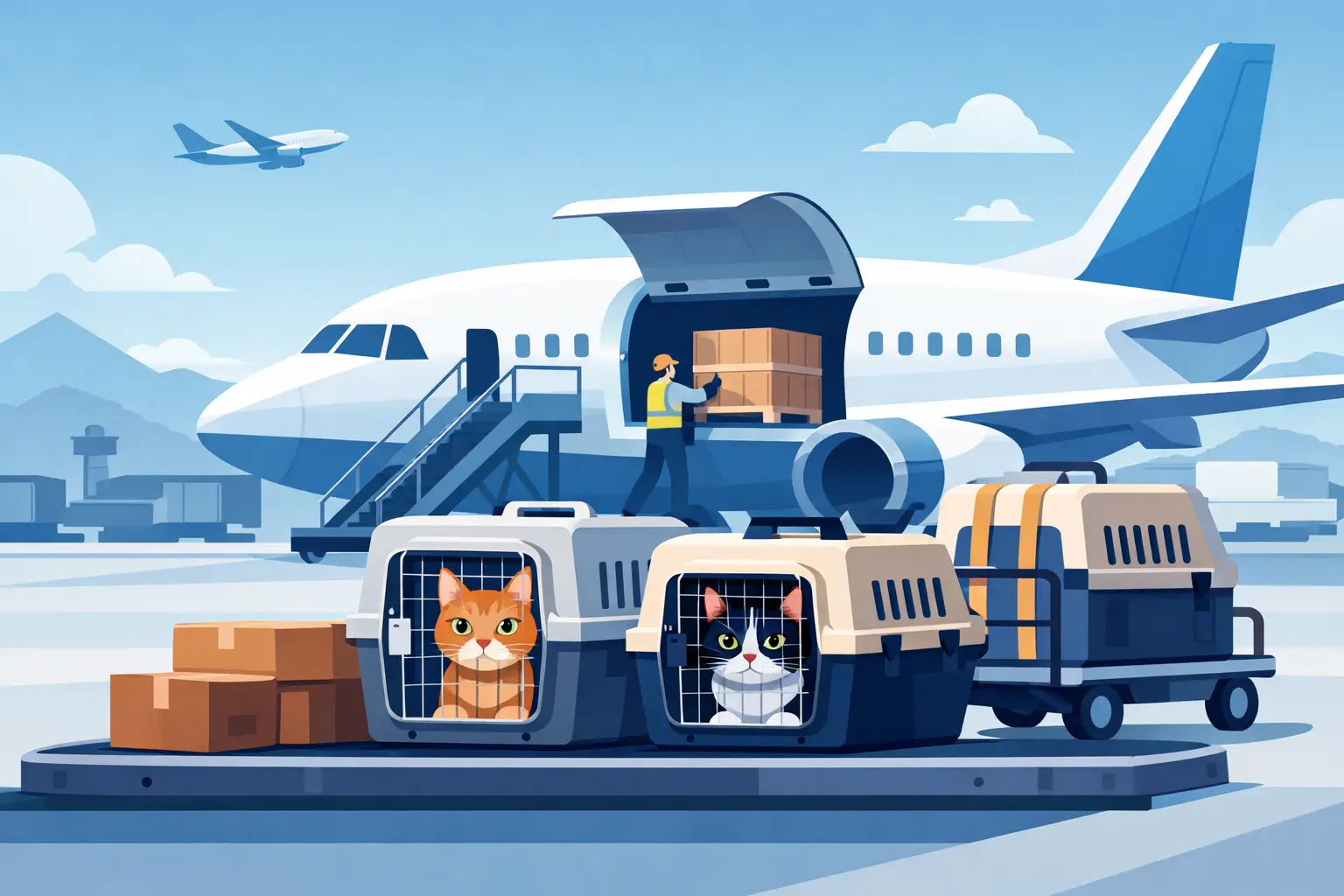
Can Cats Travel on Cargo Flights Safely?
A move date can be fixed, a new home can be ready, and your cat can still be the part of the plan that feels hardest to manage. Can cats travel on cargo flights? Yes, they can, provided the airline accepts the route, the cat meets health and documentation requirements, and the journey is planned around humane handling rather than convenience alone.
For many domestic and international relocations, traveling as air cargo is the practical option when a cat cannot fly in the cabin or as checked baggage with its owner. It is not a lesser form of travel. Properly arranged cargo transport uses approved kennels, controlled acceptance procedures, trained personnel, and airline-specific live-animal protocols. The right choice depends on the individual cat, the itinerary, the weather, and the destination rules.
Can Cats Travel on Cargo Flights? What It Really Means
The phrase “cargo flight” can describe two different arrangements. A cat may travel in the climate-controlled cargo hold of a scheduled passenger aircraft under an airline’s cargo program, or it may travel on a dedicated freighter aircraft. In either case, the cat is booked and handled as live cargo, not shipped like ordinary freight.
Most pet relocations use the live-animal cargo program of a commercial airline. The cat is delivered to the airline’s cargo facility, accepted after a document and kennel check, and loaded in a designated area of the aircraft. On arrival, the receiving party collects the cat from the cargo terminal or a prearranged animal-handling agent completes the transfer.
Dedicated cargo aircraft can be appropriate for certain routes, group movements, or highly coordinated relocations. However, availability, aircraft configuration, ground handling capacity, and local regulations vary. The most suitable option is the one that offers a safe, compliant route with the fewest unnecessary transfers – not simply the lowest fare or fastest advertised flight time.
When Air Cargo May Be the Right Choice
Cargo travel is often used when an owner is relocating internationally, when an airline does not permit pets in the cabin on a particular route, or when the cat is too large to meet cabin carrier limits. It may also be necessary when a cat is traveling separately from its owner, such as during a corporate relocation, family move, breeder placement, or rescue transfer.
A direct flight is generally preferable, but direct is not always possible. A well-managed connection at an airport with experienced live-animal facilities can be safer than forcing a difficult ground journey to reach a nonstop departure city. Planning should account for total journey time, including transport to the airport, check-in, transfer periods, customs clearance, and final delivery.
Air cargo is not ideal for every cat. A veterinarian should assess cats with significant heart, respiratory, or other medical conditions before travel. Kittens, senior cats, pregnant cats, and animals recovering from illness may require additional review. Brachycephalic, or short-nosed, cats can face more restrictive airline policies because their airway anatomy may make heat and stress harder to tolerate.
Safety Depends on the Full Transport Plan
A safe flight begins well before departure. The airline’s acceptance requirements, the crate, the health paperwork, and the ground arrangements all matter. A cat can be medically fit to fly yet still be denied boarding if its kennel does not meet the airline’s live-animal standards or its documents are incomplete.
The travel crate must be strong, secure, leak-resistant, and large enough for the cat to stand naturally, turn around, and lie down comfortably. It needs adequate ventilation on multiple sides and must be properly labeled. The cat should be accustomed to the crate before travel day. Familiarity reduces stress and makes the crate feel less like an alarming new environment at the airport.
Food and water instructions are also specific to the airline and journey length. Cats should not begin a long trip dehydrated, but overfeeding immediately before travel can cause discomfort. Water containers must be securely attached and accessible from outside the crate. For long or complex routes, the transport plan should clearly identify who is responsible for checking the animal and replenishing water when permitted.
Sedation is usually discouraged unless a veterinarian determines it is medically necessary and the airline accepts it. Sedatives can affect balance, breathing, and temperature regulation at altitude. A calm, crate-acclimated cat with a carefully planned itinerary is generally safer than a sedated cat whose condition may be harder to monitor.
Weather Is a Real Operational Factor
Extreme heat and cold can change a flight plan quickly. Airlines may impose seasonal or day-of-travel temperature restrictions for live animals, especially when a cat will spend any time on an airport ramp or in a non-climate-controlled transfer area. These restrictions exist to protect animals, even when they create frustrating delays.
A responsible transport plan includes flexibility. Early-morning departures, alternate hubs, overnight holds with professional care, or a revised travel date may be necessary to avoid unsafe temperatures. No one should promise a departure at the expense of an animal’s welfare.
International Flights Add Another Layer of Requirements
International cat transport is not simply a domestic cargo booking with a longer flight. Every destination may set its own import rules, including microchip requirements, rabies vaccination timing, health certificates, import permits, parasite treatments, laboratory testing, and inspection procedures.
The sequence matters. For example, a microchip may need to be implanted before a rabies vaccination is administered for that vaccination to be recognized by the destination. Some countries require treatments within a narrow window before arrival. Others have limited entry airports, mandatory quarantine, or advance approval requirements that can take weeks or months.
Airline requirements and government import requirements are separate. Meeting one does not guarantee compliance with the other. A complete plan verifies the cat’s eligibility with the destination authority, confirms the airline’s current live-animal policy, and allows enough time for veterinary appointments, endorsements, and original paperwork.
What Professional Cargo Coordination Provides
Pet owners can sometimes book a simple domestic shipment directly with an airline. But international moves and multi-leg itineraries often benefit from specialized coordination. The work involves more than reserving space on a flight. It includes reviewing the cat’s travel eligibility, selecting an appropriate routing, preparing the crate, organizing veterinary documentation, coordinating airport delivery, and monitoring the shipment through departure and arrival.
Professional planning is especially valuable when timing is tight, destinations have strict import rules, or travel involves a connection. A qualified animal transport provider can identify problems early – such as an unacceptable crate size, a missing endorsement, a weather embargo, or a connection that does not allow live-animal transfers.
Global Animal Transport coordinates domestic and international animal movements with welfare, compliance, and practical handling at the center of each plan. For cats, that means treating the journey as a live-animal operation with individual needs, not a standard cargo transaction.
Preparing Your Cat for a Better Travel Day
The most useful preparation is gradual and calm. Leave the travel crate open at home well in advance, place familiar bedding inside if permitted, and let the cat choose to rest there. Short, positive crate sessions are more effective than trying to introduce the carrier on departure day.
Keep identification accurate. The crate should carry the required live-animal labels, feeding and watering instructions, and contact details. Your cat should have an identification tag, and a current microchip is strongly recommended even when it is not legally required. Keep copies of all documents accessible during the move, while recognizing that original documents may be needed for airline acceptance or border inspection.
On travel day, arrive according to the cargo facility’s instructions. Cargo acceptance times differ from passenger check-in times and may be several hours before departure. Stay calm around your cat, avoid last-minute changes to food or medication, and confirm who will receive the cat at destination before the flight leaves.
Questions to Ask Before Booking
Before committing to an itinerary, ask whether the airline accepts cats as cargo on the specific route and dates, whether any breed, age, seasonal, or temperature restrictions apply, and whether the itinerary includes live-animal-safe connections. Confirm the exact crate specifications and document deadlines as well.
For international travel, ask which authority issues or endorses the health certificate, whether an import permit or advance notification is required, and what happens after landing. Collection procedures can vary widely. In some locations, the cat may be released quickly after inspection; in others, customs clearance, broker coordination, or quarantine procedures may apply.
The right cargo plan gives your cat time, appropriate handling, and a safe place in every handoff. When the route, paperwork, crate, and care arrangements are aligned before departure, air travel becomes a managed relocation process rather than an uncertain flight day.
