
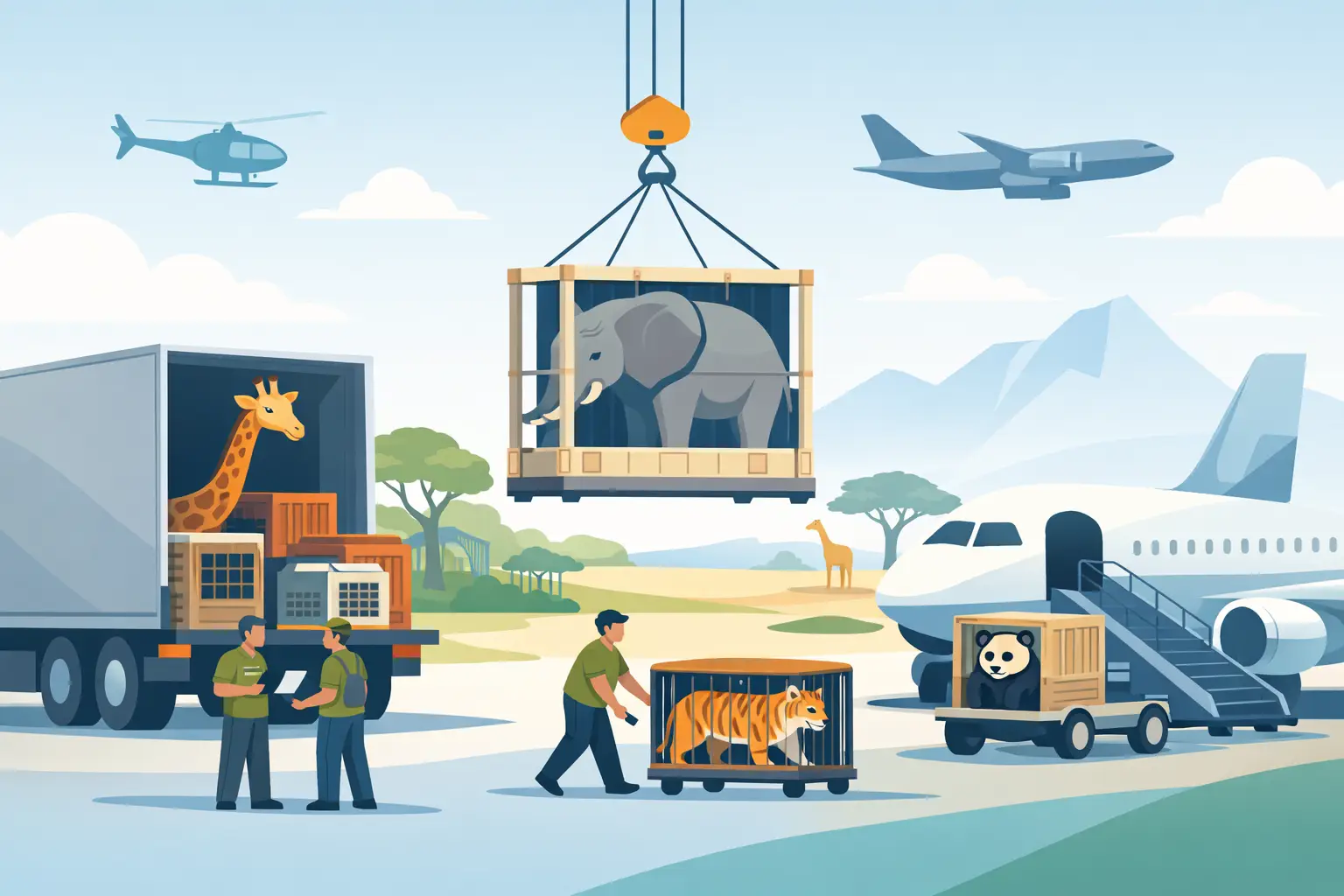
A Guide to Zoo Animal Logistics and Safe Relocation
A zoo animal move is never simply a matter of getting an animal from one location to another. A breeding recommendation may require a rare ungulate to travel across borders. A habitat renovation may require primates to be temporarily relocated. A conservation transfer may involve a species whose safety depends on precise temperature control, familiar diet, secure containment, and experienced care at every handoff. This guide to zoo animal logistics explains how institutions can plan these high-responsibility moves with animal welfare, compliance, and operational control at the center.
Why Zoo Animal Logistics Requires Specialized Planning
Zoo animals have different physical, behavioral, medical, and legal needs. A transport plan that works for one species can be unsuitable for another, even when both animals are traveling on the same aircraft or to the same destination. A large carnivore requires secure containment and carefully managed separation protocols. A giraffe requires specialized trailer height, route review, and loading procedures. Reptiles and amphibians can be highly sensitive to fluctuations in temperature and humidity, while marine species require water-quality systems that remain stable throughout transit.
The objective is not merely to shorten travel time. The right plan balances the most direct practical route with the animal’s temperament, species-specific needs, regulatory obligations, weather exposure, and the capabilities of receiving staff. In some cases, an overnight rest stop or a chartered aircraft is the safer choice. In others, a carefully timed ground movement reduces handling and provides more control.
Every relocation should begin with a full assessment of the animal, the origin and destination facilities, and the transport environment. This gives the logistics team enough time to identify constraints before they become welfare risks.
The Core Elements of a Guide to Zoo Animal Logistics
Successful zoo animal transport relies on coordinated decisions rather than a single carrier or document. The strongest plans connect veterinary input, animal care teams, transport specialists, government agencies, and receiving facilities from the beginning.
Start With Animal-Centered Transport Planning
Planning begins with the individual animal, not the shipment category. Age, sex, body condition, social structure, temperament, health history, reproductive status, and prior travel experience all affect the approach. A bonded pair may need to travel together. A highly social species may benefit from visual or auditory contact with familiar companions. An animal with an ongoing medical condition may require veterinary monitoring, modified feeding schedules, or additional contingency planning.
The sending institution should provide current records, including identification details, veterinary certificates, vaccination status where applicable, diet information, behavioral notes, and emergency contacts. The receiving institution must confirm that the habitat, quarantine area, unloading equipment, and trained personnel are ready before the animal departs.
Transport timing matters as well. Loading during the quietest part of the day may reduce stimulation for some animals. Seasonal temperatures can affect route selection, tarmac exposure, and vehicle requirements. A plan should account for likely delays, not just the ideal schedule.
Select the Right Containment System
A transport crate, container, trailer, or aquatic life-support unit is part of the animal’s temporary environment. It must protect the animal from injury, prevent escape, allow safe monitoring, and support appropriate ventilation, temperature conditions, and access for care when necessary.
Container selection depends on species and mode of transport. Crates for large mammals must be structurally secure and sized to permit safe posture and balance without creating excess movement. Bird containers need proper perch placement, ventilation, and protection from drafts. Containers for reptiles may need insulated construction and controlled heat sources. For fish and aquatic animals, the system may involve oxygen management, filtration, temperature control, and water testing throughout the trip.
Familiarization can make a meaningful difference. When practical, animal care staff may introduce an animal to its transport container before departure, allowing it to investigate and enter voluntarily. This reduces the need for rushed loading and can help lower stress on travel day.
Build a Compliant Documentation and Permit Plan
International and interstate zoo animal relocations can involve multiple layers of regulation. Requirements may include import and export permits, wildlife documentation, health certificates, customs declarations, airline approvals, inspection arrangements, and records related to protected or endangered species.
Documentation should be reviewed early because permit timelines vary. A missing signature, expired health record, incorrect scientific name, or mismatch between a permit and an identification record can delay a shipment at a border or airport. For live animals, a delay is more than an administrative inconvenience. It can affect feeding, rest, temperature stability, staffing, and welfare.
A professional logistics coordinator works with the relevant agencies and stakeholders to align documentation with the planned route and transport dates. This includes confirming that the destination country, transit countries, port of entry, and carrier will accept the shipment as planned. A route that appears efficient on a map may not be suitable if it introduces avoidable clearance or inspection complications.
Match the Transport Mode to the Mission
Ground transport, commercial air cargo, dedicated cargo freighters, aircraft charters, and ocean charters each have a place in zoo logistics. The best option depends on distance, species, shipment size, handling requirements, schedule flexibility, and available infrastructure.
Ground transport offers direct control and can be ideal for regional moves, particularly when a vehicle can be outfitted for climate management, secure containment, and onboard care. Air transport can reduce overall travel time for long-distance or international moves, but it requires careful coordination around airport access, security, cargo acceptance windows, and potential weather disruptions.
Charter solutions may be appropriate for large animals, multiple animals, highly sensitive species, or moves that cannot fit commercial schedules. They can provide more control over timing and handling, though they may require a larger budget and more intensive planning. Ocean transport can be considered for specialized movements where a vessel provides the necessary space, life-support capacity, and duration management.
The least expensive option is not always the lowest-risk option. Institutions should evaluate the full cost of transport, including contingencies, veterinary support, specialized equipment, permits, and receiving arrangements.
Welfare Controls During Transit
Once an animal is in transit, consistency becomes the priority. Animal welfare protocols should define who monitors the shipment, how frequently conditions are checked, what information is recorded, and who can make decisions if conditions change.
For many species, the main concerns include ventilation, temperature, hydration, noise, vibration, light exposure, and handling intensity. Feeding plans should be designed with veterinary and husbandry guidance. Some animals may require food or water during transit, while others may travel more comfortably with adjusted feeding schedules. Sedation is not a routine logistics solution and should only be considered under qualified veterinary direction when the benefits clearly outweigh the risks.
Contingency planning is equally essential. Weather diversions, flight delays, mechanical issues, road closures, and border holds can occur. A responsible plan identifies alternate routes, temporary holding options, local veterinary contacts, backup equipment, and communication procedures before departure. Around-the-clock coordination is especially valuable when a move crosses time zones or includes several transport handoffs.
Arrival, Quarantine, and the First 72 Hours
A relocation is not complete when the animal reaches the destination gate. The receiving team should be prepared to unload safely, move the animal into a secure holding area, provide water and appropriate diet, and observe behavior closely. Quarantine requirements should be confirmed in advance and integrated into the facility’s arrival plan.
The first 72 hours can reveal whether the transition is progressing well. Staff should monitor food and water intake, posture, mobility, respiration, stool output, social response, and species-specific signs of stress. Familiar enrichment, known dietary items, and minimal unnecessary disturbance can support acclimation. For social animals, introductions should follow the receiving institution’s established behavioral protocols rather than a rigid transport timetable.
Communication between sending and receiving teams remains useful after arrival. Husbandry insights from the original caregivers can help the new team interpret normal behavior and recognize changes that deserve attention.
Choosing a Zoo Animal Transport Partner
A qualified provider should offer more than booking support. Look for demonstrated experience with zoological species, access to appropriate transport modes, a clear understanding of permits and border processes, species-specific containment capabilities, and a welfare-first approach to handling. Ask how the provider manages delays, coordinates veterinary requirements, communicates with institutional teams, and supports shipments outside standard business hours.
Global Animal Transport coordinates complex domestic and international animal relocations with planning tailored to the species, route, and institutional mission. From large mammals and exotic species to aquatic life-support shipments, each movement requires careful operational control and humane handling.
The most successful zoo relocation plans are built early, reviewed carefully, and designed around the animal’s needs at every stage. When welfare and logistics are treated as one responsibility, institutions can move animals with greater confidence and give them the best possible start in their new environment.
