
Shared Versus Dedicated Animal Transport Explained
A transport plan can look efficient on paper and still be wrong for the animal traveling. The decision between shared versus dedicated animal transport affects more than price. It shapes pickup timing, travel duration, handling frequency, route flexibility, and the level of control available if conditions change.
For a healthy dog moving on a predictable domestic route, shared transport may provide dependable value. For a breeding stallion, a time-sensitive aquarium shipment, or a pet with medical needs, dedicated service may offer the margin of control that makes the journey safer. The right choice begins with the animal, not the vehicle.
What Shared Animal Transport Means
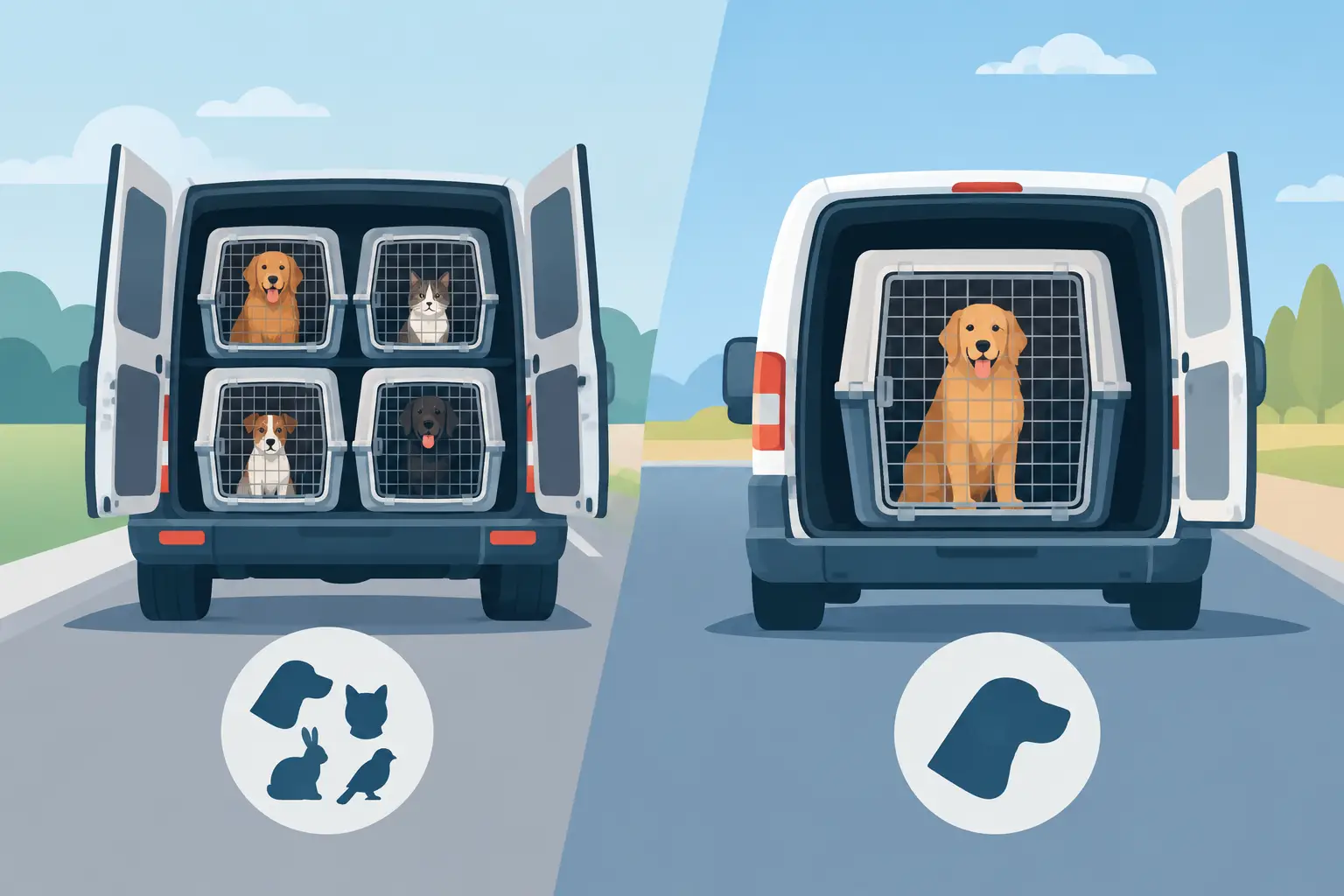
Shared animal transport combines compatible shipments moving in the same general direction or on a similar schedule. Depending on the mode of transport, this may involve multiple pets, livestock consignments, or professionally planned shipments that share a vehicle, cargo space, charter capacity, or operational route.
Shared service is not a casual ride arrangement. When managed properly, it requires careful planning around species compatibility, crate or enclosure standards, temperature needs, sanitation, handling protocols, pickup windows, and required documentation. Animals should be safely separated as appropriate and monitored according to the service plan.
The primary advantage is cost efficiency. Since transportation resources are shared among multiple clients, the expense of the route can be distributed. Shared transportation can also be practical for routine moves where the origin, destination, and timing align with an established route.
The trade-off is flexibility. Departure and arrival times may be tied to other shipments, and a route can include additional pickups, transfers, or delivery stops. That does not automatically make shared transportation unsuitable, but it does mean that travel planning must account for total time in transit rather than simply the direct mileage between two locations.
When Shared Transport Is a Strong Fit
Shared service is often a sound choice when an animal is healthy, accustomed to travel, and able to follow a planned schedule without urgent delivery requirements. It can work particularly well for domestic pet relocations, breeder transfers with flexible timing, and certain livestock movements where grouping and routing are professionally coordinated.
The key question is whether the itinerary supports the animal’s welfare. A well-designed shared route considers rest opportunities, climate conditions, feeding and watering requirements, ventilation, secure containment, and the likelihood of unnecessary handling. For international movements, it must also account for inspection appointments, airline schedules, import permits, and quarantine requirements.
A lower price should never be the only reason to select shared transport. The provider should be able to explain how animals are housed, how the route is managed, what happens if there is a delay, and who is responsible for communication throughout the move.
What Dedicated Animal Transport Means
Dedicated animal transport reserves transportation capacity for one client, one animal, or one closely related shipment. The service may involve a dedicated ground vehicle, a private aircraft charter, reserved cargo arrangements, or specialized support equipment designed around a particular species and route.
This option gives the transport team greater control over timing and operations. Pickup and delivery windows can be more precise, the itinerary can be direct, and handling can be limited to what the animal’s movement actually requires. A dedicated plan can also make it easier to adapt when weather, veterinary guidance, border processing, or facility availability changes at short notice.
Dedicated service is especially valuable for animals that need close oversight or highly specific travel conditions. This may include senior pets, animals recovering from illness, high-value breeding animals, zoo species, aquatic life, exotic animals, or shipments that require controlled temperatures, specialized containers, or trained attendants.
Dedicated does not mean every journey is free from risk or delay. Weather, airport congestion, customs procedures, and animal health requirements still apply. What it provides is a more tailored operational response, with fewer variables created by unrelated shipments.
Shared Versus Dedicated Animal Transport: Key Differences
The practical difference between shared and dedicated service comes down to control, cost, and complexity. Shared transport generally offers lower cost and works best when schedule flexibility is acceptable. Dedicated service typically costs more because capacity, equipment, and personnel are reserved, but it can reduce travel variables and allow a more direct plan.
Timing is often the deciding factor. A shared route may operate within a pickup and delivery window, while dedicated transportation can be built around a specific appointment, flight connection, veterinary clearance, or receiving facility. For an aquarium accepting a live fish shipment at a defined time, or a zoo coordinating a transfer team, that precision may be essential.
Animal temperament also matters. Some animals travel well with routine handling and stable conditions. Others become stressed by repeated loading, unfamiliar sounds, changes in temperature, or extended confinement. A calm family pet may do well in a carefully managed shared plan, while an anxious animal may benefit from a direct dedicated move.
Species requirements can quickly change the equation. Household pets have different needs than horses, cattle, reptiles, birds, primates, or marine animals. There is no one-size-fits-all transport model for living cargo. Welfare standards must guide the service decision at every stage.
How to Choose the Right Transport Plan
Before selecting a service, consider the full journey from the animal’s perspective. Travel time begins before departure, with crate preparation, pickup, loading, and transfer procedures. It ends only after safe delivery and handoff at the destination.
A professional transport consultation should address the animal’s species, age, health status, temperament, travel history, origin and destination, climate exposure, required paperwork, and destination deadlines. It should also identify whether the shipment needs veterinary coordination, special handling equipment, temperature support, secure containment, or customs assistance.
Dedicated transportation is generally worth considering when the animal has a medical concern, the route is time-sensitive, the shipment is high-value or regulated, or species-specific requirements leave little room for scheduling uncertainty. Shared transportation may be appropriate when the route is compatible, the animal is suited to the itinerary, and a qualified provider can demonstrate humane handling throughout the process.
Do not assume that a direct route is always the best route, or that shared service is automatically stressful. The details matter: the mode of travel, staffing, container design, layover procedures, weather planning, and contingency response all influence the animal’s experience.
Planning for Welfare, Compliance, and Contingencies
Safe transport depends on planning for what is expected and what is not. Documentation errors, delayed clearances, weather disruptions, flight changes, and receiving-facility issues can affect even the most carefully arranged shipment. An experienced provider builds contingency planning into the service rather than treating it as an afterthought.
For international moves, requirements may include health certificates, import permits, vaccination records, microchip verification, species documentation, airline approvals, and destination-specific entry rules. Specialized shipments can require additional permits, inspections, escorts, or environmental controls. These details should be confirmed well before travel dates are finalized.
Global Animal Transport develops transport plans around the welfare needs and logistical realities of each shipment, whether the right solution is shared capacity or a dedicated movement. The goal is not to sell one model over the other. It is to provide safe, humane, professionally managed transportation that fits the animal and the mission.
The best transport choice is the one that gives your animal appropriate care, realistic timing, and a clear plan for every handoff. Start the conversation early, ask specific questions about the route and handling process, and choose the level of service that protects both the journey and the animal entrusted to it.
