
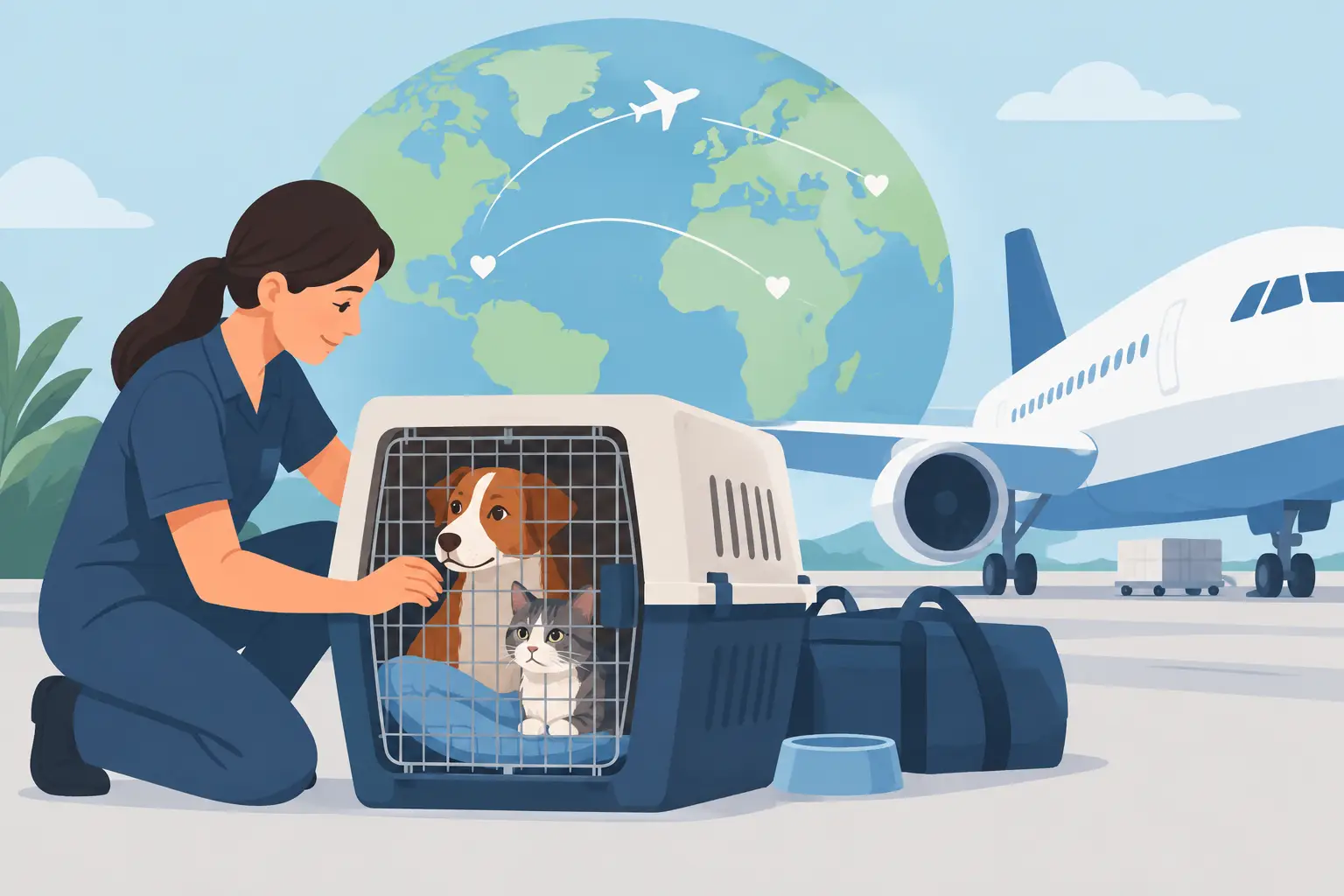
Shipping Rescue Animals Overseas With Care
A rescue animal’s journey does not begin when an aircraft leaves the ground. It begins with a careful assessment of the animal’s health, temperament, legal status, and destination requirements. Shipping rescue animals overseas is a high-responsibility operation, particularly when animals have unknown histories, recent medical needs, or limited experience with handling and confinement.
For shelters, rescue organizations, foster networks, adopters, and conservation partners, the priority is not simply getting an animal from one country to another. The priority is arranging a humane, compliant move that protects welfare at every handoff. That requires species-specific planning, accurate documentation, appropriate equipment, and experienced coordination from pickup through arrival.
Why rescue animal transport requires added care
Rescue animals can arrive with circumstances that affect transport planning. A dog may be recovering from neglect. A cat may be fearful of unfamiliar people and sounds. A group of animals may have incomplete records, uncertain ages, or vaccination schedules that do not yet meet the destination country’s entry rules. Wildlife and exotic rescue cases can involve permits, quarantine protocols, and specialized housing requirements.
These factors do not make international transport impossible. They do mean that a standard booking process is rarely enough. The transport plan must account for each animal’s condition and the rules that apply to its species, origin, and final destination.
The first question is always whether the animal is fit to travel. A licensed veterinarian should evaluate health, confirm any required vaccinations or testing, and determine whether air, sea, or ground transport is appropriate. If an animal is not ready, delaying the shipment may be the safest decision. A rushed itinerary can create unnecessary stress and place the animal, receiving organization, and transport team in a difficult position.
Shipping rescue animals overseas: the planning process
A safe international move is built around a complete transport profile. This includes the animal’s species, breed or type, age, size, medical condition, behavioral needs, current location, destination, and desired arrival window. For larger rescue movements, planners also need to know whether animals will travel individually or as a group, where they will be housed before departure, and who is authorized to receive them on arrival.
Documentation is one of the most time-sensitive parts of the process. Requirements vary widely by destination and may include veterinary health certificates, proof of vaccinations, import permits, microchip records, laboratory testing, ownership or transfer documentation, and customs declarations. Some countries require advance approval, specific certificate language, or a mandatory waiting period after a rabies vaccination or blood test.
A document that is valid in the United States may not satisfy the importing country. Timing also matters. Some health certificates must be issued within a narrow period before travel, while endorsements may need to be completed by the appropriate government authority. A professional transport coordinator tracks these deadlines, confirms the required sequence, and helps prevent avoidable delays at the border.
The destination country sets the rules
International animal transport is never a one-size-fits-all service. Entry requirements can change based on the country of origin, transit points, species, and disease-control regulations. A rescue animal traveling from the United States to a rabies-controlled destination will often need a different preparation timeline than an animal moving between neighboring countries.
Quarantine is another consideration. In some cases, a properly prepared animal can be released shortly after inspection. In others, quarantine may be required because of local laws, missing documentation, or the animal’s origin. Rescue organizations should plan for this possibility early, including the cost, facility arrangements, and ongoing care responsibilities.
For zoological, exotic, aquatic, or protected species, the regulatory process may be considerably more involved. Permits related to conservation, wildlife trade, institutional accreditation, and species welfare can be necessary. These moves require specialized transport equipment and coordinated communication among veterinarians, government agencies, receiving facilities, and trained animal handlers.
Choosing the right route, carrier, and travel environment
The fastest route is not always the best route for the animal. A direct flight can reduce handling and total travel time, but it may not be available for every destination, species, or shipment size. A connection can be appropriate when it is planned with adequate transfer time, climate-controlled facilities, and a carrier experienced in live-animal handling.
Weather, seasonal temperatures, airport capabilities, and airline acceptance policies all influence the final itinerary. Some breeds and medically sensitive animals may require additional safeguards during warm or cold periods. For group rescue transport, a charter aircraft or dedicated freight arrangement may offer greater control over timing, loading, and supervision than individual commercial bookings.
The travel container is equally important. It must provide sufficient room for the animal to stand, turn, and rest comfortably while meeting applicable carrier and international transport standards. It should be secure, well ventilated, clearly labeled, and appropriate for the species. The right container protects the animal during movement and allows handlers to identify care instructions without opening it unnecessarily.
Crate acclimation can make a meaningful difference. When possible, animals should have time to become comfortable entering and resting in their travel containers before departure. Familiar bedding or approved comfort items may help in certain cases, but they must be used carefully to avoid creating safety or customs issues. Food and water planning should follow veterinary guidance and carrier requirements rather than assumptions about what is best during transit.
Welfare continues through every handoff
A successful shipment depends on more than a flight reservation. Animals may move through a pickup location, veterinary appointment, export facility, airport cargo terminal, airline transfer area, customs inspection point, quarantine facility, and final delivery destination. Each handoff must be organized to minimize waiting, confusion, and unnecessary handling.
Experienced teams establish clear responsibilities before travel. They confirm who will deliver the animals to the departure facility, who will monitor the shipment during loading, who can respond if a schedule changes, and who is authorized to accept the animals after customs clearance. This is especially important for rescue groups coordinating multiple animals, foster placements, or adopters in different locations.
Communication should remain active throughout the journey. Flight changes, weather events, documentation questions, and inspection delays can occur even in well-prepared shipments. A responsive transport provider can coordinate with carriers and ground partners, provide status updates, and make welfare-focused adjustments when conditions change.
Common mistakes that put a rescue move at risk
The most preventable problems usually occur before departure. Booking travel before confirming import eligibility can lead to missed flights, refused entry, or unexpected quarantine. Using incorrect crate dimensions can result in a carrier rejection at check-in. Waiting too long to arrange laboratory testing or government endorsements can make a desired travel date unrealistic.
Another frequent issue is treating rescue transport as a simple pet relocation. A healthy, fully documented companion animal may have a straightforward process, but a rescue case may involve medical follow-up, uncertain records, behavioral support, or legal transfer details. The plan should reflect the animal in front of you, not a generic checklist.
Organizations moving several animals should also avoid assuming that group travel automatically reduces complexity. It can improve efficiency, but it also increases the need for accurate identification, consistent medical records, compatible housing, and receiving capacity at the destination. Every animal must remain traceable from origin to arrival.
When specialized transport support makes the difference
Professional coordination is particularly valuable when the shipment involves a tight timeline, multiple animals, a difficult destination, medical considerations, quarantine, or regulated species. The right provider brings together documentation planning, route selection, carrier coordination, appropriate containment, ground handling, and destination support under one managed process.
Global Animal Transport plans international animal movements with welfare and operational control at the center of every decision. Whether the shipment involves a newly adopted dog, a network of rescued cats, livestock, aquatic life, or zoological animals, the transport plan should be designed around the needs of the animals and the requirements of the journey.
Before committing to an overseas relocation date, gather each animal’s veterinary records, identification details, origin information, and receiving contact information. Then allow enough time for a qualified transport team and veterinarian to build a plan that protects the animals from departure to their new safe place.
