
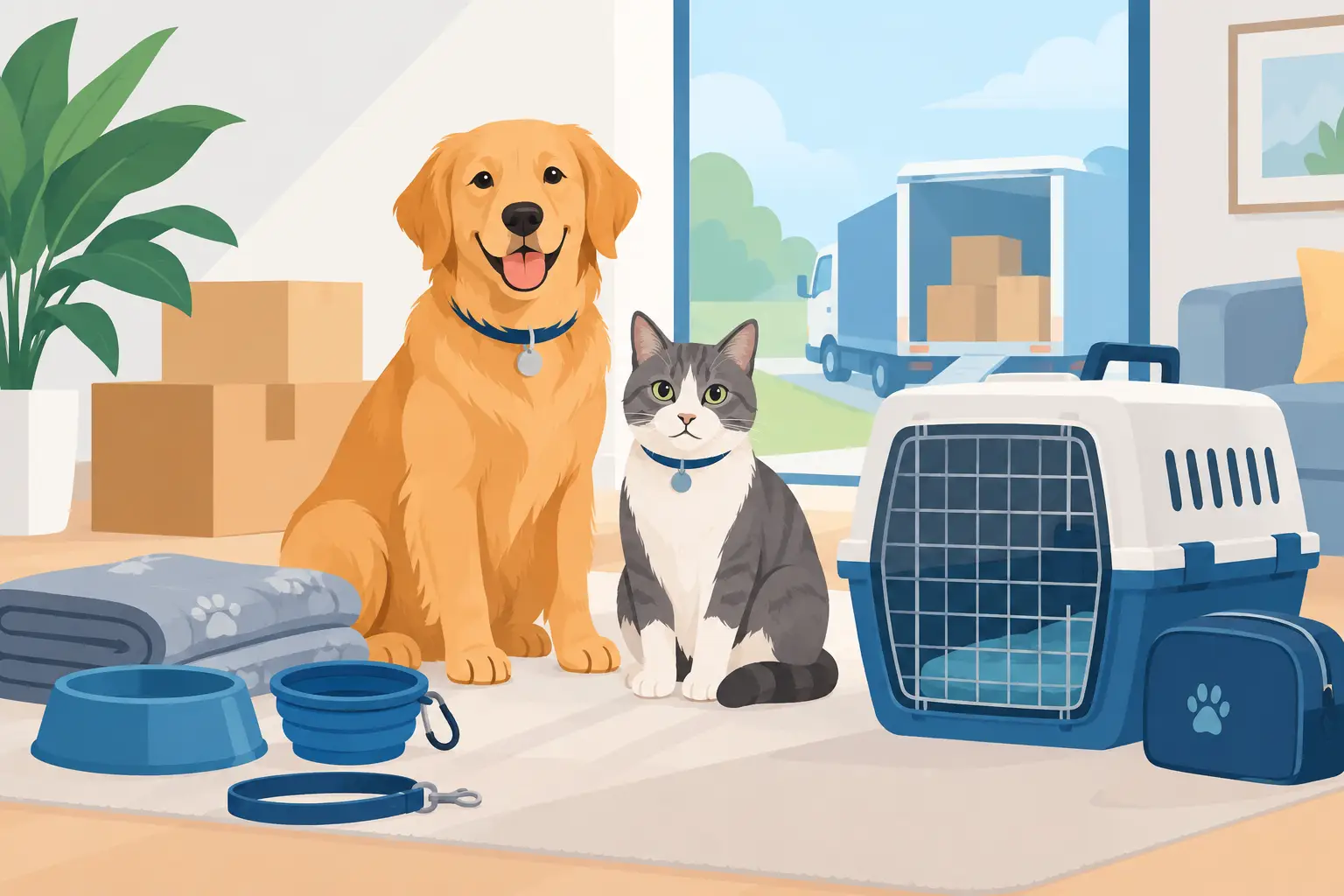
How to Prepare Pets for Relocation Safely
A move can feel exciting to people and deeply unfamiliar to animals. New routines, packing activity, travel crates, unfamiliar sounds, and separation from their usual environment can all create stress. To prepare pets for relocation safely, owners need more than a departure date and a carrier. They need a welfare-first plan that accounts for veterinary readiness, destination rules, travel conditions, and the individual animal’s needs.
For a local move, preparation may be relatively straightforward. For an interstate or international relocation, timing becomes critical. Health certificates, import permits, vaccinations, microchip requirements, airline rules, and destination quarantine policies can affect whether an animal is cleared to travel. Starting early gives you the time to make informed decisions rather than rushing an animal into an unsuitable journey.
Start With Your Pet’s Health and Travel Readiness
The first question is not whether a pet can travel. It is whether travel is appropriate at this time. Schedule a veterinary examination well before the planned move, especially for senior pets, young animals, brachycephalic breeds, animals with chronic conditions, pregnant animals, and pets taking regular medication.
Your veterinarian can assess fitness for travel, confirm vaccination status, discuss parasite prevention, and identify concerns that could worsen in transit. If medication is needed, ask for clear dosing instructions and enough supply to cover travel delays and the first days after arrival. Keep medications in their original labeled containers and carry records with you whenever possible.
Sedation requires particular care. Sedating animals for air travel is generally discouraged because it can affect breathing, balance, temperature regulation, and an animal’s ability to respond normally to changes during transport. Any medication plan should be made only with veterinary guidance and with the specific travel method in mind.
It also helps to gather documentation early. Depending on the destination and species, this may include vaccination certificates, health certificates, laboratory test results, microchip details, ownership records, import permits, and any required treatment documentation. International moves often involve strict timelines. A test completed too early, a certificate issued outside the accepted window, or a missing endorsement can delay travel.
Prepare Pets for Relocation With Crate Training
A properly selected travel crate is a safety system, not simply a container. It must be appropriate for the animal’s species, size, temperament, and transport method. For dogs and cats traveling by air, the animal should be able to stand without crouching, turn around naturally, and lie down comfortably. The crate must also meet the carrier’s construction, ventilation, and security requirements.
Do not wait until moving day to introduce the crate. Place it in a familiar area of the home several weeks in advance with the door open. Add familiar bedding or a safe comfort item, then encourage calm, voluntary time inside with meals, treats, or quiet rest. Gradually build up to closing the door for short periods and, if appropriate, taking brief vehicle rides.
This preparation changes the crate from an alarming new object into a familiar resting place. It also gives you time to identify problems, such as a crate that is too small, difficult to secure, or poorly suited to an anxious pet.
Avoid placing loose items inside that could shift, splinter, or become a choking hazard. Absorbent crate lining may be useful, particularly for longer journeys. For approved travel, water provisions should be secure and accessible without opening the crate. A professional transport coordinator can advise on crate specifications and feeding or watering procedures for the planned route.
Build a Timeline Around Destination Requirements
Every relocation has a different compliance path. Domestic moves may require a current health certificate or carrier-specific paperwork. International travel may require permits, government endorsements, rabies titers, prescribed treatments, inspection appointments, or quarantine arrangements. Some destinations also limit entry by breed, species, age, or country of origin.
Begin researching requirements as soon as a move is likely. This is especially important when relocating to islands or countries with tightly controlled biosecurity rules. Requirements can change, and the correct process depends on the animal’s origin, transit points, final destination, and species.
A practical timeline should include veterinary appointments, document deadlines, crate acclimation, travel booking, and a plan for the final 48 hours. Leave room for unexpected issues, such as a delayed lab result or a changed flight schedule. The goal is not just to obtain paperwork. It is to prevent a situation where an animal arrives without the documentation needed for release.
For complex domestic or international moves, Global Animal Transport coordinates species-specific planning so owners and institutions can address transport, documentation, routing, and welfare requirements as one organized process.
Keep Routines Stable Before Departure
Packing can disrupt a pet’s sense of security long before the actual trip begins. As much as possible, maintain normal feeding, walking, play, and rest schedules. Give your pet a calm area away from boxes, open doors, and moving equipment. Cats in particular may benefit from a quiet room with food, water, litter, and familiar bedding during the busiest stages of packing.
Maintain normal food in the days before travel unless a veterinarian directs otherwise. Introducing a new diet before a journey can cause digestive upset at the worst possible time. Ask your transport provider or veterinarian about appropriate feeding intervals before departure, as recommendations vary by species, age, health, and journey length.
Identification should be current and layered. A collar tag can provide immediate contact information, while a registered microchip offers a more permanent form of identification if an animal becomes separated from its owner. Confirm that the microchip registry lists your current phone number and destination contact details. For international travel, confirm that the microchip meets destination standards before vaccinations or documentation are completed.
Plan for the Journey, Not Only the Flight
The flight or drive is only one part of relocation. Ground transfers, airport check-in, layovers, customs processing, and final delivery may add significant time to the total journey. Ask how each stage will be managed and who is responsible for the animal at each handoff.
Temperature is another essential consideration. Seasonal weather, tarmac exposure, route choices, and the animal’s coat type or respiratory sensitivity can all affect safe travel options. A direct route may reduce handling and total travel time, but it is not always available or suitable. In some cases, a carefully planned connection with proper animal handling support is the safer choice.
Pet owners should also prepare an arrival kit that travels with them rather than in checked luggage. Include food, medications, a leash or harness, waste bags, a familiar blanket, cleaning supplies, and copies of all documents. After a long journey, animals need water, a quiet place to decompress, and a controlled opportunity to relieve themselves before being introduced to an unfamiliar home.
Help Your Pet Settle After Arrival
Relocation does not end when the crate door opens. New smells, different flooring, unfamiliar wildlife, and altered household routines can make even confident animals uneasy. Start with one quiet area of the new home, then allow your pet to explore gradually under supervision.
Keep meals and walks predictable during the first week. Check doors, windows, fences, balconies, and screens before giving a pet more freedom. Cats should remain indoors during the initial adjustment period, and dogs should be walked on leash until they are settled and the property is secure.
Watch for changes in appetite, elimination, sleep, breathing, or behavior. Some adjustment is normal, but persistent distress, vomiting, diarrhea, refusal to eat, or signs of illness deserve prompt veterinary attention. Establishing care with a local veterinarian soon after arrival provides reassurance and a reliable resource if concerns arise.
A carefully prepared relocation protects more than a travel schedule. It gives your pet the best possible chance to arrive healthy, calm, and ready to recognize home again.
