
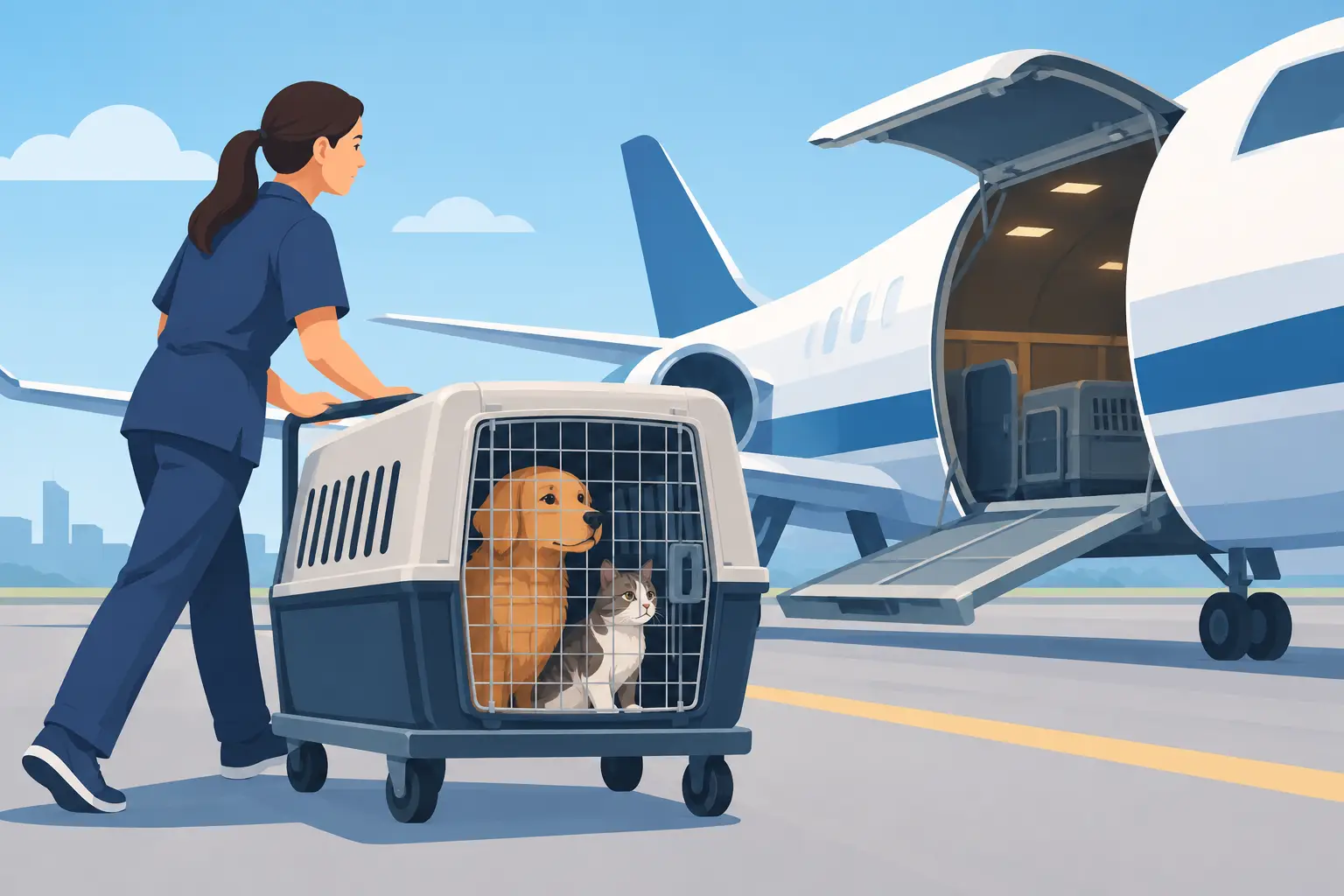
Urgent Animal Flights When Timing Cannot Wait
A delayed flight can be inconvenient for cargo. For a live animal, it can affect health, comfort, regulatory clearance, and the entire relocation plan. Urgent animal flights are not simply a matter of booking the next available aircraft. They require fast, disciplined coordination between animal handlers, veterinarians, airlines or charter operators, government agencies, and the receiving party.
Whether the need involves a family pet reuniting with its owner, breeding animals on a fixed schedule, livestock requiring relocation, or zoological species moving under carefully controlled conditions, speed must never replace humane care. The right plan balances urgency with the species-specific safeguards that make transport safe and compliant.
What Makes an Animal Flight Truly Urgent?
An urgent move usually has a deadline that cannot easily shift. A pet owner may need to relocate after a sudden military order, job transfer, medical event, or housing change. A breeder may face a narrow breeding window. A zoo, aquarium, or conservation organization may need to move an animal because of habitat disruption, facility repairs, veterinary treatment, or a coordinated transfer between institutions.
Some situations are time-sensitive because of weather. Extreme heat, cold, hurricanes, wildfires, and airport disruptions can close a safe travel window quickly. In other cases, an animal has already been cleared for import or export and must travel before health certificates, permits, quarantine reservations, or receiving arrangements expire.
Urgency can also arise after another plan fails. An airline embargo, missed connection, canceled cargo booking, or incorrect documentation can leave an animal and its owner with very little time. In these cases, the solution is not to force an unsuitable itinerary. It is to reassess the route, aircraft options, handling requirements, and paperwork immediately.
Urgent Animal Flights Still Start With Welfare
The fastest available flight is not always the safest choice. Animals travel best when their route, container, timing, and ground handling plan match their physical and behavioral needs. A short itinerary with extended tarmac exposure, unsuitable temperatures, or a poorly coordinated transfer may create more stress than a slightly longer route with controlled handling.
For household pets, planning may include an appropriately sized travel kennel, current veterinary documentation, feeding and hydration instructions, and confirmation that the destination can receive the animal at the scheduled time. Certain breeds, ages, medical conditions, and temperatures can limit airline options. These factors need to be identified early, especially when the flight is needed within days or hours.
For livestock, large animals, and zoological species, the transport plan becomes more specialized. Loading equipment, stalls or crates, bedding, ventilation, species-compatible grouping, veterinary oversight, trained attendants, and airport access all matter. Aquatic animals and fish introduce another layer of complexity, including water quality, oxygenation, tank systems, packing density, temperature control, and transit duration.
A professional transport coordinator evaluates these details before confirming a solution. The purpose is not to slow the process. It is to prevent an avoidable problem after the animal has begun its journey.
How Urgent Animal Flights Are Coordinated
Time-critical animal transport works best when one experienced team manages the moving parts. That team verifies the animal’s needs, identifies suitable transportation options, coordinates documents, and communicates with the people responsible at origin, during transit, and at destination.
The initial assessment should establish the animal’s species, breed, age, size, health status, location, destination, desired travel date, and any known restrictions. It should also clarify whether the animal will travel as airline cargo, on a cargo freighter, by aircraft charter, or through a combined ground-and-air solution. For some moves, a charter may offer the required control over timing, equipment, or space. For others, a scheduled cargo route may be appropriate if capacity and handling conditions are available.
Documentation is often the deciding factor. Domestic travel may require health records and airline-specific paperwork. International moves can involve import permits, export approvals, health certificates, vaccination records, customs requirements, CITES documentation for protected species, and quarantine arrangements. Requirements vary by country, species, and purpose of transport. A missing signature or improperly timed certificate can stop an otherwise ready shipment.
Ground transportation is equally important. An animal must arrive at the airport with enough time for safe acceptance and security procedures, but not so early that it spends unnecessary hours in a holding area. At destination, the receiving team must be prepared to collect the animal, complete clearance procedures, and provide the next stage of care or transport without delay.
The Questions That Should Be Answered First
When time is limited, clear information speeds up responsible planning. A transport specialist will typically need to know the animal’s exact location and destination, the firm travel deadline, species and physical measurements, current health status, and whether any permits or veterinary certificates have already been issued.
It is also useful to share prior flight cancellations, airline restrictions, special care instructions, crate availability, and destination requirements at the start. This prevents the team from building a plan around an option that cannot legally or safely be used.
Common Trade-Offs in Emergency Transport Planning
Urgent transport always involves choices. Direct service may reduce total travel time but have limited capacity. A charter can provide schedule control but may be more expensive than scheduled cargo. A departure from a larger airport may offer better aircraft options, while requiring additional ground transportation from the animal’s current location.
The best decision depends on the animal and the circumstances. A healthy adult dog may have options that are not suitable for a heat-sensitive breed, a medically fragile cat, a pregnant mare, or a shipment of live fish. Similarly, one institution’s time-sensitive movement may require a dedicated charter and onboard support, while another can move safely through a carefully managed commercial cargo itinerary.
Cost matters, particularly when a move is unexpected. However, choosing solely on price can create risk if a provider does not have the experience, carrier relationships, equipment access, or species knowledge required for the shipment. Transparent planning should explain what the quoted service includes, what documentation remains the shipper’s responsibility, and which variables can affect timing or price.
Preparing an Animal for a Rapid Departure
Owners and institutions can help an urgent move proceed more smoothly by following veterinary guidance and providing accurate records promptly. Do not sedate an animal for air travel unless a veterinarian has specifically directed it and the transport plan supports it. Sedation can affect breathing, balance, and the animal’s ability to regulate body temperature during transit.
Use a travel container that is appropriate for the species and sized to allow normal standing, turning, and resting where applicable. The container should be secure, well ventilated, clearly identified, and prepared according to carrier and destination requirements. For complex animal movements, custom enclosures, stalls, tanks, or life-support systems may be necessary.
Owners should also prepare for the handoff at both ends of the journey. Keep contact information current, remain reachable during transport, and ensure the receiving party understands the collection process. If the animal is a pet, familiar bedding or a safe comfort item may be permitted depending on the carrier’s rules. For institutional shipments, detailed husbandry instructions and receiving protocols should travel with the operational team.
Why Specialized Support Matters When Time Is Short
A time-sensitive animal move can become complicated in minutes. Weather shifts, flight schedules change, document reviews take longer than expected, and airline capacity can disappear. Experienced coordination gives the shipment a better path forward because alternatives can be evaluated quickly without losing sight of animal welfare.
Global Animal Transport manages domestic and international movements for pets, livestock, aquatic life, and zoological species, with planning tailored to the animal rather than a one-size-fits-all shipping process. Around-the-clock coordination, species-aware handling, and clear communication are particularly valuable when a travel window is narrow.
When an animal needs to move urgently, act early with the information you have. A qualified transport team can assess what is realistic, identify the safest available option, and help turn a difficult deadline into a carefully managed journey.
