
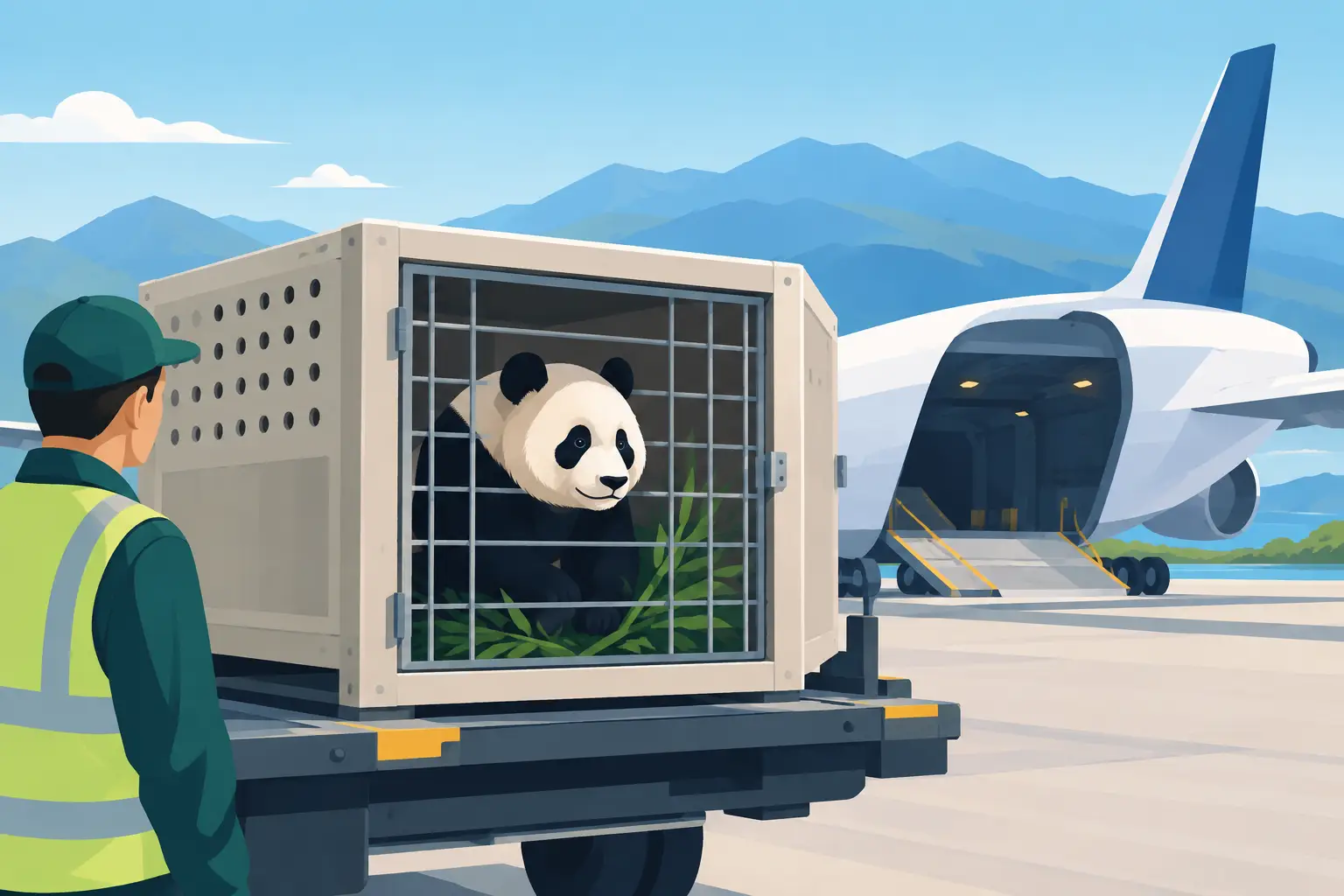
An Endangered Species Transport Case Study
A conservation relocation can appear straightforward on a calendar: move animals from one qualified facility to another. In practice, an endangered species transport case study reveals a far more demanding responsibility. Every handoff, document, temperature setting, and flight decision can affect an animal’s welfare and the success of a wider breeding or conservation program.
The following representative case reflects the type of planning required for a sensitive zoological relocation. Identifying details have been withheld, but the operational lessons are real: endangered animals cannot be treated as standard cargo. They require a transport plan built around species biology, legal compliance, and dependable communication from collection through arrival.
The Transport Challenge
A conservation program needed to relocate a small group of endangered primates from a breeding institution in the United States to a partner facility overseas. The move supported genetic diversity within a managed population, but its purpose did not reduce its complexity. The animals had established social relationships, specialized dietary needs, and limited tolerance for unfamiliar handling.
The transport window was narrow. Seasonal temperatures at both origin and destination could become unsafe outside certain hours, while aircraft schedules offered limited live-animal capacity. The receiving facility also needed to be ready to accept the animals immediately, with trained staff, a quiet holding area, approved food, and veterinary support available before the shipment departed.
This was not simply a question of finding an available flight. The central question was whether every stage of the journey could protect the animals from unnecessary stress, heat or cold exposure, delays, and separation from their normal care routines.
Endangered Species Transport Case Study: The Planning Phase
Planning began well before the travel date. The transport team coordinated with the sending institution’s veterinarian, animal care staff, receiving facility, customs brokers, airline personnel, and regulatory authorities. A clear chain of responsibility was established so no critical task depended on assumptions or last-minute decisions.
Permits and health documentation
For endangered species, documentation is part of animal welfare planning. A missing or inaccurate permit can hold animals in an unsuitable airport environment or prevent entry at destination. The file for this move included applicable export and import permissions, CITES documentation, veterinary health certificates, identification records, and carrier-required paperwork.
Timing mattered as much as accuracy. Some documents have strict validity periods, while laboratory testing, endorsements, or government approvals can take longer than expected. The team built a document timeline backward from the proposed departure date and maintained contingency time for revisions or regulatory questions.
It depends on the species and destination, but permits should never be treated as paperwork that can be finalized after travel is booked. For a protected animal, compliance and welfare are connected. The correct approvals help ensure the animal moves through controlled, authorized channels with the right professionals prepared at each point.
Species-specific travel accommodations
The primates traveled in containers designed for safe containment, adequate ventilation, visual security, and appropriate posture during transit. The containers were introduced before departure so the animals could become familiar with them in a controlled setting. This conditioning reduced the need for stressful handling on travel day.
Animal care staff advised on group arrangements, enclosure dimensions, bedding, food, hydration, and acceptable ambient temperature ranges. Keeping compatible animals together can offer reassurance, but it is not always appropriate. Social dynamics, veterinary direction, container design, and airline requirements must all be weighed before deciding whether animals travel together or separately.
The team also reviewed light, noise, and public exposure. A calm, low-traffic holding environment is often preferable to unnecessary movement through busy terminals. For endangered species, privacy can be another practical consideration, particularly when a species may attract unwanted attention or create security concerns.
Routing for welfare, not just speed
The shortest route is often desirable, but it is not automatically the best route. A nonstop flight may reduce handling, yet departure times, aircraft type, cargo procedures, weather conditions, and destination support can make another option safer. In this case, the selected routing minimized total handling and avoided extended ground exposure during the hottest part of the day.
The transport plan included confirmed acceptance at each airport, animal-specific booking details, and a realistic buffer before flight departure. It also identified an alternate flight option and local support should weather, mechanical issues, or regulatory delays disrupt the primary plan. Contingency planning is not a sign that a move is uncertain. It is how experienced teams protect living animals when transportation conditions change.
Travel Day: Controlled Handoffs Matter
On departure day, the animals were loaded according to a timed plan developed with their care team. Feeding and hydration schedules were adjusted only under veterinary guidance. Staff monitored behavior before loading, documenting that the animals were fit to travel and that containers were secure, clean, and correctly labeled.
Ground transport to the airport used a vehicle capable of maintaining appropriate environmental conditions. The driver and support team understood the route, access procedures, emergency contacts, and the need to avoid unnecessary stops. At the airport, the shipment moved through prearranged acceptance procedures rather than waiting in a general cargo queue.
This is where many animal moves become vulnerable. Even an approved container cannot compensate for excessive time on a hot ramp, a missed communication between teams, or an unprepared receiving agent. The most reliable transport operations treat each transfer as a controlled handoff. One responsible team confirms the animal’s condition, documentation, location, and next point of contact before the next team takes over.
For this shipment, the airline’s live-animal procedures, cargo environment, and loading timing were reviewed in advance. The transport coordinator remained available throughout the journey, monitoring departure confirmation and communicating status updates to both facilities. Round-the-clock oversight is especially valuable when animals cross time zones and multiple operational teams are involved.
Arrival Is Not the Finish Line
At destination, the receiving institution and local handling partner were prepared before wheels touched down. Import clearance, approved transport from the airport, and facility intake had been coordinated around the flight’s arrival window. The goal was to limit time in airport cargo areas and transfer the animals promptly into a quiet, temperature-appropriate environment.
Once at the facility, veterinary and animal care staff assessed each individual. They observed breathing, posture, alertness, hydration, appetite, and social behavior, then compared those observations with pre-travel records. The animals were given time to settle before routine husbandry activities resumed.
The first 24 to 72 hours after arrival can be as important as the flight itself. A successful shipment is not measured only by an on-time landing. It is measured by safe recovery, stable behavior, and a handoff that allows the receiving team to continue care without uncertainty.
What This Case Study Teaches
The most valuable lesson is that endangered species transport is an integrated care operation. Logistics expertise is essential, but logistics alone is not enough. A strong plan combines regulatory knowledge, species-specific husbandry, vetted transport partners, suitable equipment, realistic schedules, and immediate access to decision-makers.
It also shows why generic shipping processes create unnecessary risk. A transport plan for a companion animal, livestock shipment, aquatic collection, or zoological species may share certain fundamentals, but endangered animals frequently require a higher level of documentation, security, handling control, and interinstitutional coordination.
At Global Animal Transport, complex animal moves are approached with that responsibility in mind. Every recommendation should be shaped by the animal’s needs, the route’s realities, and the care standards expected by the people entrusted with conservation work.
When a relocation supports the future of a species, there is little room for improvised decisions. Start planning early, involve veterinary and animal care experts from the beginning, and choose a transport partner prepared to protect welfare at every mile.
