
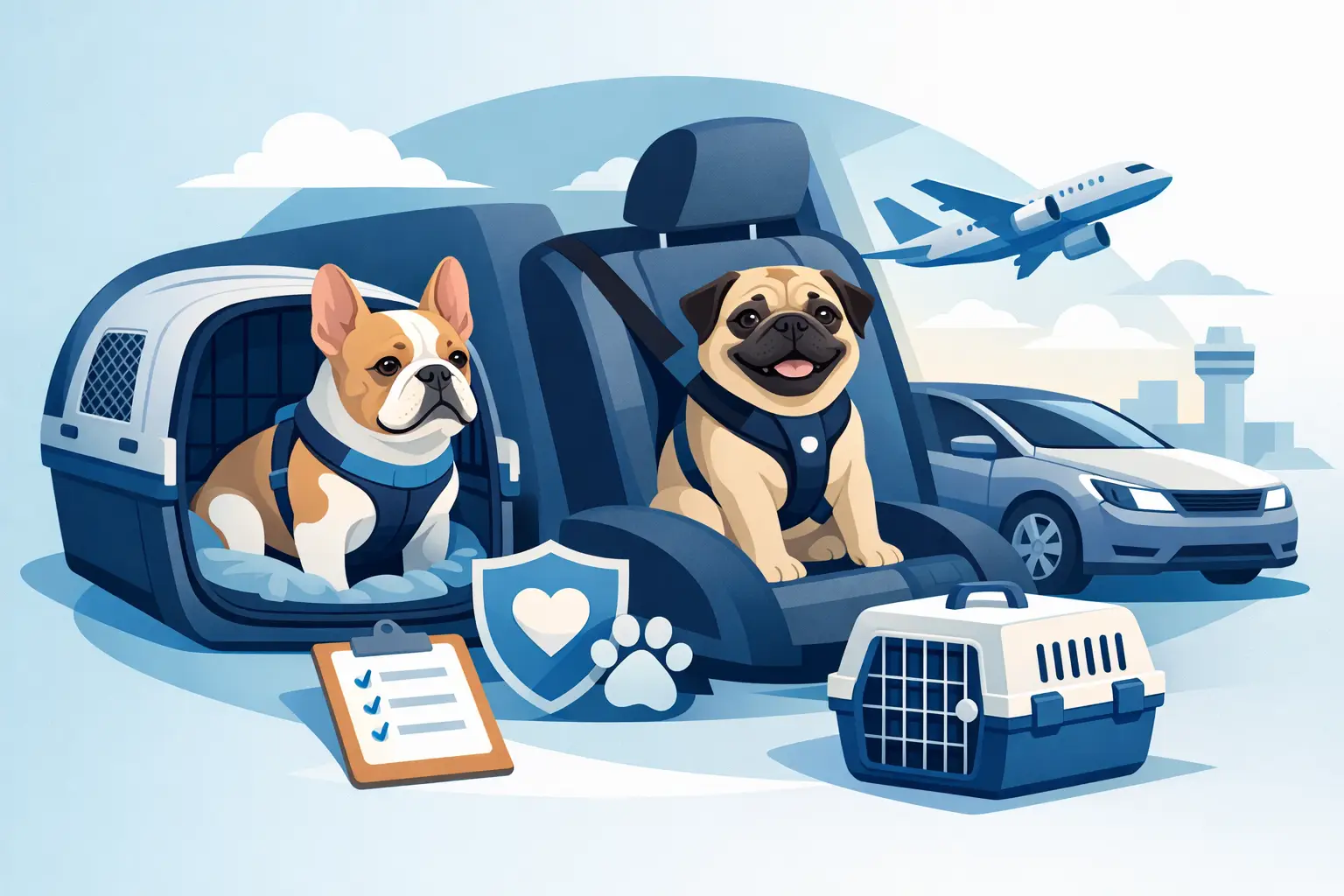
How to Transport Brachycephalic Dogs Safely
A French Bulldog panting hard in a warm airport terminal is not simply uncomfortable. For a brachycephalic dog, heat, stress, exertion, and restricted airflow can quickly become a medical concern. Knowing how to transport brachycephalic dogs means planning around that risk from the first travel decision, not trying to solve it on departure day.
Brachycephalic, or short-nosed, breeds include Bulldogs, Pugs, Boston Terriers, Boxers, Pekingese, Shih Tzus, and similar dogs. Their facial structure can make it harder to move air efficiently, especially when temperatures rise or anxiety increases. Safe transport requires an individualized plan that protects breathing, limits heat exposure, and accounts for the rules of every carrier and country involved.
Why Short-Nosed Dogs Need a Different Transport Plan
Many brachycephalic dogs live full, active lives, but their airway anatomy creates a lower margin for error during travel. Narrow nostrils, an elongated soft palate, and a smaller windpipe may contribute to brachycephalic obstructive airway syndrome, often called BOAS. A dog that seems stable at home may struggle when placed in an unfamiliar crate, exposed to noise, or required to wait on a hot tarmac.
Air travel deserves particular attention. Airlines and cargo operators may restrict or decline certain brachycephalic breeds, especially during warm-weather periods or on routes with elevated temperatures. Policies vary by airline, aircraft type, season, departure location, and whether the dog travels in cabin or as managed cargo. Approval for one route does not guarantee approval for another.
Ground transport also requires careful oversight. A long drive in an unventilated vehicle, a crowded transfer area, or an extended stop without access to temperature-controlled shelter can create the same hazards. The safest method is the one that provides the most reliable control over temperature, handling, transit time, and the dog’s physical condition.
How to Transport Brachycephalic Dogs: Start With a Veterinary Assessment
Schedule a veterinary examination well before travel. This is not just a paperwork appointment. The veterinarian should assess the dog’s breathing, heart function, body condition, exercise tolerance, current medications, and any history of heat stress or airway surgery. Dogs with severe respiratory symptoms may need a different route, a different season, or a decision not to fly.
Ask the veterinarian to explain what signs would make travel unsafe for your individual dog. Noisy breathing at rest, blue or pale gums, frequent collapse, excessive panting, and poor tolerance for mild activity all deserve serious attention. If international travel is involved, the appointment should also allow enough time for destination-specific vaccinations, microchip verification, parasite treatments, laboratory testing, health certificates, and government endorsements.
Sedation is generally not a routine solution for transport anxiety. Sedatives can affect breathing, balance, temperature regulation, and a dog’s ability to respond normally during transit. Only use medication when it has been specifically prescribed for that dog and coordinated with the treating veterinarian and transport plan.
Choose the Safest Route, Season, and Travel Method
For many families, the shortest itinerary is preferable, but the shortest route is not always the safest route. A direct flight may reduce handling and total travel time. However, a connection through a better-equipped, cooler airport or a departure time outside peak heat may be the more responsible choice.
When comparing options, consider the full journey: pickup, terminal arrival, security and acceptance procedures, flight time, layovers, customs clearance, final delivery, and possible delays. A dog may spend more time in transfer than in the air, so each handoff matters.
Professional planning is particularly valuable when travel involves international entry rules, airline breed restrictions, remote destinations, or multiple transport segments. Global Animal Transport coordinates species-specific transport plans that place welfare, compliant handling, and operational reliability at the center of the journey.
Cabin, Cargo, and Ground Transport Considerations
In-cabin travel can reduce separation from an owner, but it is only appropriate if the dog, carrier size, airline rules, and route all qualify. The carrier must fit beneath the seat, and the dog must remain safely contained throughout the flight. Not every short-nosed breed or adult dog can travel this way.
Managed air cargo may be necessary for larger dogs or international moves. This option should never be treated as ordinary freight. Confirm that the operator accepts the breed, that the travel date is suitable for weather conditions, and that trained personnel can maintain appropriate handling through each stage.
For regional moves, climate-controlled ground transport may offer a more controlled alternative. It can allow for monitored rest stops and reduce airport-related stress, although the overall travel time may be longer. The right choice depends on distance, weather, medical history, and available transport standards.
Use a Crate That Supports Safe Breathing and Handling
An airline-compliant crate must be large enough for the dog to stand naturally, turn around, and lie down comfortably. For brachycephalic dogs, adequate ventilation is especially critical. The crate should have secure ventilation openings on multiple sides, a solid floor, and safe, functional hardware.
Crate training should begin weeks before departure. Let the dog rest in the crate at home with the door open, then gradually build calm, short periods inside. The goal is familiarity, not forced confinement. A dog that panics in a crate at home should not first encounter a closed travel crate in a busy terminal.
Line the crate with absorbent bedding that will not bunch up or obstruct movement. Attach water provisions in the manner required by the carrier, but avoid overfilling them before loading. Identification should be clear and durable, with the owner’s contact information and destination details. Do not place loose toys, collars, or items that could become a choking or entanglement risk inside the crate.
Control Heat, Stress, and Physical Exertion
Temperature management is a central safety measure, not a comfort upgrade. Avoid travel during the hottest parts of the day whenever possible. Keep the dog indoors or in air-conditioned transportation before check-in, and do not leave the dog unattended in a vehicle, even briefly.
On travel day, offer a normal but modest routine. Provide water as directed by your veterinarian and transport provider, but avoid a large meal immediately before departure. Allow enough time for a calm bathroom break without rushing, vigorous play, or prolonged exposure to heat.
Watch closely for distress. Rapid or labored breathing, excessive drooling, agitation, weakness, vomiting, confusion, or discolored gums require immediate attention. If a dog shows breathing difficulty before departure, the responsible decision may be to postpone the trip and obtain veterinary care. A schedule can be changed. A respiratory emergency cannot be managed by determination alone.
Confirm Every Requirement Before Travel Day
Do not rely on general breed guidance found online. Obtain written confirmation of the specific carrier’s current policies, including breed acceptance, crate requirements, temperature restrictions, check-in timing, and documentation standards. For international travel, verify the destination’s animal health and import rules directly through the relevant authorities or a qualified transport specialist.
Keep original documents organized and accessible. These may include health certificates, vaccination records, microchip information, import permits, airline confirmations, and contact details for the receiving party. Build extra time into the plan for inspections and customs processes, particularly when a destination requires government review on arrival.
A dependable transport provider should also have a contingency approach. Weather changes, flight disruptions, documentation questions, and unexpected delays happen. The plan should identify who is responsible for communication, where the dog can be safely held if needed, and how welfare will be protected if the itinerary changes.
When Postponing Travel Is the Best Decision
There are times when responsible planning means not moving forward. Extreme weather, a respiratory illness, recent surgery, an unresolved airway concern, or a carrier restriction can make travel unsuitable. Breeders, pet owners, and institutional teams should view a delay as a welfare decision, not a failure of logistics.
After arrival, give the dog a quiet, cool place to settle. Offer water, observe breathing, and avoid strenuous activity until the dog has recovered from the journey. If breathing remains abnormal, seek veterinary care promptly.
For brachycephalic dogs, safe transport is built on cautious decisions made well before the crate door closes. A well-planned journey gives your dog the best possible protection while getting them where they need to be.
