
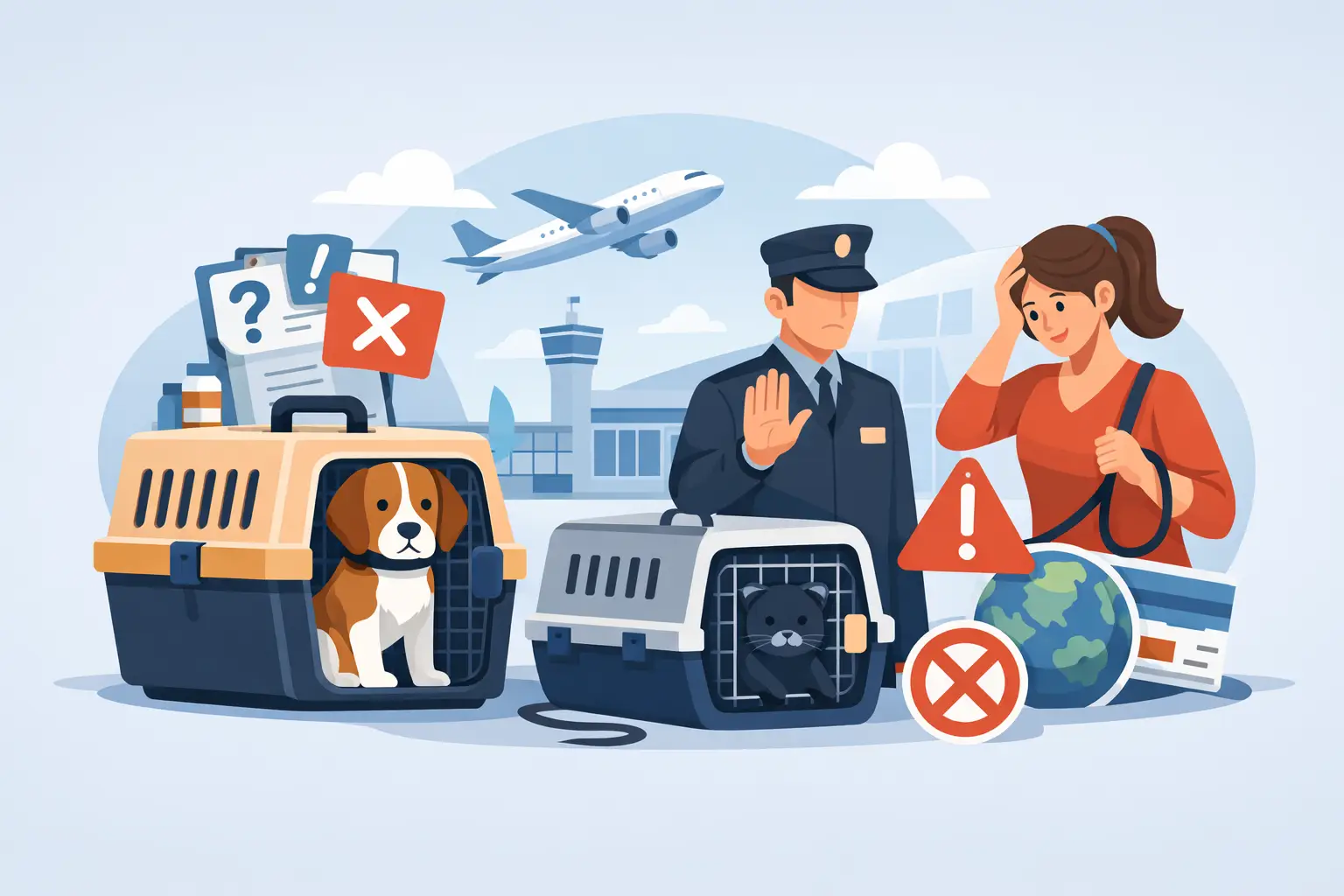
Top Mistakes in Pet Export That Delay Travel
A pet can be ready to travel long before the paperwork, crate, airline booking, and destination requirements are ready. That gap is where costly delays and unnecessary stress begin. The top mistakes in pet export usually happen before departure day, when an owner assumes that a current vaccine record or a standard airline reservation is enough. International animal transport is a coordinated process, and every requirement must support the animal’s safe and lawful arrival.
For a family pet, a missed document can mean a denied flight or quarantine. For breeders, organizations, and animal care institutions, the consequences may also include disrupted schedules, added holding costs, and welfare concerns. Careful advance planning protects both the animal and the move.
Top Mistakes in Pet Export Planning
Treating destination rules as a last-minute task
Every country sets its own import conditions, and those conditions can change based on species, origin country, age, breed, health status, and travel route. A dog traveling from the United States to one country may need only a veterinary certificate and valid rabies vaccination. The same dog traveling elsewhere may need an ISO-compliant microchip, rabies antibody blood testing, parasite treatments recorded within a narrow window, import permits, or a pre-booked quarantine space.
The most common planning error is researching requirements after travel dates have been chosen. Some steps have waiting periods that cannot be shortened. Rabies titer testing, for example, may require a specific sequence of microchipping, vaccination, blood collection, laboratory results, and a waiting period before entry. If that sequence begins too late, changing the flight is often the only responsible option.
Start with the destination’s current rules, then review the rules for every transit country. A connection is not always just a connection. Depending on the routing and airport procedures, transit regulations can affect documentation, handling arrangements, and acceptable flight options.
Assuming a veterinarian can issue every required document
A trusted local veterinarian is essential to a pet’s preparation, but not every clinic is authorized or experienced in export documentation. International health certificates may require specific language, particular test results, accredited veterinarian involvement, government endorsement, or issuance within a short period before departure.
The certificate must also match the pet’s identification and travel details exactly. A transposed microchip digit, an incorrect breed description, or a certificate dated outside the destination’s validity window can stop a shipment at check-in or border inspection. These details may appear minor on paper, but border officials use them to confirm that the animal being presented is the animal described in the import file.
Ask early which documents require government endorsement and how long that endorsement process takes. Do not schedule the final veterinary appointment based only on flight convenience. It must be timed around the destination’s document-validity rules and the availability of the necessary authorities.
Getting the microchip and vaccination sequence wrong
Microchip errors are among the most preventable causes of rejected pet export files. Many destinations require a readable ISO-standard microchip, and the chip number must be identical across vaccination records, laboratory reports, health certificates, permits, and booking documents.
Timing matters just as much as the number itself. In some cases, a rabies vaccination given before the microchip is implanted will not count for international entry purposes. A pet may be medically protected, yet still be considered noncompliant because the record does not establish the required identification sequence.
Have the microchip scanned before each major step. Confirm that the number is recorded accurately, that the pet’s name and description are consistent, and that any older records do not create confusion. If a pet has more than one chip, the travel file should clearly identify which chip is active and readable.
Crate and Flight Errors That Compromise Welfare
Choosing a crate that is too small or not airline compliant
A carrier that fits in a car or works for a routine veterinary visit may be unacceptable for air transport. For cargo travel, the crate must meet the airline’s live-animal standards and give the pet enough room to stand naturally, turn around, and lie down comfortably. It also needs secure ventilation, a leak-resistant floor, appropriate fastening, and correctly fitted water containers.
Crate sizing should be based on the pet’s actual measurements, not a label such as “large” or a guess based on weight. A crate that is too small can compromise comfort and be refused by the airline. An oversized crate may create handling challenges, use more space than expected, and increase shipping cost.
Crate conditioning is equally important. Introducing the crate only on departure day turns an unfamiliar space into another stressor. Give the pet time to rest, eat treats, and sleep in the crate before travel. The goal is not simply crate acceptance. It is helping the animal regard the crate as a familiar, secure place.
Booking the pet like ordinary luggage
Pets traveling internationally are not handled as an afterthought to a passenger ticket. Airline policies differ by route, aircraft, season, breed, and whether the pet travels in cabin, as accompanied baggage, or as manifested cargo. Cargo capacity for live animals can be limited, particularly during busy periods or on routes with few suitable flights.
A passenger booking does not guarantee that a pet has a confirmed place. Even when an airline accepts pets on a route, it may impose temperature restrictions, embargo certain breeds, require advance approval, or limit transfers through specific airports. Flat-faced breeds need particular attention because they can face elevated respiratory risk and may be subject to carrier restrictions.
Reliable planning accounts for ground transport, airline acceptance, airport delivery times, welfare checks, and the receiving process at destination. A flight that looks efficient online may be a poor choice if it creates an overly short connection, an unsuitable climate exposure, or an airport transfer without appropriate animal handling support.
Using sedatives without transport-specific veterinary direction
Owners sometimes consider sedation because they want to make travel easier for an anxious pet. In air travel, however, sedatives can affect breathing, balance, temperature regulation, and the animal’s ability to respond normally to the travel environment. Airlines may also restrict or prohibit sedated animals.
The safer approach is individualized preparation with a veterinarian who understands the pet’s health and the travel plan. That may include crate conditioning, a familiar feeding routine, suitable timing for exercise, and clear instructions for handlers. Medication decisions should never be made based on internet advice or a desire for a quieter flight.
Documentation Is Only One Part of the Move
Ignoring weather, timing, and airport handling windows
An animal can have perfect paperwork and still face disruption if weather conditions exceed airline limits. Heat, cold, storms, and airport operational delays can affect whether a pet is accepted for travel. Seasonal route planning is especially important for animals sensitive to temperature changes, young pets, senior pets, and breeds with respiratory concerns.
Build flexibility into the schedule. Avoid planning an international move around a nonrefundable departure date with no margin for a veterinary correction, endorsement delay, flight cancellation, or weather hold. When possible, select routes that reduce unnecessary transfers and limit time spent waiting in unfamiliar facilities.
Arrival timing matters, too. Some countries process animal imports only during defined inspection hours. If a flight arrives after the inspection office closes, the pet may need to remain in an approved holding area until clearance is available. That is not a detail to leave for the airline counter.
Overlooking the return trip or onward relocation
A pet export plan should consider what happens after entry, especially for temporary assignments, military postings, seasonal residences, and international moves with an uncertain end date. The destination country may have requirements that affect a future return to the United States or travel onward to another country.
Keep original records, endorsed certificates, vaccination history, laboratory results, and permit copies organized after the pet arrives. These documents can be valuable later, particularly if the pet’s travel history is reviewed by another border authority. A well-maintained file also helps a new veterinarian understand prior treatments and identification details.
Trying to coordinate a complex move alone
Some straightforward pet moves can be managed directly by an owner who has sufficient lead time and a clear understanding of the applicable rules. Complexity rises quickly when there are multiple pets, restricted breeds, tight timelines, international connections, large animals, exotic species, or destination-specific quarantine procedures.
Professional coordination is not about adding steps. It is about putting the right steps in the right order, confirming that the transport plan matches the animal’s needs, and maintaining communication when plans change. Global Animal Transport coordinates species-specific travel arrangements with welfare, regulatory compliance, and operational reliability at the center of each move.
Your pet does not need a rushed solution. It needs a travel plan that respects its health, comfort, and destination requirements from the first appointment to final clearance. Begin early, verify every record, and leave enough time for qualified guidance when the route or regulations demand it.
