
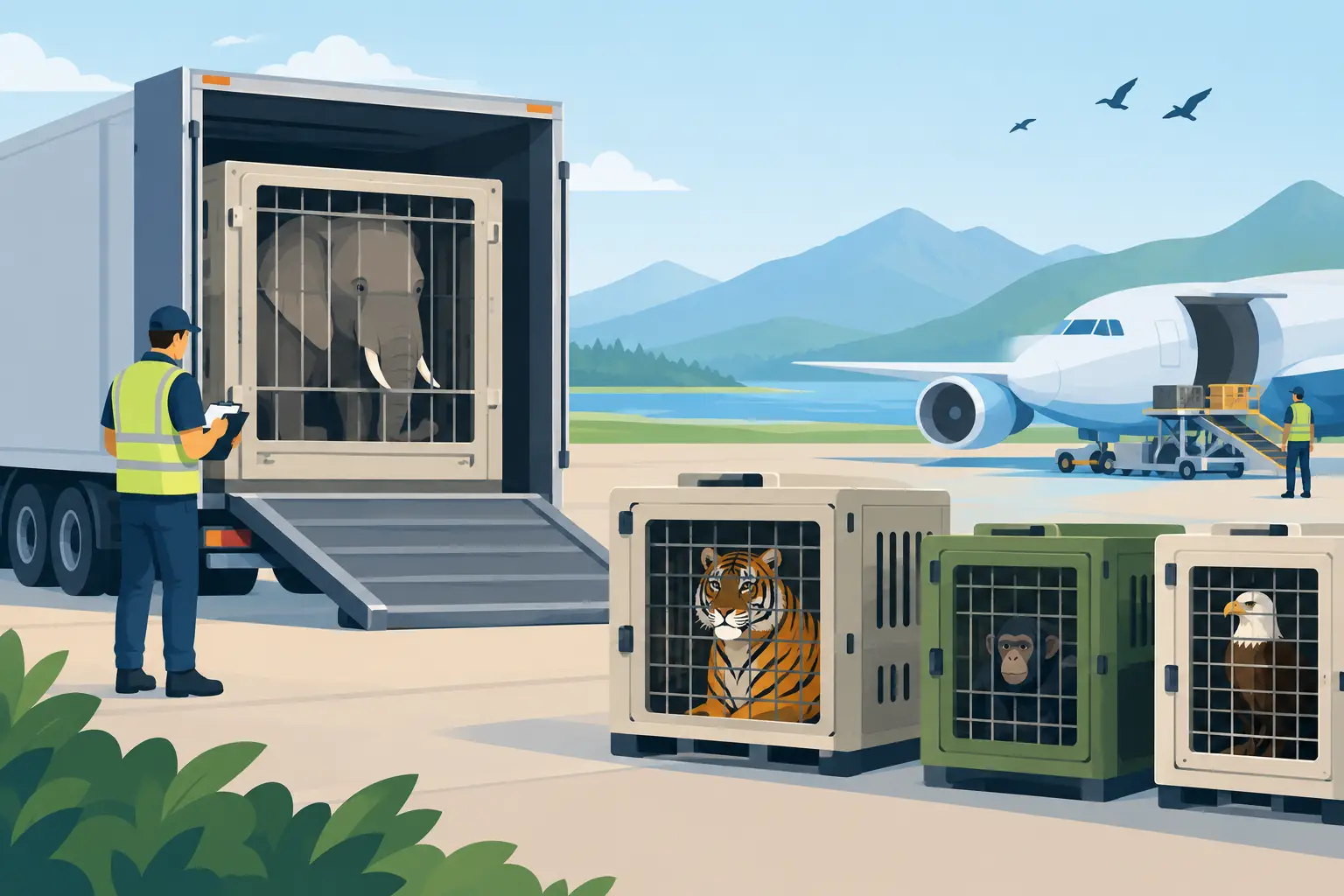
Wildlife Transport Trends Shaping Safer Moves
A wildlife move can involve far more than reserving space on an aircraft. A zoological collection transfer, conservation relocation, or regulated exotic animal shipment may require months of permits, species-specific enclosure planning, veterinary coordination, routing analysis, and trained personnel at every handoff. The most significant wildlife transport trends reflect a welcome shift: better logistics are being judged not only by whether an animal arrives, but by how safely and humanely it travels.
For zoos, aquariums, conservation organizations, breeders, and private owners of regulated species, that shift has practical consequences. Transport plans are becoming more individualized, documentation is more closely reviewed, and welfare considerations are influencing decisions that once focused primarily on speed and cost.
Wildlife Transport Trends Are Centered on Welfare
The strongest trend in animal logistics is the growing recognition that each species experiences transport differently. A route that works well for a healthy dog may be unsuitable for a primate, reptile, hoofstock animal, marine specimen, or sensitive bird. Temperature tolerance, light exposure, noise, hydration needs, social grouping, feeding schedules, and enclosure design all affect the quality of a journey.
This has increased demand for species-specific planning rather than one-size-fits-all shipping. A qualified transport provider begins by evaluating the animal, not the vehicle. That assessment may include age, health status, temperament, acclimation to the transport container, daily care requirements, and the conditions at both the origin and destination.
For some animals, the shortest route is the best choice because it reduces total transit time. In other cases, a slightly longer itinerary with a controlled layover, more reliable handling environment, or better-equipped arrival facility may be safer. Responsible planning weighs those trade-offs carefully instead of treating every delay or connection as equivalent.
Container Design Is Becoming More Specialized
Transport enclosures are no longer viewed simply as crates. They are a temporary habitat and one of the most important welfare controls in the shipment. Proper containment must prevent escape and injury while providing appropriate ventilation, footing, space, visibility management, and access for care when necessary.
The right design varies sharply by species. Large mammals may need reinforced partitions and non-slip flooring. Birds may need reduced visual stimulation and secure perching arrangements. Reptiles require stable thermal conditions, while aquatic animals depend on water quality, oxygenation, insulation, and carefully managed density. Container selection must also meet carrier and regulatory requirements.
Acclimation is increasingly part of the plan. When an animal has time to become familiar with its travel enclosure before departure, handlers can often reduce stress and identify concerns early. This is especially valuable for animals that are sensitive to new environments or have limited transport history.
Compliance Is Driving Earlier Planning
Wildlife transportation operates within a changing network of domestic and international rules. Depending on the species and route, a move may involve wildlife permits, import or export approvals, health certificates, carrier requirements, customs declarations, quarantine arrangements, and destination-specific restrictions. Protected and endangered species can require additional review and documentation.
The trend is clear: compliance cannot be left until the final days before travel. Missing paperwork can lead to a denied shipment, extended holding period, rerouting, or an animal remaining in an environment that was never intended for a prolonged stay. Those outcomes can create welfare risks as well as operational costs.
Early coordination also helps teams confirm whether the planned destination is ready. A receiving facility may need to prepare quarantine space, appropriate climate control, veterinary support, specialized equipment, or trained staff before the animal arrives. For international movements, arrival timing must align with inspection availability and customs processes.
A professional transport plan treats documentation, routing, and care as connected decisions. For example, a route may look efficient on paper but become unsuitable if it arrives outside an inspection window or requires an extended transfer in conditions that do not support the species.
More Visibility During Transit, With Human Oversight
Clients increasingly expect clearer information about an animal’s movement from pickup through delivery. Shipment tracking, status updates, and coordinated communication can provide meaningful reassurance, particularly when animals are traveling across borders or on multi-stage itineraries.
Technology can improve visibility, but it does not replace experienced judgment. Temperature-monitoring tools, location updates, and digital documentation help teams identify issues and share information quickly. Yet a live animal shipment still depends on knowledgeable people who can interpret changing conditions, communicate with airline or charter partners, and make decisions that protect the animal’s welfare.
This is particularly relevant when weather, airport congestion, mechanical disruptions, or border delays affect a schedule. A contingency plan should address who will be notified, where the animal can be safely cared for, what supplies are available, and who has authority to adjust the plan. Around-the-clock operational support matters because transportation disruptions do not follow business hours.
Direct Routing and Controlled Handling Matter More
Another of the key wildlife transport trends is a preference for fewer handoffs whenever practical. Every transfer introduces variables: changes in personnel, equipment, ambient temperature, noise, holding conditions, and timing. Direct flights, dedicated charters, coordinated ground transport, and prearranged handling teams can reduce unnecessary exposure to those variables.
That does not mean direct routing is always available or automatically appropriate. Some species may require specialized cargo capabilities or support systems only available through a particular airport or carrier. The goal is not simply to minimize the number of flight segments. It is to select the route that best manages total risk.
For high-value zoological, conservation, and aquatic shipments, controlled transport environments are also becoming more common. Depending on the move, this may involve aircraft charters, cargo freighters, ocean charters, climate-managed vehicles, escort support, or purpose-built life-support systems. These options require greater coordination and may carry higher costs, but they can be justified when the species, scale, or sensitivity of the shipment demands tighter control.
Conservation and Institutional Moves Require Team-Based Logistics
Wildlife transport increasingly supports broader conservation goals, including managed breeding programs, habitat restoration, rescue operations, and population transfers between accredited facilities. These shipments demand close cooperation among veterinarians, animal care teams, regulators, transport specialists, receiving institutions, and sometimes conservation authorities.
A successful move begins with a shared plan. The sending and receiving teams need clear protocols for feeding, medication, behavior observations, emergency contacts, transport enclosure preparation, and post-arrival monitoring. For social animals, group composition may be as important as the travel schedule. Separating bonded animals or introducing unfamiliar companions during transport can create avoidable stress.
Post-arrival care is receiving more attention as well. Travel does not end when a shipment clears customs or reaches the destination gate. Animals may need a quiet recovery area, gradual reintroduction to a group, observation for signs of dehydration or stress, and a carefully managed transition to a new diet or enclosure. Transport planning should account for this handoff rather than treating delivery as the finish line.
What Responsible Shippers Should Ask Before Booking
The right transportation partner should be prepared to discuss the animal’s specific needs, not just quote a route. Ask how the provider evaluates species requirements, manages permits and documentation, coordinates veterinary records, prepares for weather or schedule disruptions, and confirms receiving arrangements.
It is also reasonable to ask who will handle each part of the journey. Clarity about pickup, ground transfer, airport handling, flight coordination, border processing, and delivery helps prevent gaps in responsibility. A reliable provider should be direct about what is included, what requires third-party coordination, and where timing depends on regulatory approval or carrier availability.
Global Animal Transport approaches complex animal moves with this level of planning because every shipment represents a living animal, a serious responsibility, and often a significant conservation, institutional, or family commitment. Careful coordination is not an added feature. It is the foundation of humane transport.
When a wildlife move is on the horizon, begin the conversation early. The more time available to assess the animal, secure approvals, prepare the enclosure, and build contingencies, the better positioned every team will be to protect the animal throughout the journey.
