
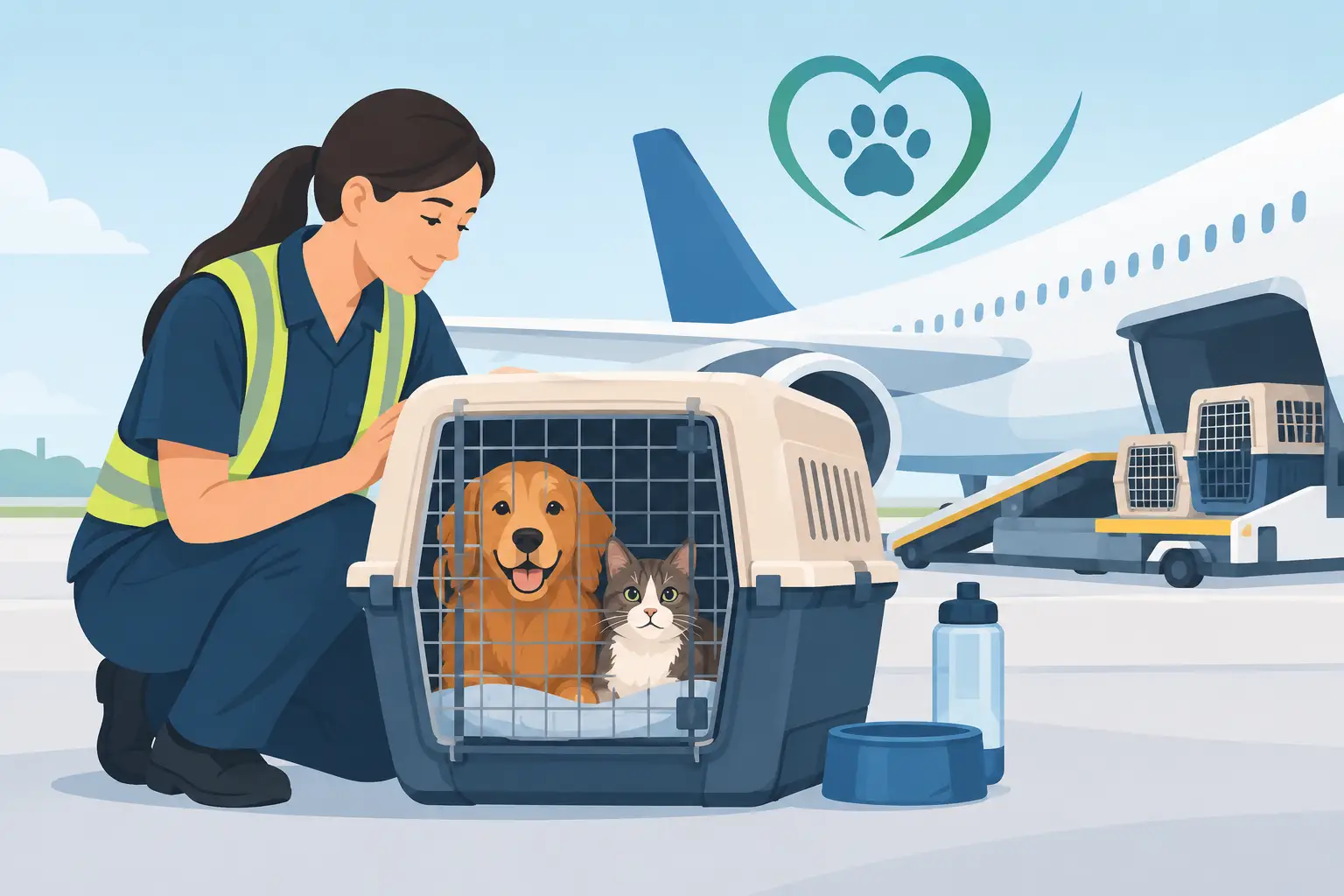
Pet Shipping That Puts Safety and Welfare First
A move can be stressful before the boxes are packed. When a family pet is involved, pet shipping becomes a welfare decision as much as a transportation decision. The right plan accounts for your animal’s health, temperament, species, route, travel enclosure, and destination requirements long before departure day.
Whether you are relocating across the country, moving overseas, coordinating a breeding placement, or transporting an animal for professional care, safe travel depends on experienced coordination. A booking alone is not a transport plan. Humane animal relocation requires informed handling at every point where an animal changes hands.
What Professional Pet Shipping Really Involves
Professional pet shipping is a managed process designed to move a live animal safely, legally, and with as little stress as practical. It may involve ground transport, commercial air cargo, charter aircraft, or a combination of services. The appropriate solution depends on the animal and the route, not simply on the fastest available option.
For a domestic move, the process may be relatively straightforward, but timing, weather, carrier rules, and secure pickup arrangements still matter. International transport introduces another level of complexity. Import permits, health certificates, vaccination records, microchip requirements, airline embargoes, customs procedures, quarantine rules, and destination-specific restrictions can all affect the travel plan.
The animal’s welfare remains central to each decision. A dog traveling in the heat of summer, a senior cat with a medical concern, and a brachycephalic breed with respiratory sensitivity should not be handled under the same assumptions. Species-specific planning is what turns transportation into responsible animal logistics.
Planning Pet Shipping Around the Animal
Every successful move starts with an accurate assessment. Before selecting a route or carrier, a professional transport coordinator should understand the animal’s species, breed, age, size, temperament, health history, feeding needs, and prior travel experience. These details guide the selection of an appropriate travel enclosure, handling schedule, and transportation method.
A travel kennel is not just a container. It is the animal’s protected space throughout transit. It must be large enough for the animal to stand, turn around, and rest naturally while remaining secure for handling. Proper ventilation, reliable construction, absorbent bedding where permitted, and clearly visible identification are essential. For some animals, travel accommodations may also require temperature management, specialized supports, or carefully controlled environmental conditions.
Food and water planning must be equally practical. Overfeeding immediately before travel can create discomfort, while inadequate hydration can create avoidable risk. The correct approach depends on the animal, trip duration, veterinary guidance, and carrier requirements. Owners should be cautious about advice that treats all pets the same. Sedation, for example, is not routinely appropriate for air travel and should only be considered under direct veterinary direction.
Documentation Can Determine Whether Travel Happens
Many pet shipping delays occur because documentation is incomplete, dated incorrectly, or does not meet the destination’s exact rules. For domestic travel, airlines and states may request health documentation or proof of vaccination. International travel can require a detailed sequence of veterinary treatments, government endorsements, import approvals, and specific timing windows.
A health certificate may need to be issued within a narrow period before departure. A rabies vaccination may need to be administered far enough in advance to be accepted, particularly for first-time vaccinations or entry into countries with strict biosecurity rules. Microchip placement may need to occur before certain vaccinations for those records to be valid at the destination.
These requirements are not paperwork for paperwork’s sake. They protect animal health, public health, agriculture, and local ecosystems. Missing a requirement can result in denied boarding, delayed clearance, additional costs, or quarantine after arrival. Early planning gives owners more options and reduces the pressure of last-minute changes.
International moves require a realistic timeline
International pet transport should generally begin weeks or months ahead, depending on the destination. Some countries have lengthy preparation periods for blood tests, treatments, permits, or quarantine reservations. Routes can also change based on airline capacity, seasonal restrictions, and airport handling capabilities.
The most reliable plan allows room for veterinary appointments, document review, and contingency decisions. A knowledgeable coordinator can identify the critical deadlines, but the pet owner still plays an important role by providing accurate records and completing required appointments on time.
Choosing the Right Transport Method
There is no universal best method for pet shipping. Ground transportation may be the better choice for certain domestic routes, especially when it permits attentive handling and avoids long airport waits. Air transport may be necessary for cross-country or international relocation, but the itinerary should be evaluated carefully for connection times, climate conditions, and available animal handling facilities.
Commercial airline cargo can be appropriate for many pets when airline policies, weather conditions, and routing align with the animal’s needs. Charter aircraft may be considered for specialized, time-sensitive, high-value, or multi-animal movements. The same principle applies to more complex animal categories: the transport method must fit the species, welfare requirements, and operational realities of the trip.
Owners should be wary of providers that promise a one-size-fits-all solution or quote a route without asking meaningful questions about the animal. A lower price can be appealing, but it may not include pickup coordination, compliant kennel guidance, document support, monitoring, or assistance should a flight schedule change.
Humane Handling Does Not End at Departure
The time before and after a flight can be as important as time in the air. Animals need safe transfer between home, vehicle, airport, aircraft, customs facilities, and final destination. Each handoff should be planned to minimize exposure, unnecessary waiting, and confusion.
Professional handling means using trained personnel who understand that an animal is not ordinary cargo. Calm movement, secure loading, proper kennel orientation, accurate labeling, and prompt communication all make a difference. For pets, familiar routines and a composed owner can also help reduce pre-travel anxiety.
Weather deserves close attention. Extreme heat and cold can trigger carrier restrictions and alter an itinerary. These rules can feel inconvenient, particularly when a relocation date is fixed, but they exist for good reason. A responsible transport provider will prioritize safe conditions over forcing an unsuitable departure.
Questions to Ask Before You Book
Before entrusting a pet to a transporter, ask how the company evaluates your animal’s individual needs and how it handles changes during transit. You should understand who is responsible for pickup, kennel specifications, documentation review, airport delivery, customs clearance when applicable, and final delivery.
It is also reasonable to ask about experience with your specific route, breed, or animal type. A provider that transports dogs and cats may not be equipped for birds, reptiles, aquatic animals, livestock, or exotic species. Complex relocations demand personnel, equipment, and procedures designed for those animals rather than adapted at the last minute.
Clear communication is a meaningful safety measure. You should know what information will be provided before departure, what happens if weather or airline operations disrupt the schedule, and whom to contact outside standard business hours. When an animal is in transit, uncertainty can be the hardest part for an owner. Reliable updates and accountable coordination provide necessary reassurance.
Pet Shipping for More Than Dogs and Cats
The term pet shipping often brings dogs and cats to mind, but animal transportation can extend much further. Small mammals, birds, reptiles, horses, aquatic life, livestock, and zoological animals each require distinct expertise. Their transport plans may include specialized crates, life-support systems, controlled temperatures, permits, veterinary supervision, or charter arrangements.
For institutions and conservation programs, mistakes can have consequences beyond a delayed move. Animal health, breeding objectives, exhibit schedules, regulatory responsibilities, and conservation outcomes may all depend on precise execution. The same care-centered mindset that protects a household pet also guides responsible transport for every species.
Global Animal Transport approaches each movement as a customized operational plan, built around humane handling, regulatory compliance, and the realities of the route. The goal is not simply to get an animal from one location to another. It is to ensure the journey respects the animal at every stage.
When your pet’s travel date approaches, start with the questions that matter most: Is this route safe for my animal? Are the documents complete? Is every handoff accounted for? The right preparation gives your animal the calmest possible path to the place you will call home next.
